Rumińska Małgorzata, Witkowska-Sędek Ewelina, Majcher Anna, Brzewski Michał, Krawczyk Monika, Pyrżak Beata
Department of Pediatrics and Endocrinology, Medical University of Warsaw , Poland.
Department of Pediatric Radiology, Medical University of Warsaw , Poland.
J Ultrason. 2018;18(75):296-301. doi: 10.15557/JoU.2018.0043.
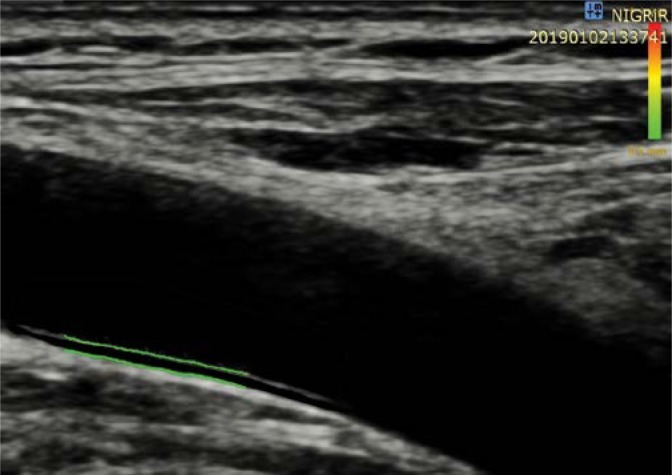
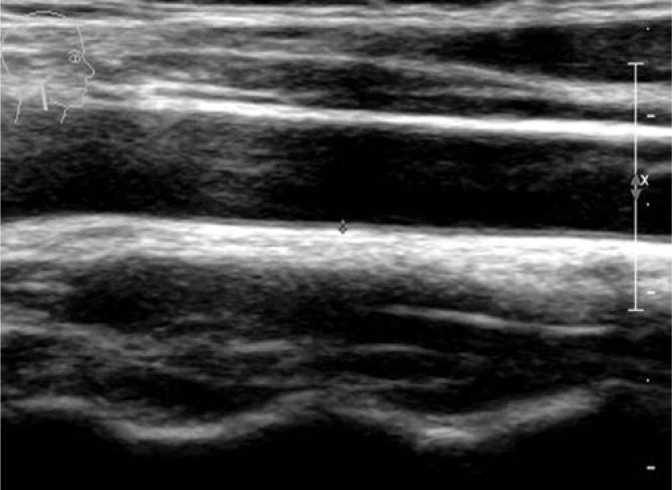
Moderately elevated level of thyroid-stimulating hormone accompanied by normal serum concentrations of free thyroxine, suggesting subclinical hypothyroidism, is the most common hormonal abnormality in obese children. Controversy remains, whether a thyroid dysfunction related to obesity has an influence on the cardiovascular risk factors. The aim of the study was to assess correlation between thyroid-stimulating hormone and free thyroxine and chosen atherogenic lipid indicators, and carotid intima media thickness in obese children and adolescents. : A study group consisted of 110 obese children (11.5 ± 2.9 years) and 38 healthy children (13.4 ± 2.6 years). Obesity was defined using International Obesity Task Force criteria. In each patient anthropometric measurements, thyroid-stimulating hormone, free thyroxine, a lipid profile were evaluated. Carotid intima-media thickness was measured in 74 obese children and 28 lean children. The resulting data were used to calculate indicators of atherogenesis: total cholesterol to HDL cholesterol ratio; triglycerides to HDL cholesterol ratio and LDL cholesterol to HDL cholesterol ratio. : Obese children had higher mean serum thyroid-stimulating hormone levels compared to their lean peers and an adverse atherogenic lipid profile. Serum free thyroxine concentrations were comparable between the groups. Serum thyroid-stimulating hormone values correlated with total cholesterol to HDL cholesterol ratio; triglycerides to HDL cholesterol ratio, LDL cholesterol to HDL cholesterol ratio, and intima-media thickness. In a multivariate regression analysis, thyroid-stimulating hormone weakly correlated only with intima-media thickness after adjustment for age, gender and Body Mass Index (β = 0.249, = 0.04). This relationship weakened after considering a lipid profile (β = 0.242, = 0.058). No relationship was found for free thyroxine. Serum level of thyroid-stimulating hormone in obese children did not seem to impact atherogenic lipid indicators and carotid intima-media thickness. Therefore, an adverse lipid profile should still be considered the main risk factor for development of cardiovascular diseases in obese children. Moderately elevated level of thyroid-stimulating hormone accompanied by normal serum concentrations of free thyroxine, suggesting subclinical hypothyroidism, is the most common hormonal abnormality in obese children. Controversy remains, whether a thyroid dysfunction related to obesity has an influence on the cardiovascular risk factors. The aim of the study was to assess correlation between thyroid-stimulating hormone and free thyroxine and chosen atherogenic lipid indicators, and carotid intima media thickness in obese children and adolescents. : A study group consisted of 110 obese children (11.5 ± 2.9 years) and 38 healthy children (13.4 ± 2.6 years). Obesity was defined using International Obesity Task Force criteria. In each patient anthropometric measurements, thyroid-stimulating hormone, free thyroxine, a lipid profile were evaluated. Carotid intima-media thickness was measured in 74 obese children and 28 lean children. The resulting data were used to calculate indicators of atherogenesis: total cholesterol to HDL cholesterol ratio; triglycerides to HDL cholesterol ratio and LDL cholesterol to HDL cholesterol ratio. : Obese children had higher mean serum thyroid-stimulating hormone levels compared to their lean peers and an adverse atherogenic lipid profile. Serum free thyroxine concentrations were comparable between the groups. Serum thyroid-stimulating hormone values correlated with total cholesterol to HDL cholesterol ratio; triglycerides to HDL cholesterol ratio, LDL cholesterol to HDL cholesterol ratio, and intima-media thickness. In a multivariate regression analysis, thyroid-stimulating hormone weakly correlated only with intima-media thickness after adjustment for age, gender and Body Mass Index (β = 0.249, = 0.04). This relationship weakened after considering a lipid profile (β = 0.242, = 0.058). No relationship was found for free thyroxine. Serum level of thyroid-stimulating hormone in obese children did not seem to impact atherogenic lipid indicators and carotid intima-media thickness. Therefore, an adverse lipid profile should still be considered the main risk factor for development of cardiovascular diseases in obese children.
促甲状腺激素水平中度升高,同时游离甲状腺素血清浓度正常,提示亚临床甲状腺功能减退,这是肥胖儿童中最常见的激素异常情况。肥胖相关的甲状腺功能障碍是否会影响心血管危险因素,目前仍存在争议。本研究的目的是评估肥胖儿童和青少年中促甲状腺激素与游离甲状腺素以及选定的致动脉粥样硬化脂质指标和颈动脉内膜中层厚度之间的相关性。:研究组由110名肥胖儿童(11.5±2.9岁)和38名健康儿童(13.4±2.6岁)组成。肥胖采用国际肥胖特别工作组的标准进行定义。对每位患者进行人体测量、评估促甲状腺激素、游离甲状腺素和血脂谱。对74名肥胖儿童和28名瘦儿童测量了颈动脉内膜中层厚度。所得数据用于计算动脉粥样硬化指标:总胆固醇与高密度脂蛋白胆固醇比值;甘油三酯与高密度脂蛋白胆固醇比值以及低密度脂蛋白胆固醇与高密度脂蛋白胆固醇比值。:与瘦的同龄人相比,肥胖儿童的血清促甲状腺激素平均水平更高,且有不良的致动脉粥样硬化脂质谱。两组间血清游离甲状腺素浓度相当。血清促甲状腺激素值与总胆固醇与高密度脂蛋白胆固醇比值、甘油三酯与高密度脂蛋白胆固醇比值、低密度脂蛋白胆固醇与高密度脂蛋白胆固醇比值以及内膜中层厚度相关。在多变量回归分析中,调整年龄、性别和体重指数后,促甲状腺激素仅与内膜中层厚度呈弱相关(β = 0.249,P = 0.04)。考虑血脂谱后这种关系减弱(β = 0.242,P = 0.058)。未发现游离甲状腺素有相关性。肥胖儿童的血清促甲状腺激素水平似乎并未影响致动脉粥样硬化脂质指标和颈动脉内膜中层厚度。因此,不良的脂质谱仍应被视为肥胖儿童发生心血管疾病的主要危险因素。促甲状腺激素水平中度升高,同时游离甲状腺素血清浓度正常,提示亚临床甲状腺功能减退,这是肥胖儿童中最常见的激素异常情况。肥胖相关的甲状腺功能障碍是否会影响心血管危险因素,目前仍存在争议。本研究的目的是评估肥胖儿童和青少年中促甲状腺激素与游离甲状腺素以及选定的致动脉粥样硬化脂质指标和颈动脉内膜中层厚度之间的相关性。:研究组由110名肥胖儿童(11.5±2.9岁)和38名健康儿童(13.4±2.6岁)组成。肥胖采用国际肥胖特别工作组的标准进行定义。对每位患者进行人体测量、评估促甲状腺激素、游离甲状腺素和血脂谱。对74名肥胖儿童和28名瘦儿童测量了颈动脉内膜中层厚度。所得数据用于计算动脉粥样硬化指标:总胆固醇与高密度脂蛋白胆固醇比值;甘油三酯与高密度脂蛋白胆固醇比值以及低密度脂蛋白胆固醇与高密度脂蛋白胆固醇比值。:与瘦的同龄人相比,肥胖儿童的血清促甲状腺激素平均水平更高,且有不良的致动脉粥样硬化脂质谱。两组间血清游离甲状腺素浓度相当。血清促甲状腺激素值与总胆固醇与高密度脂蛋白胆固醇比值、甘油三酯与高密度脂蛋白胆固醇比值、低密度脂蛋白胆固醇与高密度脂蛋白胆固醇比值以及内膜中层厚度相关。在多变量回归分析中,调整年龄、性别和体重指数后,促甲状腺激素仅与内膜中层厚度呈弱相关(β = 0.249,P = 0.04)。考虑血脂谱后这种关系减弱(β = 0.242,P = 0.058)。未发现游离甲状腺素有相关性。肥胖儿童的血清促甲状腺激素水平似乎并未影响致动脉粥样硬化脂质指标和颈动脉内膜中层厚度。因此,不良的脂质谱仍应被视为肥胖儿童发生心血管疾病的主要危险因素。