Universidad Loyola Andalucía, Seville, Spain.
Bizkaia Mental Health Services, Osakidetza-Basque Health Service, Biocruces Health Research Institute, Bilbao, Spain.
PLoS One. 2019 Feb 14;14(2):e0212179. doi: 10.1371/journal.pone.0212179. eCollection 2019.
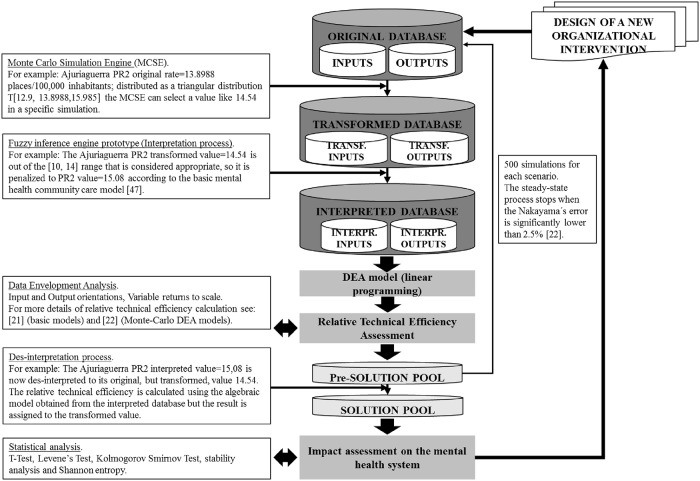
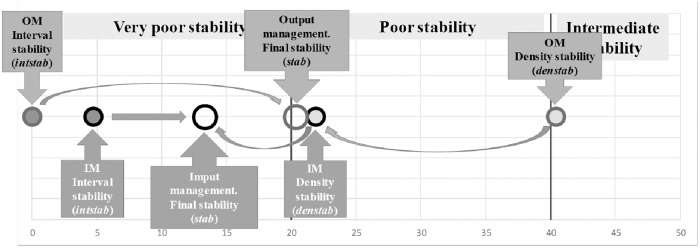
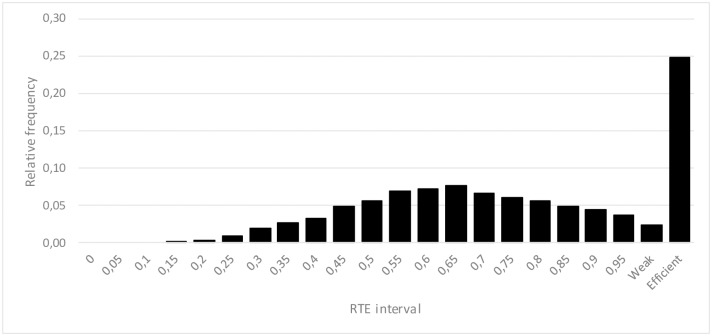
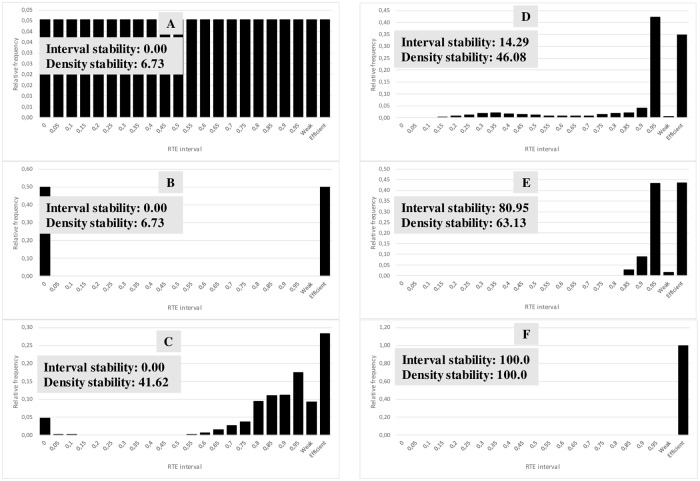
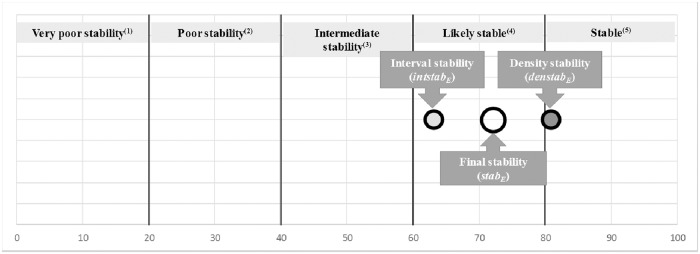
Evidence-informed strategic planning is a top priority in Mental Health (MH) due to the burden associated with this group of disorders and its societal costs. However, MH systems are highly complex, and decision support tools should follow a systems thinking approach that incorporates expert knowledge. The aim of this paper is to introduce a new Decision Support System (DSS) to improve knowledge on the health ecosystem, resource allocation and management in regional MH planning. The Efficient Decision Support-Mental Health (EDeS-MH) is a DSS that integrates an operational model to assess the Relative Technical Efficiency (RTE) of small health areas, a Monte-Carlo simulation engine (that carries out the Monte-Carlo simulation technique), a fuzzy inference engine prototype and basic statistics as well as system stability and entropy indicators. The stability indicator assesses the sensitivity of the model results due to data variations (derived from structural changes). The entropy indicator assesses the inner uncertainty of the results. RTE is multidimensional, that is, it was evaluated by using 15 variable combinations called scenarios. Each scenario, designed by experts in MH planning, has its own meaning based on different types of care. Three management interventions on the MH system in Bizkaia were analysed using key performance indicators of the service availability, placement capacity in day care, health care workforce capacity, and resource utilisation data of hospital and community care. The potential impact of these interventions has been assessed at both local and system levels. The system reacts positively to the proposals by a slight increase in its efficiency and stability (and its corresponding decrease in the entropy). However, depending on the analysed scenario, RTE, stability and entropy statistics can have a positive, neutral or negative behaviour. Using this information, decision makers can design new specific interventions/policies. EDeS-MH has been tested and face-validated in a real management situation in the Bizkaia MH system.
循证战略规划是精神健康(MH)的首要任务,因为这组疾病及其社会成本带来了负担。然而,MH 系统非常复杂,决策支持工具应该采用系统思维方法,纳入专家知识。本文旨在介绍一种新的决策支持系统(DSS),以提高对区域 MH 规划中卫生系统、资源分配和管理的认识。高效决策支持-精神健康(EDeS-MH)是一种 DSS,它集成了一个运营模型,以评估小卫生区域的相对技术效率(RTE)、蒙特卡罗模拟引擎(执行蒙特卡罗模拟技术)、模糊推理引擎原型和基本统计以及系统稳定性和熵指标。稳定性指标评估由于数据变化(源于结构变化)导致模型结果的敏感性。熵指标评估结果的内在不确定性。RTE 是多维的,也就是说,它通过使用 15 个变量组合(称为方案)进行评估。每个方案都是由 MH 规划专家设计的,根据不同类型的护理有其自身的意义。利用服务可用性、日间护理安置能力、医疗保健劳动力能力以及医院和社区护理资源利用数据等关键绩效指标,对比斯开亚 MH 系统的三项管理干预措施进行了分析。评估了这些干预措施对地方和系统层面的潜在影响。系统对效率和稳定性略有提高(相应的熵降低)的建议做出了积极反应。然而,根据所分析的方案,RTE、稳定性和熵统计数据可能具有积极、中性或消极的行为。利用这些信息,决策者可以设计新的具体干预措施/政策。EDeS-MH 已在比斯开亚 MH 系统的真实管理情况下进行了测试和表面验证。