Centre for Radiation and Environmental Science, FOCAS Research Institute, Technological University Dublin, Dublin, Ireland.
Department of Chemistry and Earth Sciences, Qatar University, Doha, Qatar.
PLoS One. 2019 Feb 14;14(2):e0212376. doi: 10.1371/journal.pone.0212376. eCollection 2019.
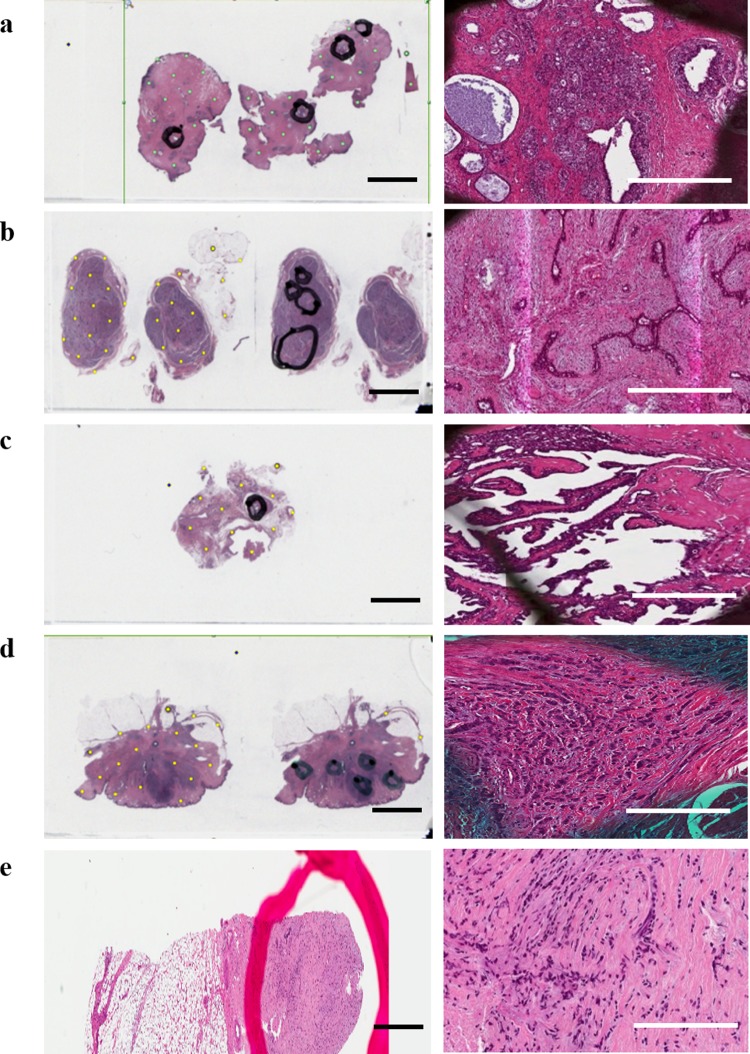
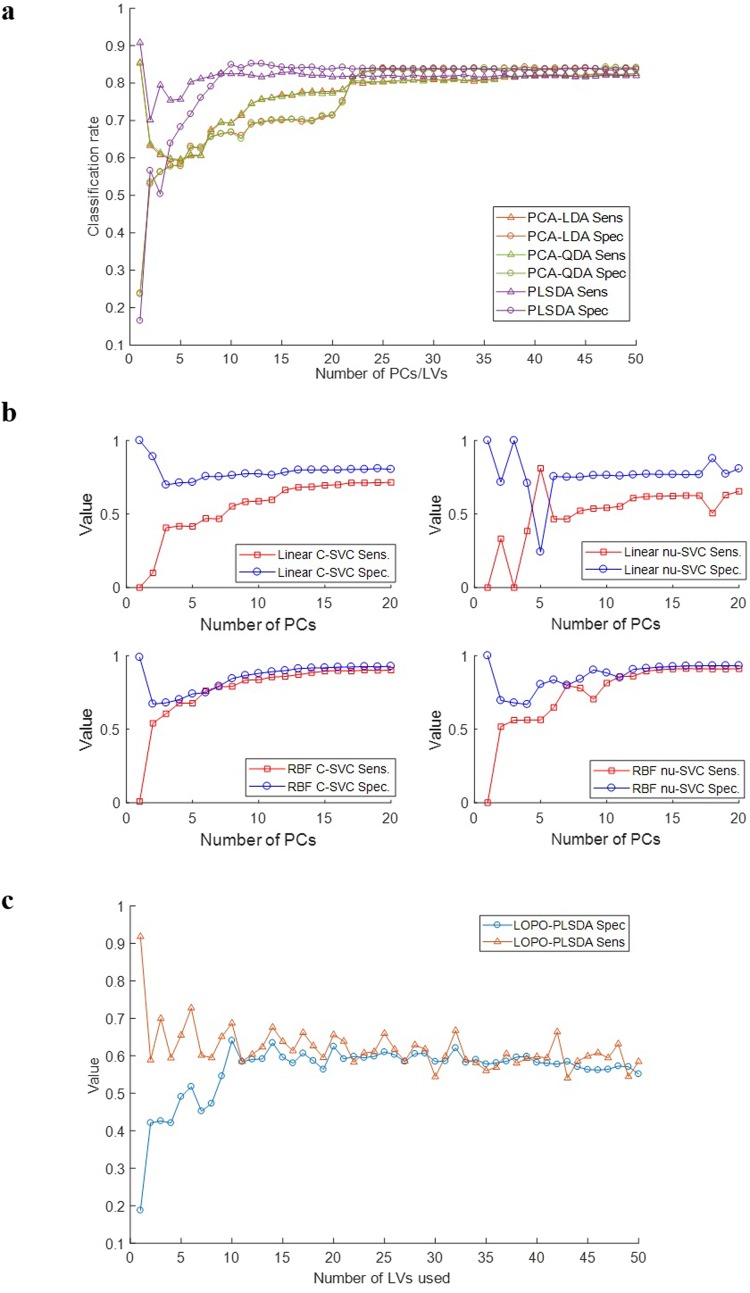
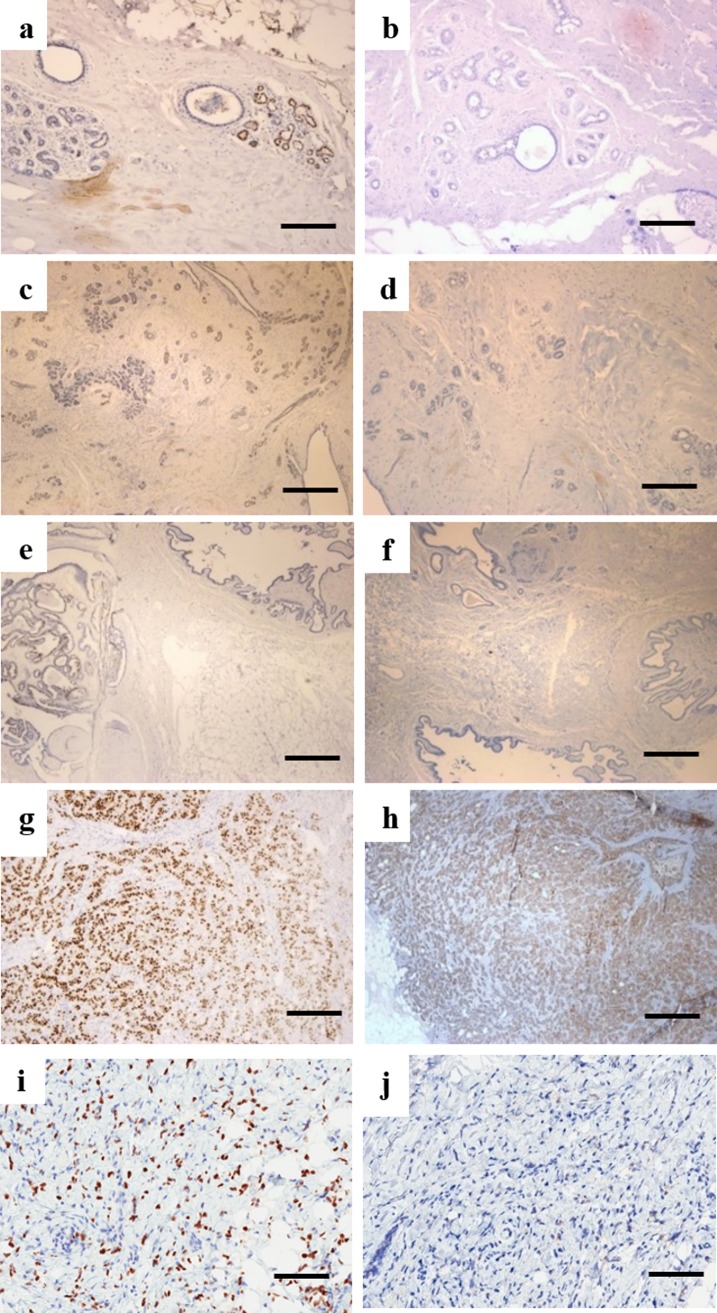
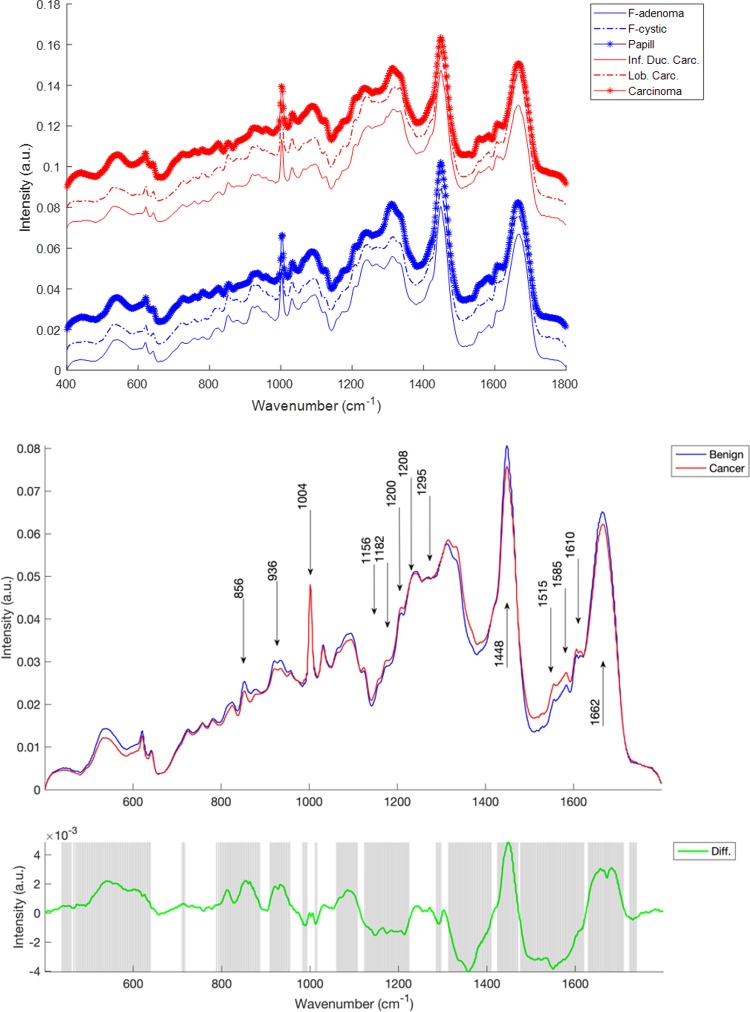
Breast cancer is the most common cancer among women worldwide, with an estimated 1.7 million cases and 522,000 deaths in 2012. Breast cancer is diagnosed by histopathological examination of breast biopsy material but this is subjective and relies on morphological changes in the tissue. Raman spectroscopy uses incident radiation to induce vibrations in the molecules of a sample and the scattered radiation can be used to characterise the sample. This technique is rapid and non-destructive and is sensitive to subtle biochemical changes occurring at the molecular level. This allows spectral variations corresponding to disease onset to be detected. The aim of this work was to use Raman spectroscopy to discriminate between benign lesions (fibrocystic, fibroadenoma, intraductal papilloma) and cancer (invasive ductal carcinoma and lobular carcinoma) using formalin fixed paraffin preserved (FFPP) tissue. Haematoxylin and Eosin stained sections from the patient biopsies were marked by a pathologist. Raman maps were recorded from parallel unstained tissue sections. Immunohistochemical staining for estrogen receptor (ER) and human epidermal growth factor receptor 2 (HER2/neu) was performed on a further set of parallel sections. Both benign and cancer cases were positive for ER while only the cancer cases were positive for HER2. Significant spectral differences were observed between the benign and cancer cases and the benign cases could be differentiated from the cancer cases with good sensitivity and specificity. This study has shown the potential of Raman spectroscopy as an aid to histopathological diagnosis of breast cancer, in particular in the discrimination between benign and malignant tumours.
乳腺癌是全世界女性最常见的癌症,据估计,2012 年全球有 170 万例乳腺癌新发病例和 52.2 万例死亡病例。乳腺癌的诊断是通过对乳腺活检材料的组织病理学检查来实现的,但这种方法具有主观性,并且依赖于组织的形态变化。拉曼光谱技术利用入射辐射诱导样品分子的振动,散射辐射可用于对样品进行特征描述。这种技术快速、无损,对分子水平上发生的微妙生化变化非常敏感。这使得可以检测到与疾病发生相对应的光谱变化。本工作的目的是使用拉曼光谱技术,通过对福尔马林固定石蜡包埋(FFPP)组织的良性病变(纤维囊性、纤维腺瘤、导管内乳头状瘤)和癌症(浸润性导管癌和小叶癌)进行区分。从患者活检中提取的经苏木精和伊红染色的切片由病理学家进行标记。从平行的未染色组织切片中记录拉曼图谱。对另一组平行切片进行雌激素受体(ER)和人表皮生长因子受体 2(HER2/neu)的免疫组织化学染色。良性和癌症病例均对 ER 呈阳性,而只有癌症病例对 HER2 呈阳性。良性和癌症病例之间观察到明显的光谱差异,并且可以通过高灵敏度和特异性将良性病例与癌症病例区分开来。本研究表明拉曼光谱技术具有作为辅助组织病理学诊断乳腺癌的潜力,特别是在良性和恶性肿瘤的鉴别方面。