Laboratory of Neurobiology and Experimental Neurology, Department of Physiology, Faculty of Medicine, University of La Laguna, Tenerife, Canary Islands, Spain; Network Center for Biomedical Research in Neurodegenerative Diseases (CIBERNED), Spain; Department of Psychiatry, Getafe University Hospital, Madrid, Spain.
Laboratory of Neurobiology and Experimental Neurology, Department of Physiology, Faculty of Medicine, University of La Laguna, Tenerife, Canary Islands, Spain; Network Center for Biomedical Research in Neurodegenerative Diseases (CIBERNED), Spain.
Neuroimage Clin. 2019;22:101708. doi: 10.1016/j.nicl.2019.101708. Epub 2019 Feb 3.
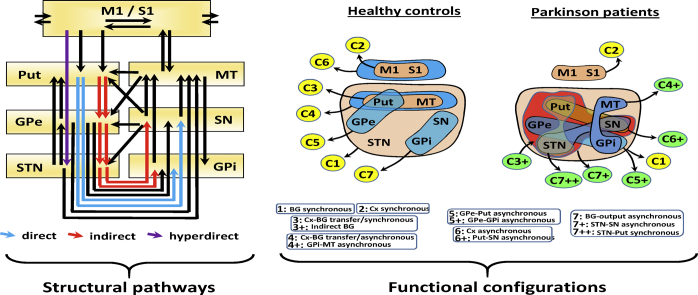
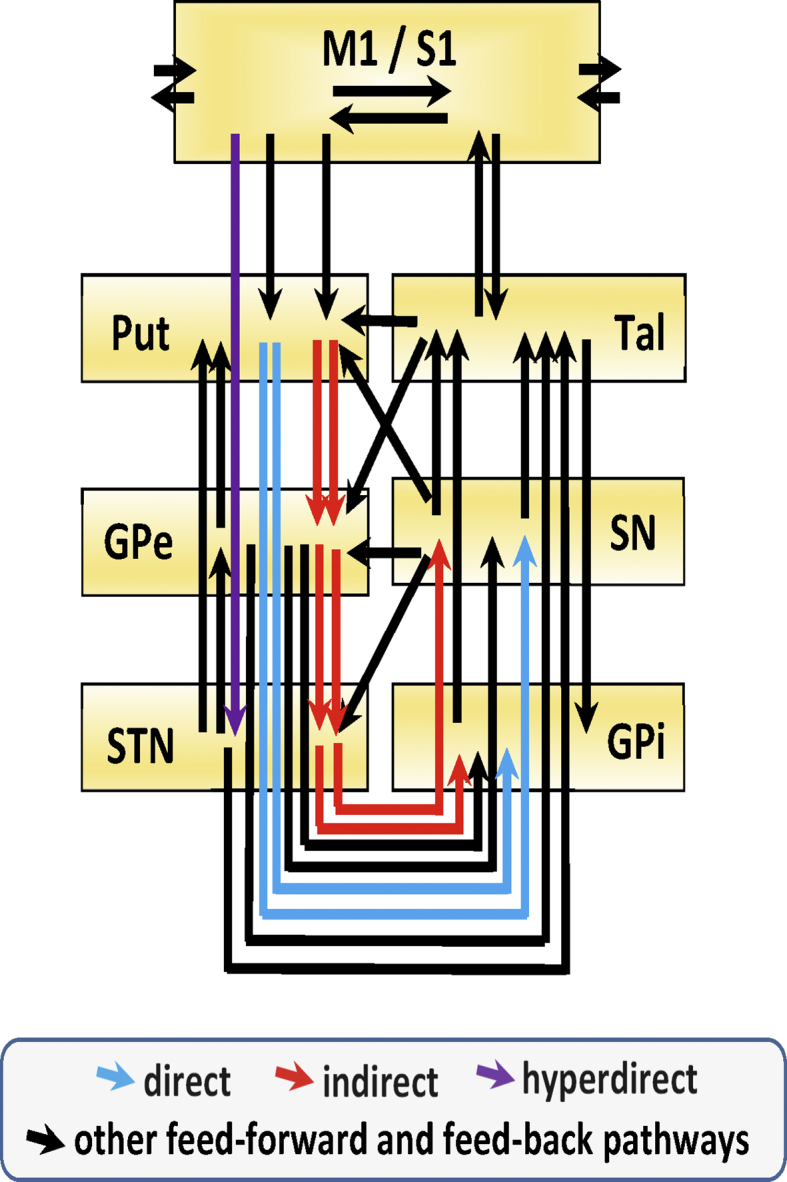
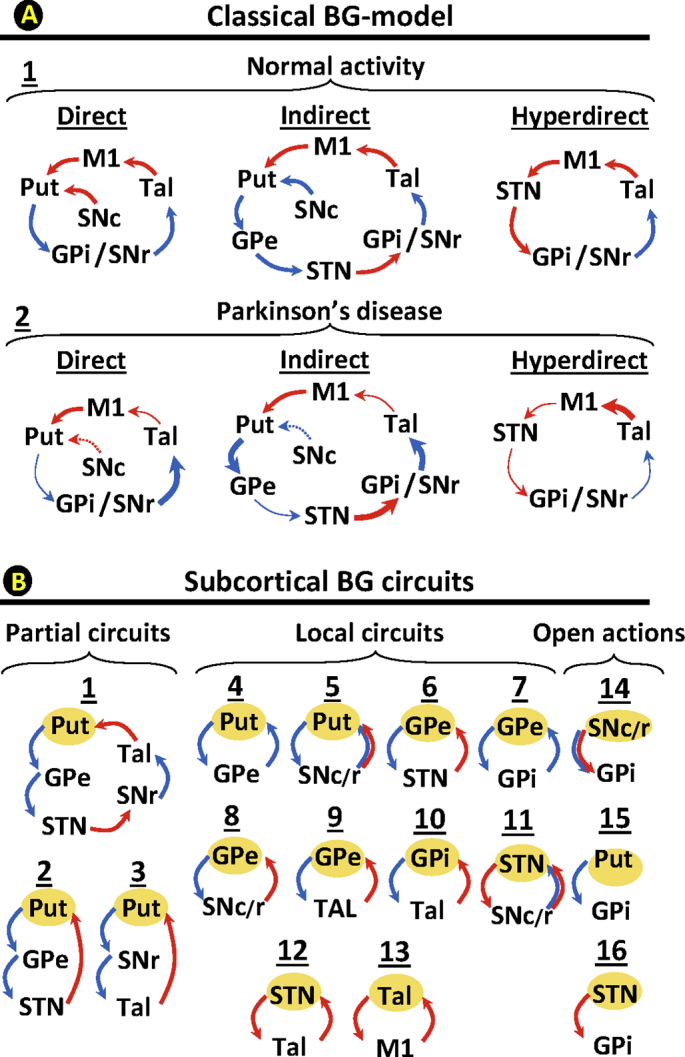
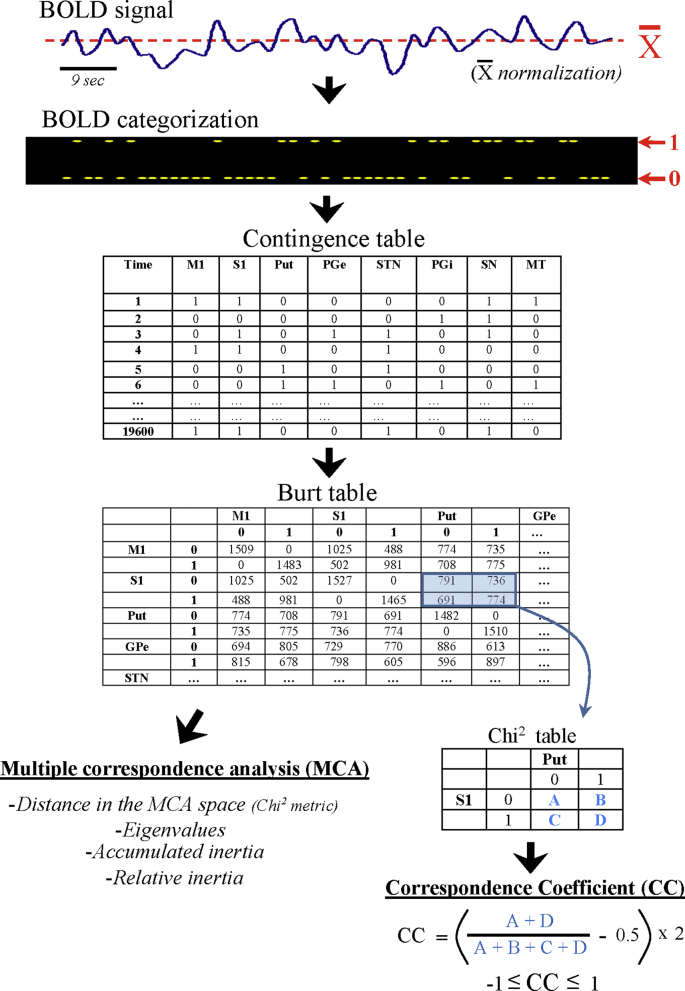
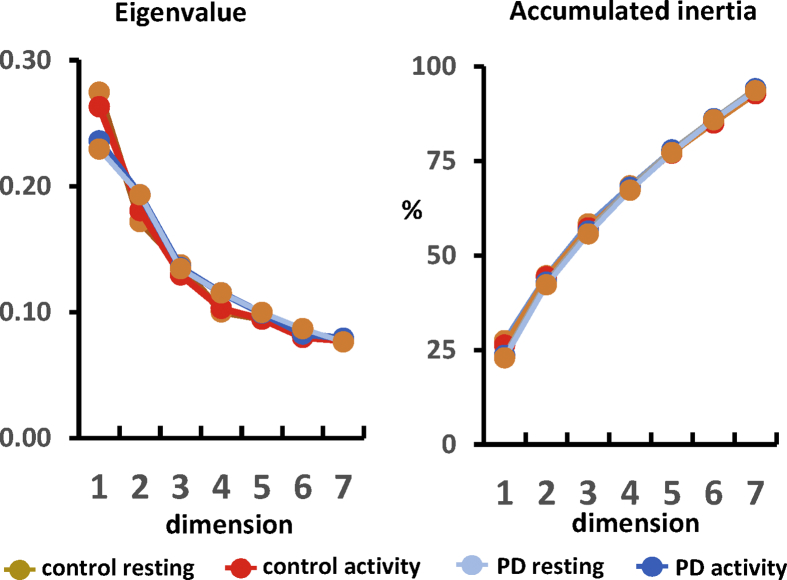
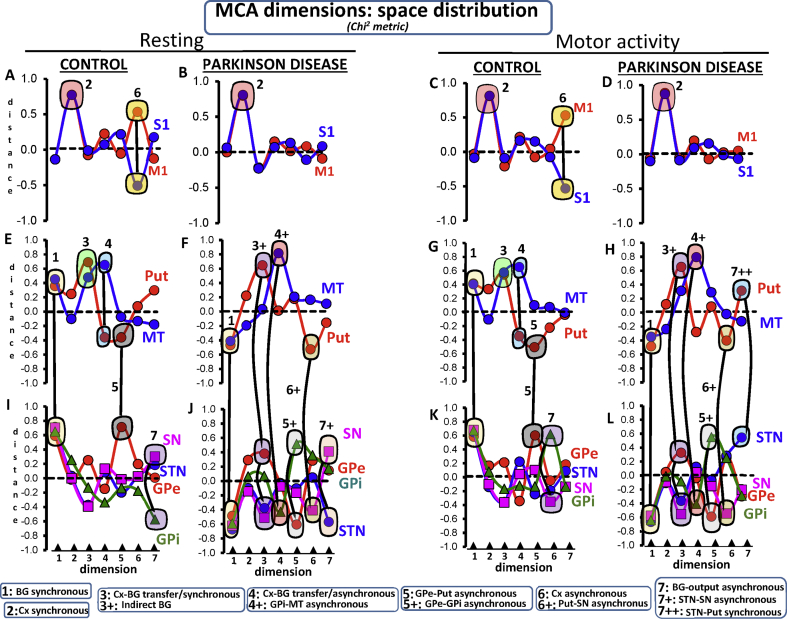
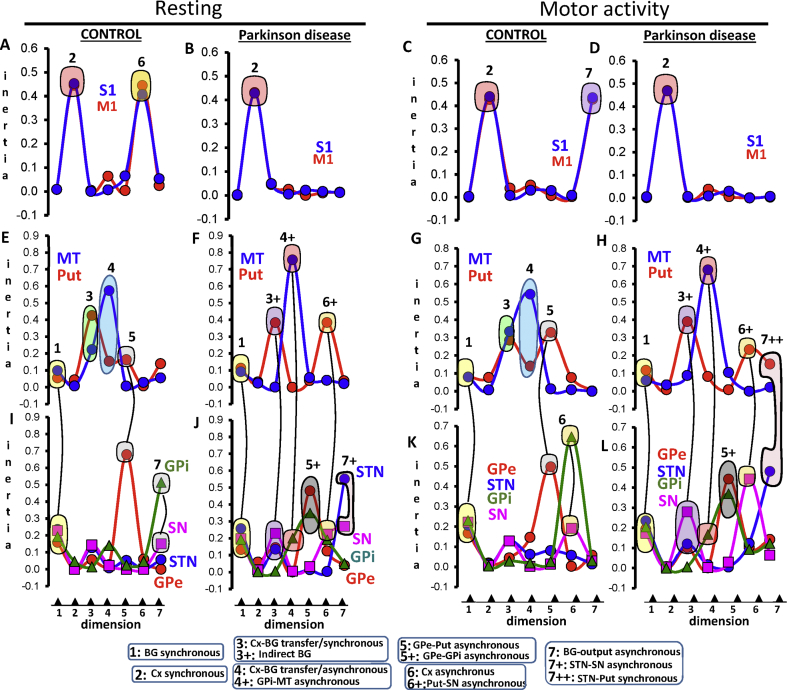
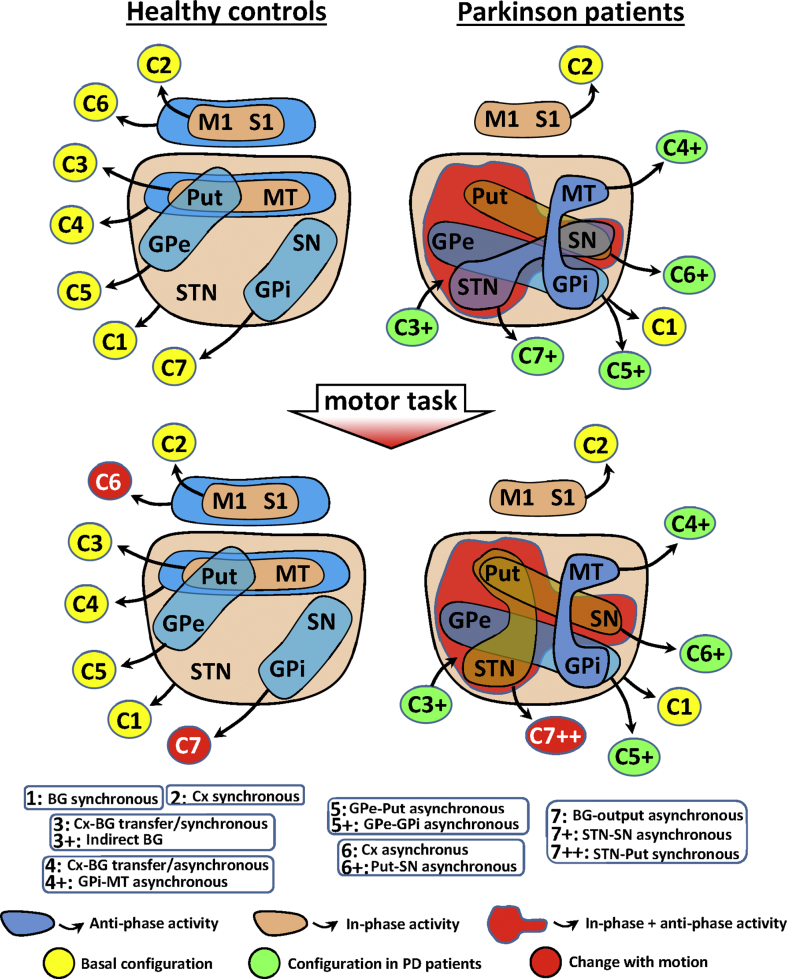
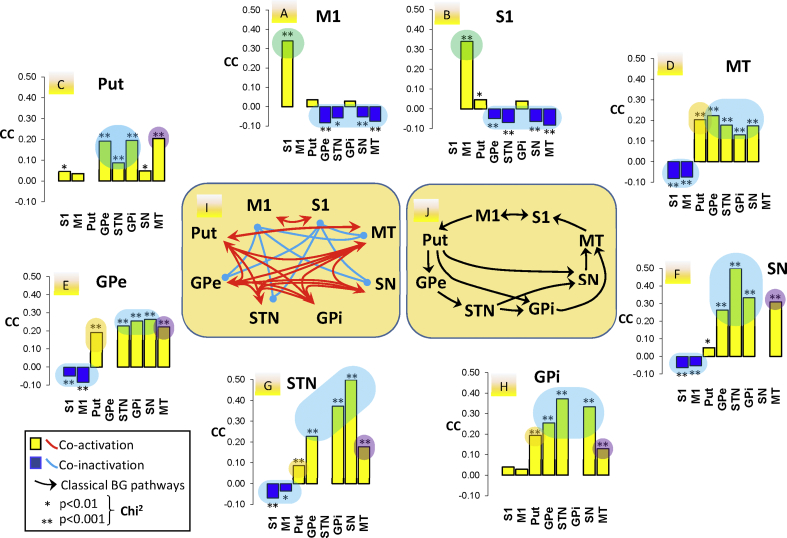
The motor symptoms in Parkinson's disease (PD) have been linked to changes in the excitatory/inhibitory interactions of centers involved in the cortical-subcortical closed-loop circuits which connect basal ganglia (BG) and the brain cortex. This approach may explain some motor symptoms of PD but not others, which has driven the study of BG from new perspectives. Besides their cortical-subcortical linear circuits, BG have a number of subcortical circuits which directly or indirectly connect each BG with all the others. This suggests that BG may work as a complex network whose output is the result of massive functional interactions between all of their nuclei (decentralized network; DCN), more than the result of the linear excitatory/inhibitory interactions of the cortical-subcortical closed-loops. The aim of this work was to study BG as a DCN, and to test whether the DCN behavior of BG changes in PD. BG activity was recorded with MRI methods and their complex interactions were studied with a procedure based on multiple correspondence analysis, a data-driven multifactorial method which can work with non-linear multiple interactions. The functional connectivity of twenty parkinsonian patients and eighteen age-matched controls were studied during resting and when they were performing sequential hand movements. Seven functional configurations were identified in the control subjects during resting, and some of these interactions changed with motor activity. Five of the seven interactions found in control subjects changed in Parkinson's disease. The BG response to the motor task was also different in PD patients and controls. These data show the basal ganglia as a decentralized network where each region can perform multiple functions and each function is performed by multiple regions. This framework of BG interactions may provide new explanations concerning motor symptoms of PD which are not explained by current BG models.
帕金森病(PD)的运动症状与皮质-基底节回路中涉及的中心的兴奋性/抑制性相互作用的变化有关,这些回路连接基底节(BG)和大脑皮层。这种方法可以解释 PD 的一些运动症状,但不能解释其他症状,这促使人们从新的角度研究 BG。除了皮质-基底节的线性回路外,BG 还有许多亚皮质回路,这些回路直接或间接地将每个 BG 与所有其他 BG 连接起来。这表明 BG 可能作为一个复杂的网络运作,其输出是其所有核(去中心化网络;DCN)之间大量功能相互作用的结果,而不仅仅是皮质-基底节闭环的线性兴奋/抑制相互作用的结果。这项工作的目的是将 BG 作为 DCN 进行研究,并测试 PD 中 BG 的 DCN 行为是否发生变化。使用 MRI 方法记录 BG 的活动,并使用基于多元对应分析的程序研究其复杂的相互作用,这是一种可以处理非线性多相互作用的数据驱动多因素方法。研究了二十名帕金森病患者和十八名年龄匹配的对照者在休息时和进行手部连续运动时的 BG 功能连接。在对照组中,在休息时确定了七个功能配置,其中一些相互作用随运动活动而改变。在帕金森病患者中,对照组中发现的五个相互作用发生了变化。PD 患者和对照组的 BG 对运动任务的反应也不同。这些数据显示,基底节作为一个去中心化的网络,其中每个区域都可以执行多个功能,每个功能由多个区域执行。这种 BG 相互作用框架可能为 PD 的运动症状提供新的解释,这些解释不能用当前的 BG 模型来解释。