Department of Pharmacology and Therapeutics, Roswell Park Comprehensive Cancer Center, Buffalo, New York.
Center for Prostate Disease Research, Department of Surgery, Uniformed Services University of Health Sciences, Bethesda, Maryland.
Cancer Res. 2019 Apr 1;79(7):1353-1368. doi: 10.1158/0008-5472.CAN-18-2383. Epub 2019 Feb 14.
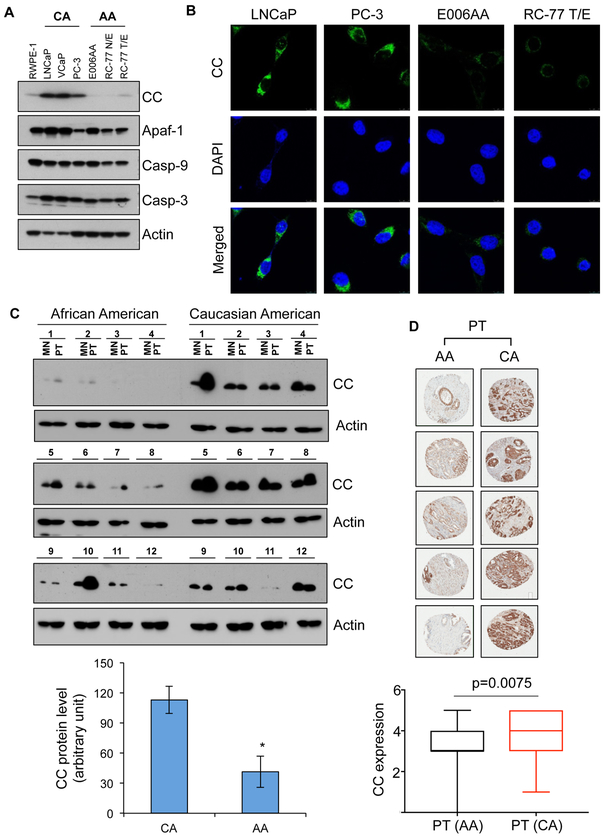
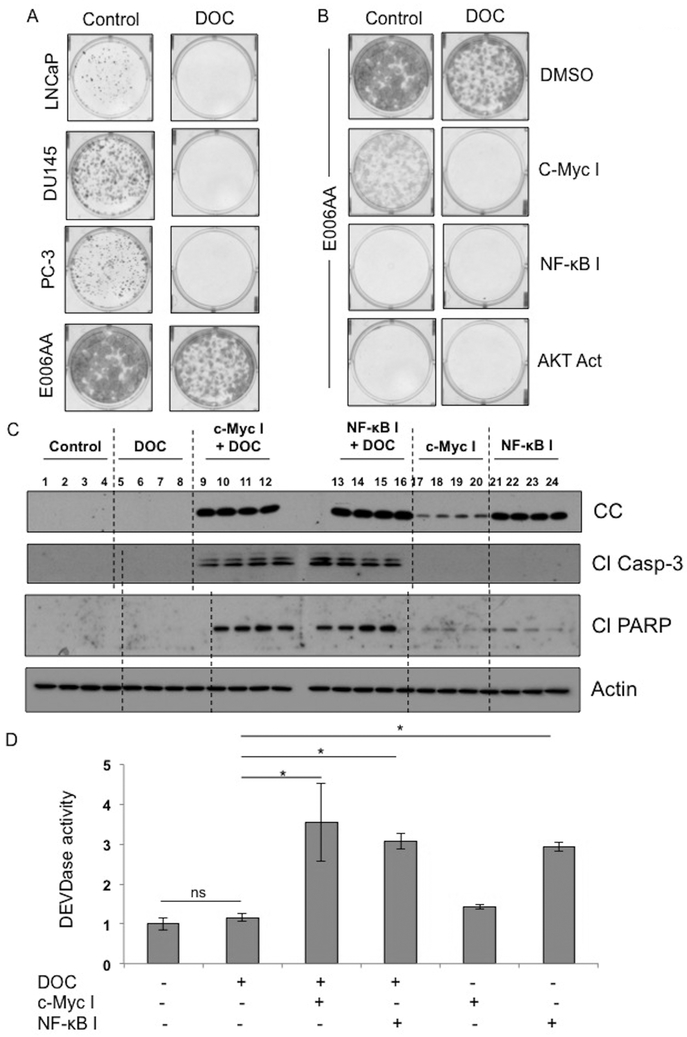
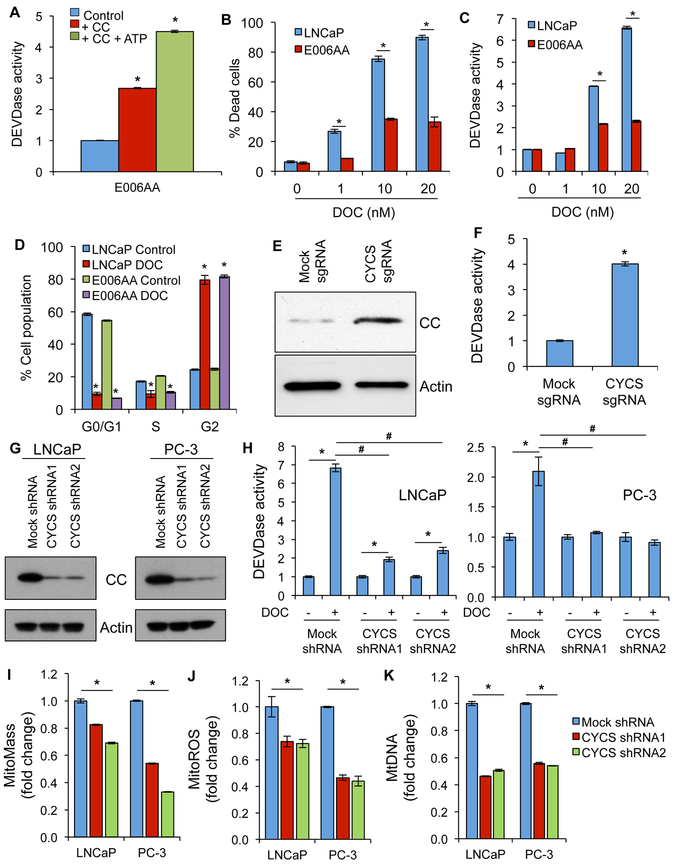
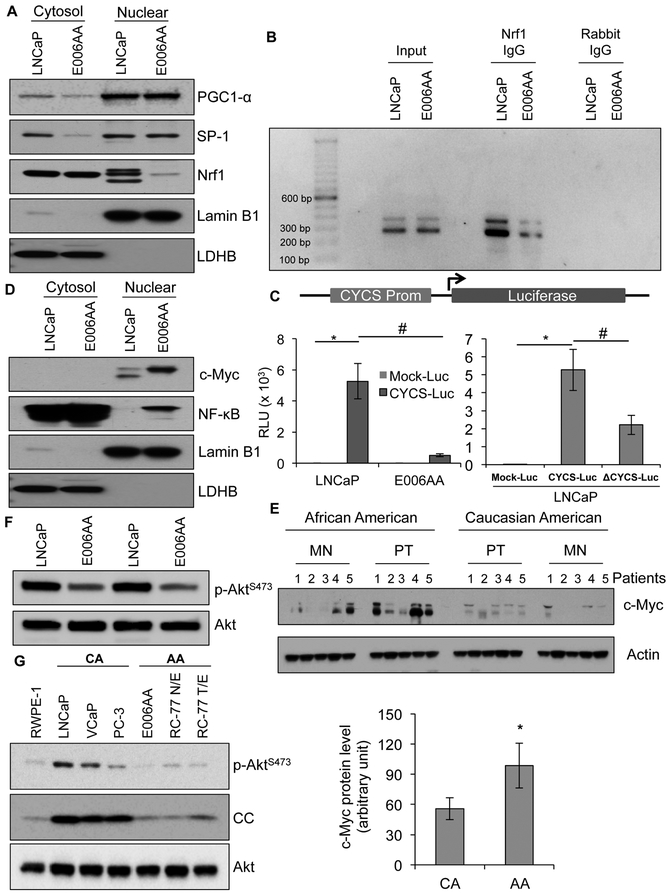
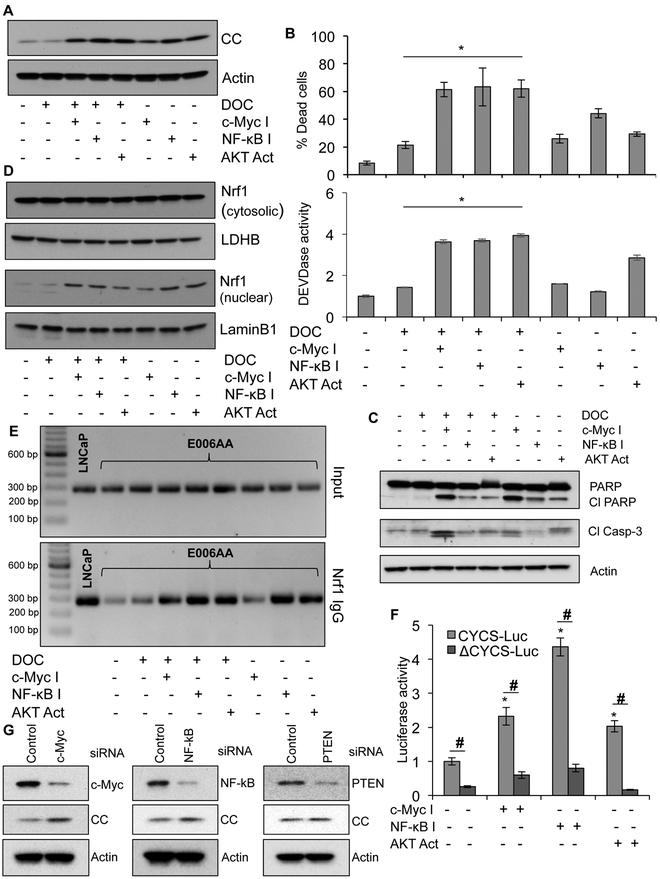
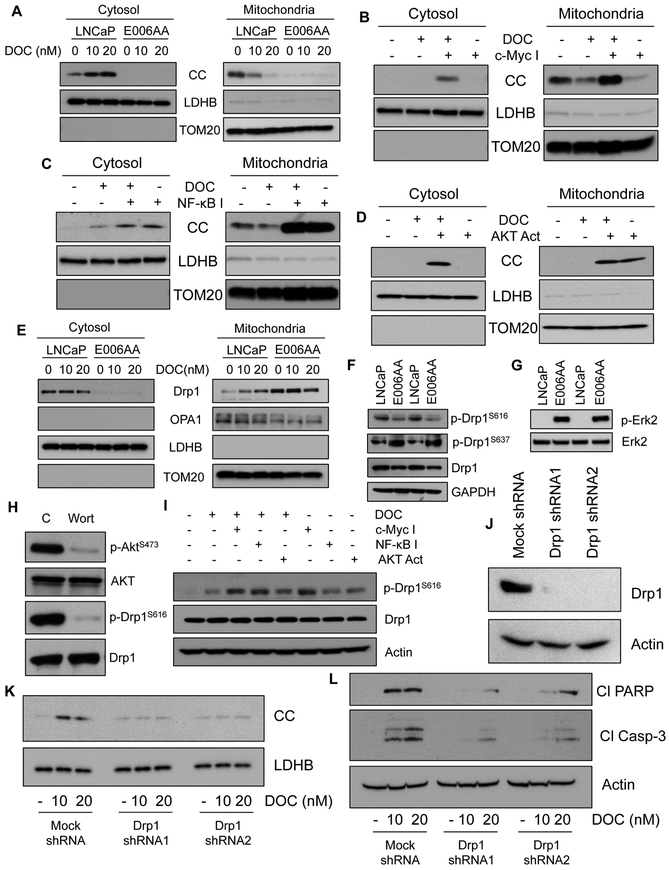
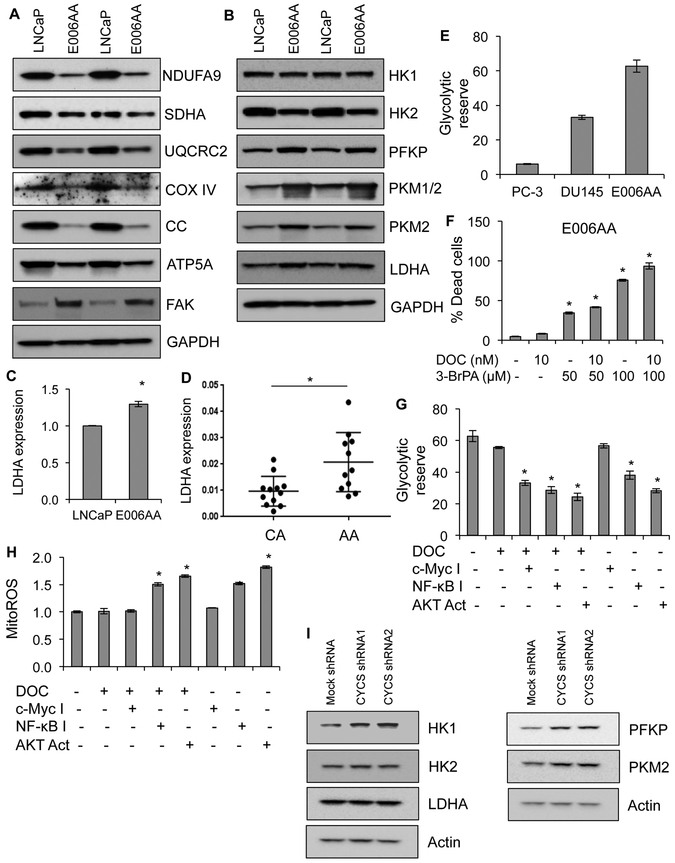
Although African-American (AA) patients with prostate cancer tend to develop greater therapeutic resistance and faster prostate cancer recurrence compared with Caucasian-American (CA) men, the molecular mechanisms of this racial prostate cancer disparity remain undefined. In this study, we provide the first comprehensive evidence that cytochrome deficiency in AA primary tumors and cancer cells abrogates apoptosome-mediated caspase activation and contributes to mitochondrial dysfunction, thereby promoting therapeutic resistance and prostate cancer aggressiveness in AA men. In AA prostate cancer cells, decreased nuclear accumulation of nuclear respiration factor 1 (Nrf1) and its subsequent loss of binding to the cytochrome promoter mediated cytochrome deficiency. The activation of cellular Myc (c-Myc) and NF-κB or inhibition of AKT prevented nuclear translocation of Nrf1. Genetic and pharmacologic inhibition of c-Myc and NF-κB or activation of AKT promoted Nrf1 binding to cytochrome promoter, cytochrome expression, caspase activation, and cell death. The lack of p-Drp1 in AA prostate cancer cells contributed to defective cytochrome release and increased resistance to apoptosis, indicating that restoration of cytochrome alone may be insufficient to induce effective apoptosis. Cytochrome deficiency promoted the acquisition of glycolytic phenotypes and mitochondrial dysfunction, whereas cytochrome restoration via inhibition of c-Myc and NF-κB or activation of AKT attenuated glycolysis in AA prostate cancer cells. Inhibition of c-Myc and NF-κB enhanced the efficacy of docetaxel in tumor xenografts. Therefore, restoring cytochrome may overcome therapeutic resistance and prostate cancer aggressiveness in AA men. Overall, this study provides the first comprehensive experimental, mechanistic, and clinical evidence for apoptosome and mitochondrial dysfunction in prostate cancer racial disparity. SIGNIFICANCE: Mechanistic insights on prostate cancer health disparity among American men provide novel approaches to restore mitochondrial function, which can address therapeutic resistance and aggressiveness in African-American men with prostate cancer.
尽管非裔美国(AA)前列腺癌患者与白种美籍(CA)男性相比,往往表现出更强的治疗抵抗性和更快的前列腺癌复发,但这种种族间前列腺癌差异的分子机制仍未明确。在这项研究中,我们首次提供了全面的证据,表明 AA 原发性肿瘤和癌细胞中细胞色素缺乏会破坏凋亡体介导的半胱氨酸蛋白酶激活,并导致线粒体功能障碍,从而促进 AA 男性的治疗抵抗性和前列腺癌侵袭性。在 AA 前列腺癌细胞中,核呼吸因子 1(Nrf1)的核积累减少及其随后与细胞色素启动子结合的丧失导致细胞色素缺乏。细胞 Myc(c-Myc)和 NF-κB 的激活或 AKT 的抑制可阻止 Nrf1 的核转位。c-Myc 和 NF-κB 的遗传和药物抑制或 AKT 的激活可促进 Nrf1 与细胞色素启动子结合、细胞色素表达、半胱氨酸蛋白酶激活和细胞死亡。AA 前列腺癌细胞中 p-Drp1 的缺乏导致细胞色素释放缺陷和抗凋亡能力增加,表明单独恢复细胞色素可能不足以诱导有效的凋亡。细胞色素缺乏促进了糖酵解表型和线粒体功能障碍的获得,而通过抑制 c-Myc 和 NF-κB 或激活 AKT 恢复细胞色素可减轻 AA 前列腺癌细胞中的糖酵解。抑制 c-Myc 和 NF-κB 增强了多西他赛在肿瘤异种移植中的疗效。因此,恢复细胞色素可能会克服 AA 男性的治疗抵抗性和前列腺癌侵袭性。总体而言,这项研究为前列腺癌种族差异中的凋亡体和线粒体功能障碍提供了首次全面的实验、机制和临床证据。意义:美国男性前列腺癌健康差异的机制研究为恢复线粒体功能提供了新的方法,这可以解决 AA 男性前列腺癌的治疗抵抗性和侵袭性问题。