Taweesomboonyat Chin, Tunthanathip Thara, Sae-Heng Sakchai, Oearsakul Thakul
Department of Surgery, Division of Neurosurgery, Faculty of Medicine, Prince of Songkla University, Hat Yai, Songkhla 90110, Thailand.
J Neurosci Rural Pract. 2019 Jan-Mar;10(1):78-84. doi: 10.4103/jnrp.jnrp_166_18.
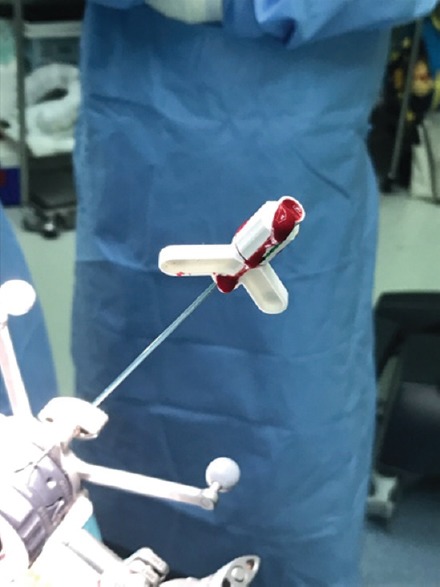
With the advancement of neuronavigation technologies, frameless stereotactic brain biopsy has been developed. Previous studies proved that frameless stereotactic brain biopsy was as effective and safe as frame-based stereotactic brain biopsy. The authors aimed to find the factors associated with diagnostic yield and complication rate of frameless intracranial biopsy.
Frameless stereotactic brain biopsy procedures, between March 2009 and April 2017, were retrospectively reviewed from medical records including imaging studies. Using logistic regression analysis, various factors were analyzed for association with diagnostic yield and postoperative complications.
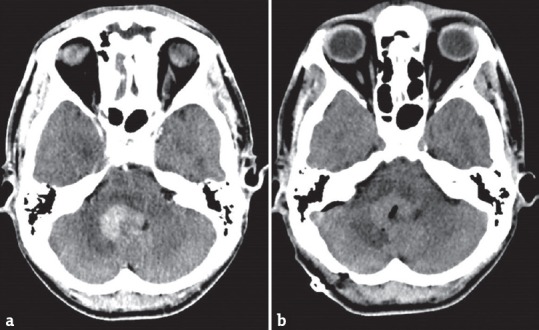
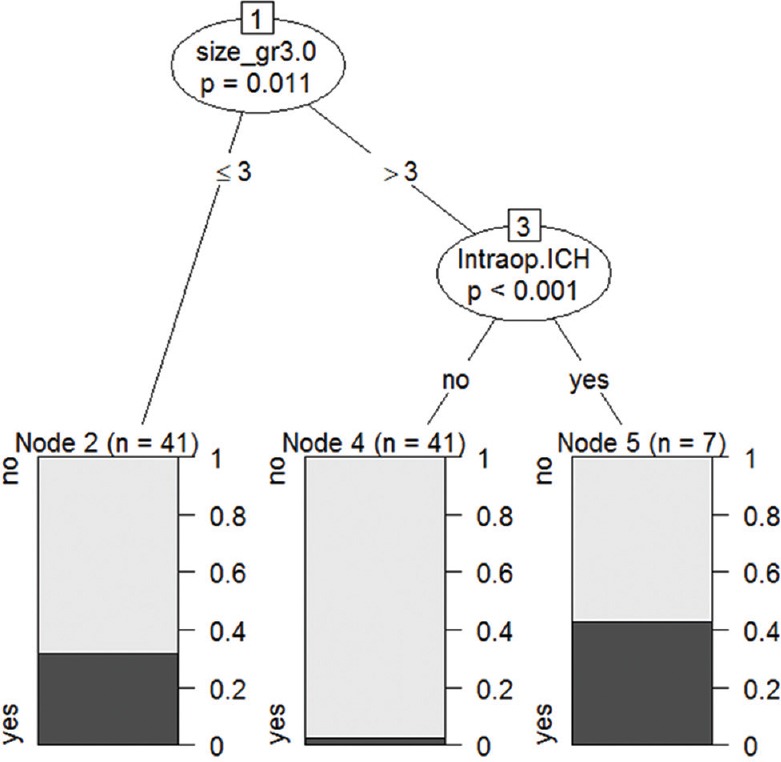
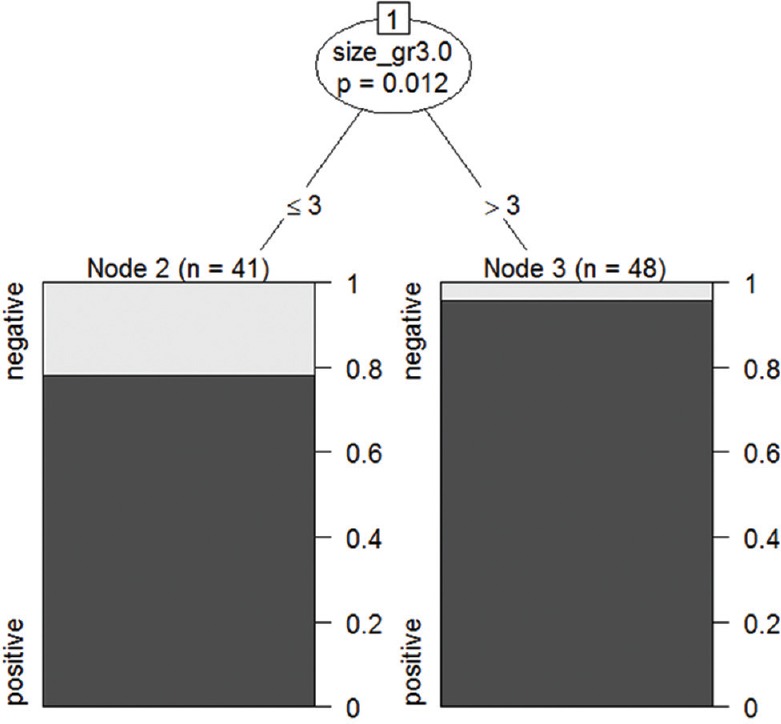
Eighty-nine frameless stereotactic brain biopsy procedures were performed on 85 patients. The most common pathology was primary central nervous system lymphoma (43.8%), followed by low-grade glioma (15.7%), and high-grade glioma (15%), respectively. The diagnostic yield was 87.6%. Postoperative intracerebral hematoma occurred in 19% of cases; however, it was symptomatic in only one case. The size of the lesion was associated with both diagnostic yield and postoperative intracerebral hematoma complication. Lesions, larger than 3 cm in diameter, were associated with a higher rate of positive biopsy result ( = 0.01). Lesion 3 cm or smaller than 3 cm in diameter, and intraoperative bleeding associated with a higher percentage of postoperative intracerebral hematoma complications ( = 0.01).
For frameless stereotactic brain biopsy, the size of the lesion is the essential factor determining diagnostic yield and postoperative intracerebral hematoma complication.
随着神经导航技术的进步,无框架立体定向脑活检技术得以发展。既往研究证明,无框架立体定向脑活检与有框架立体定向脑活检同样有效且安全。作者旨在找出与无框架颅内活检的诊断率及并发症发生率相关的因素。
回顾性分析2009年3月至2017年4月期间包含影像学研究的病历资料中的无框架立体定向脑活检手术。采用逻辑回归分析,分析各种因素与诊断率及术后并发症的相关性。
对85例患者实施了89例无框架立体定向脑活检手术。最常见的病理类型是原发性中枢神经系统淋巴瘤(43.8%),其次分别是低级别胶质瘤(15.7%)和高级别胶质瘤(15%)。诊断率为87.6%。19%的病例发生术后脑内血肿;然而,仅1例出现症状。病变大小与诊断率及术后脑内血肿并发症均相关。直径大于3 cm的病变,活检阳性结果率更高(P = 0.01)。直径3 cm或小于3 cm的病变以及术中出血,术后脑内血肿并发症的发生率更高(P = 0.01)。
对于无框架立体定向脑活检,病变大小是决定诊断率及术后脑内血肿并发症的关键因素。