Coulter Robert Ws, Sang Jordan M, Louth-Marquez William, Henderson Emmett R, Espelage Dorothy, Hunter Simon C, DeLucas Matthew, Abebe Kaleab Z, Miller Elizabeth, Morrill Brooke A, Hieftje Kimberly, Friedman Mark S, Egan James E
University of Pittsburgh, Pittsburgh, PA, United States.
College of Health and Human Performance, University of Florida, Gainesville, FL, United States.
JMIR Res Protoc. 2019 Feb 15;8(2):e12164. doi: 10.2196/12164.
Sexual and gender minority youth (SGMY; eg, lesbian, gay, bisexual, and transgender youth) experience myriad substance use and mental health disparities compared with their cisgender (nontransgender) heterosexual peers. Despite much research showing these disparities are driven by experiences of bullying and cyberbullying victimization, few interventions have aimed to improve the health of bullied SGMY. One possible way to improve the health of bullied SGMY is via a Web-accessible game intervention. Nevertheless, little research has examined the feasibility of using a Web-accessible game intervention with SGMY.
This study aimed to describe the protocol for a randomized controlled trial (RCT) pilot, testing the feasibility and limited efficacy of a game-based intervention for increasing help-seeking-related knowledge, intentions, self-efficacy, behaviors, productive coping skills use, and coping flexibility and reducing health risk factors and behaviors among SGMY.
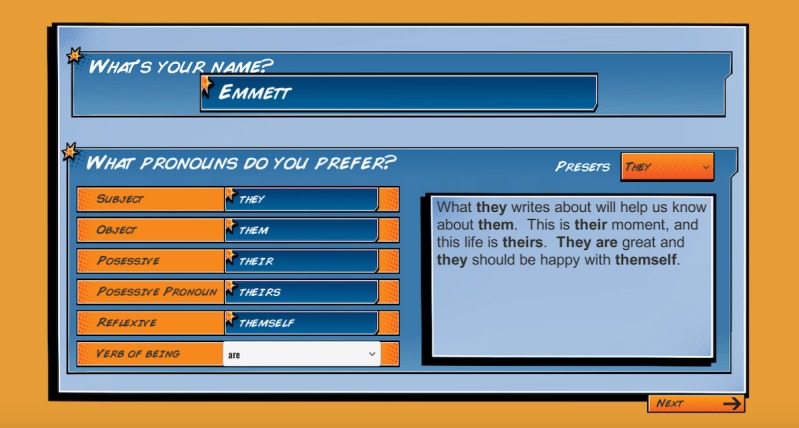
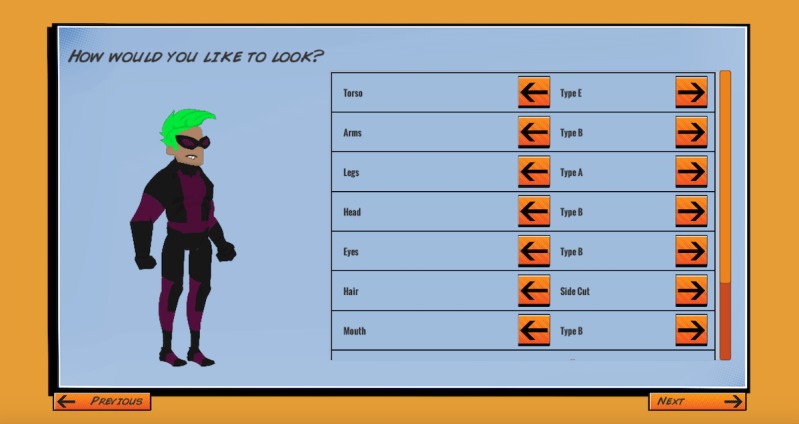
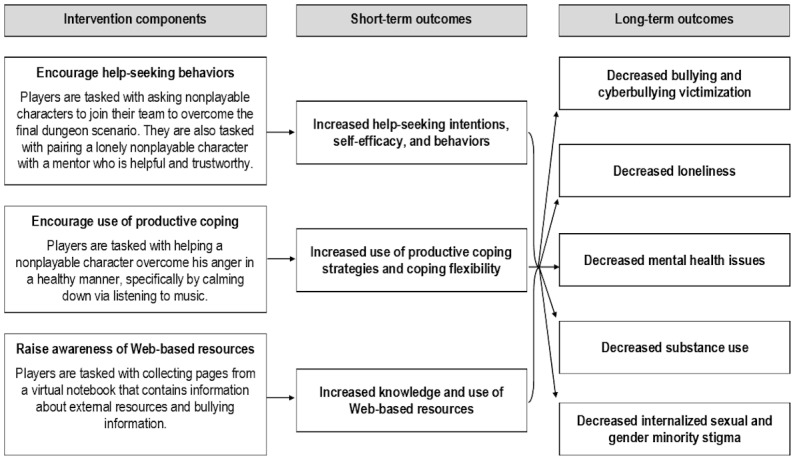
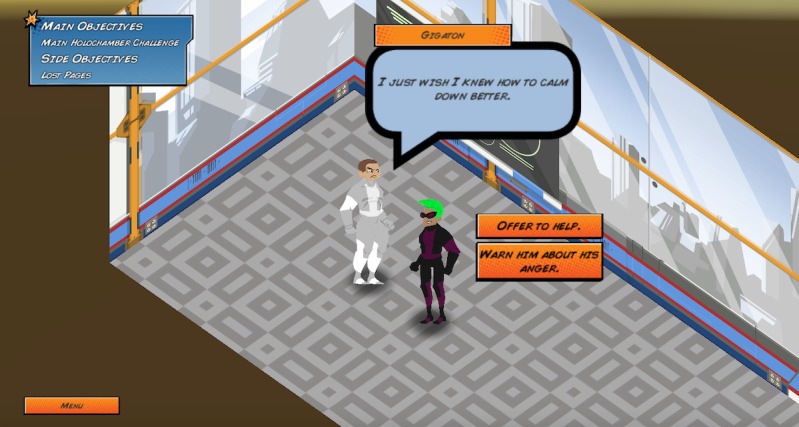
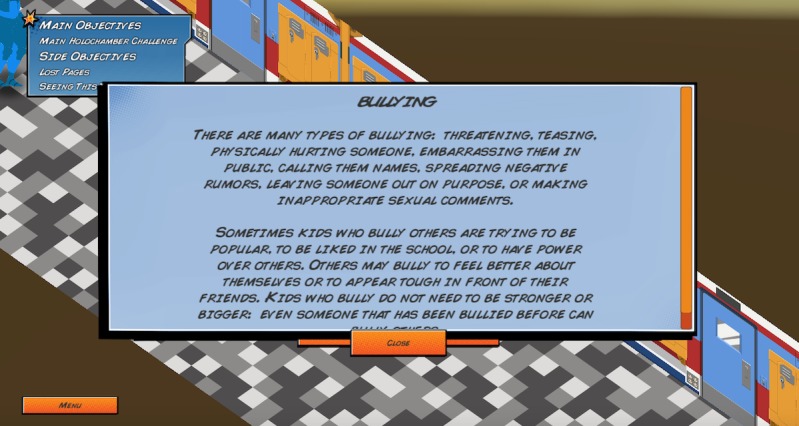
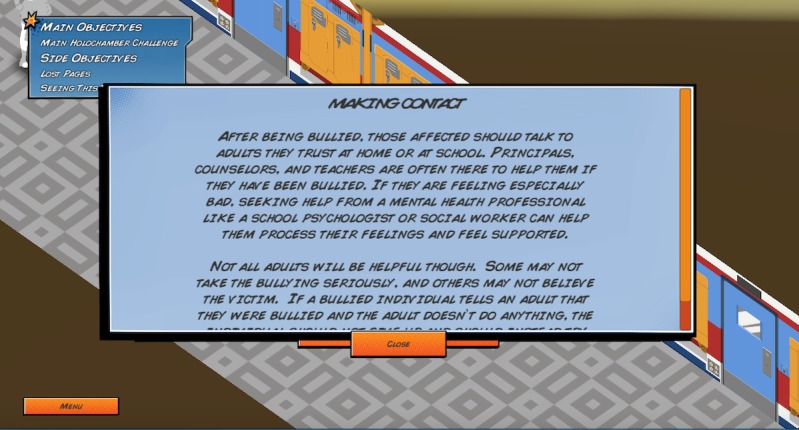
We enrolled 240 SGMY aged 14 to 18 years residing in the United States into a 2-arm prospective RCT. The intervention is a theory-based, community-informed, computer-based, role playing game with 3 primary components: encouraging help-seeking behaviors, encouraging use of productive coping, and raising awareness of Web-based resources. SGMY randomized to both the intervention and control conditions will receive a list of SGMY-inclusive resources, covering a variety of health-related topics. Control condition participants received only the list of resources. Notably, all study procedures are conducted via the internet. We conveniently sampled SGMY using Web-based advertisements. Study assessments occur at enrollment, 1 month after enrollment, and 2 months after enrollment. The primary outcomes of this feasibility study include implementation procedures, game demand, and game acceptability. Secondary outcomes include help-seeking intentions, self-efficacy, and behaviors; productive coping strategies and coping flexibility; and knowledge and use of Web-based resources. Tertiary outcomes include bullying and cyberbullying victimization, loneliness, mental health issues, substance use, and internalized sexual and gender minority stigma.
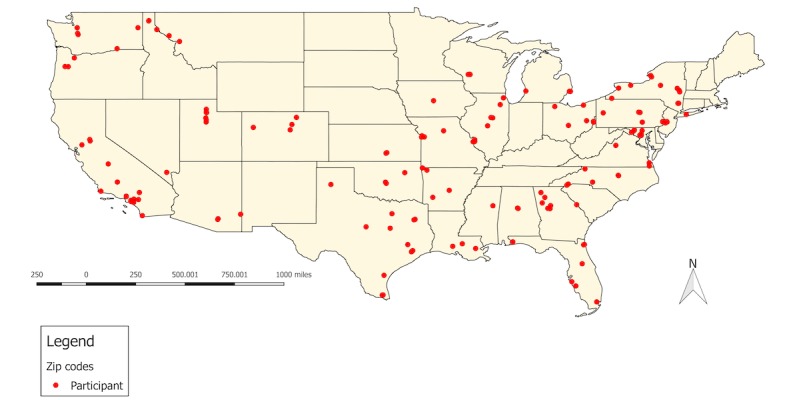
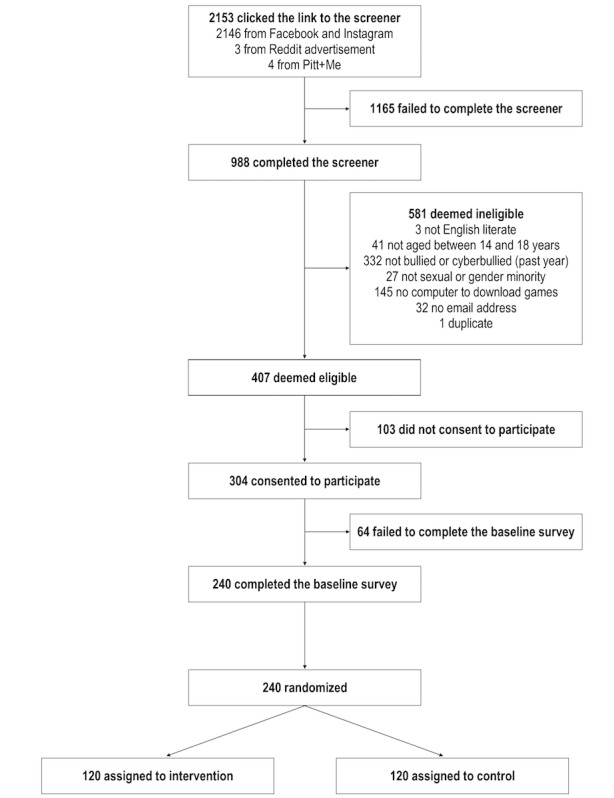
From April to July 2018, 240 participants were enrolled and randomized. Half of the enrolled participants (n=120) were randomized into the intervention condition and half (n=120) into the control condition. At baseline, 52.1% (125/240) of the participants identified as gay or lesbian, 26.7% (64/240) as bisexual, 24.2% (58/240) as queer, and 11.7% (28/240) as another nonheterosexual identity. Nearly half (113/240) of participants were a gender minority: 36.7% (88/240) were cisgender boys, and 16.3% (39/240) were cisgender girls. There were no differences in demographic characteristics between intervention and control condition participants.
Web-accessible game interventions overcome common impediments of face-to-face interventions and present a unique opportunity to reach SGMY and improve their health. This trial will provide data on feasibility and limited efficacy that can inform future Web-based studies and a larger RCT aimed at improving health equity for SGMY.
ClinicalTrials.gov NCT03501264; https://clinicaltrials.gov/ct2/show/NCT03501264 (Archived by WebCite at http://www.webcitation.org/72HpafarW).
INTERNATIONAL REGISTERED REPORT IDENTIFIER (IRRID): DERR1-10.2196/12164.
与顺性别(非跨性别)异性恋同龄人相比,性取向和性别少数群体青年(SGMY;例如,女同性恋、男同性恋、双性恋和跨性别青年)在物质使用和心理健康方面存在诸多差异。尽管大量研究表明这些差异是由欺凌和网络欺凌受害经历所驱动,但很少有干预措施旨在改善受欺凌的SGMY的健康状况。改善受欺凌的SGMY健康状况的一种可能方法是通过网络可访问的游戏干预。然而,很少有研究探讨对SGMY使用网络可访问游戏干预的可行性。
本研究旨在描述一项随机对照试验(RCT)试点的方案,测试基于游戏的干预措施在增加寻求帮助相关知识、意图、自我效能、行为、有效应对技能的使用和应对灵活性以及减少SGMY中的健康风险因素和行为方面的可行性和有限疗效。
我们招募了240名年龄在14至18岁、居住在美国的SGMY参与一项双臂前瞻性RCT。干预措施是一款基于理论、社区知情、基于计算机的角色扮演游戏,有3个主要组成部分:鼓励寻求帮助行为、鼓励使用有效应对方式以及提高对网络资源的认识。随机分配到干预组和对照组的SGMY都将收到一份包含各种健康相关主题的SGMY包容性资源列表。对照组参与者仅收到资源列表。值得注意的是,所有研究程序均通过互联网进行。我们通过网络广告方便地抽取SGMY样本。研究评估在入组时、入组后1个月和入组后2个月进行。这项可行性研究的主要结果包括实施程序、游戏需求和游戏可接受性。次要结果包括寻求帮助的意图、自我效能和行为;有效应对策略和应对灵活性;以及网络资源的知识和使用。三级结果包括欺凌和网络欺凌受害、孤独感、心理健康问题、物质使用以及内化的性取向和性别少数群体污名。
2018年4月至7月,招募了240名参与者并进行了随机分组。一半的入组参与者(n = 120)被随机分配到干预组,另一半(n = 120)被分配到对照组。在基线时,52.1%(125/240)的参与者认定为男同性恋或女同性恋,26.7%(64/240)为双性恋,24.2%(58/240)为酷儿,11.7%(28/240)为其他非异性恋身份。近一半(113/240)的参与者是性别少数群体:36.7%(88/240)是顺性别男孩,16.3%(39/240)是顺性别女孩。干预组和对照组参与者的人口统计学特征没有差异。
网络可访问游戏干预克服了面对面干预的常见障碍,为接触SGMY并改善他们的健康状况提供了独特机会。这项试验将提供关于可行性和有限疗效的数据,可为未来基于网络的研究以及旨在改善SGMY健康公平性的更大规模RCT提供参考。
ClinicalTrials.gov NCT03501264;https://clinicaltrials.gov/ct2/show/NCT03501264(由WebCite存档于http://www.webcitation.org/72HpafarW)。
国际注册报告识别号(IRRID):DERR1-10.2196/12164。