Coulter Robert W S, Mitchell Shannon, Prangley Kelly, Smallwood Seth, Bonanno Leyna, Foster Elizabeth N, Wilson Abby, Miller Elizabeth, Chugani Carla D
Department of Behavioral and Community Health Sciences, Graduate School of Public Health, University of Pittsburgh, Pittsburgh, PA, United States.
Department of Pediatrics, University of Pittsburgh School of Medicine, Pittsburgh, PA, United States.
JMIR Res Protoc. 2021 Apr 12;10(4):e26554. doi: 10.2196/26554.
Sexual and gender minority youth (SGMY; eg, lesbian, gay, bisexual, and transgender youth) are at greater risk than their cisgender heterosexual peers for adolescent relationship abuse (ARA; physical, sexual, or psychological abuse in a romantic relationship). However, there is a dearth of efficacious interventions for reducing ARA among SGMY. To address this intervention gap, we designed a novel web-based methodology leveraging the field of human-centered design to generate multiple ARA intervention concepts with SGMY.
This paper aims to describe study procedures for a pilot study to rigorously test the feasibility, acceptability, and appropriateness of using web-based human-centered design methods with SGMY to create novel, stakeholder-driven ARA intervention concepts.
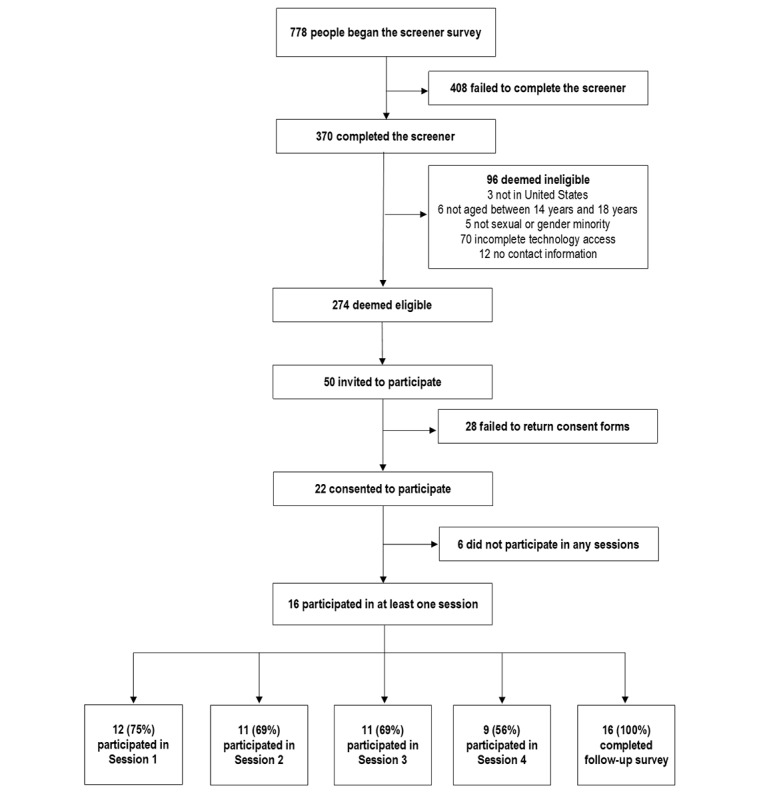
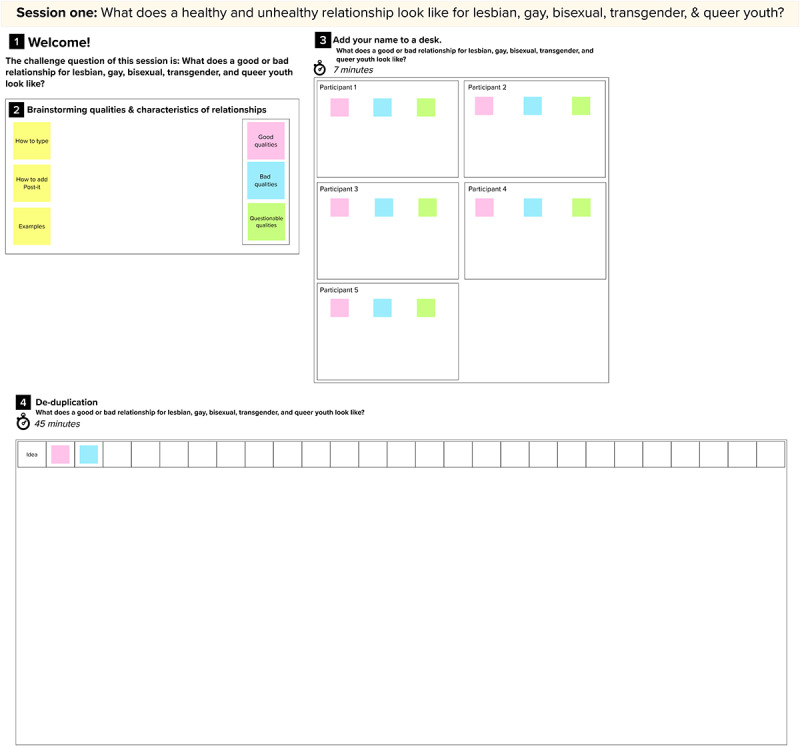
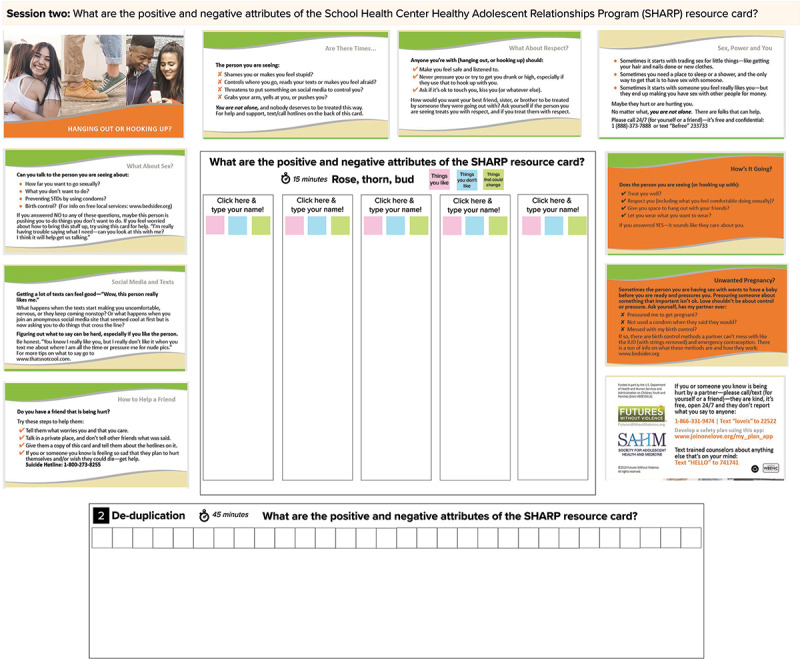
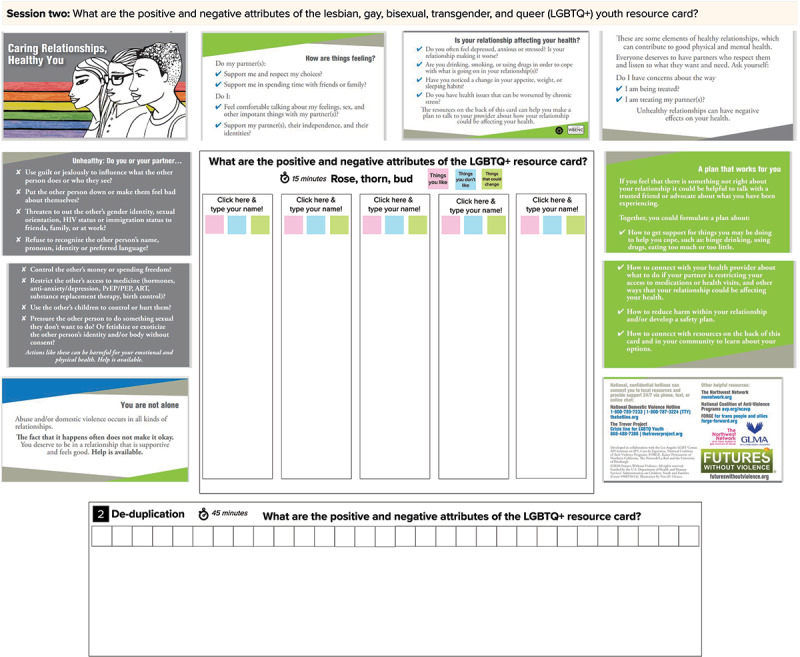
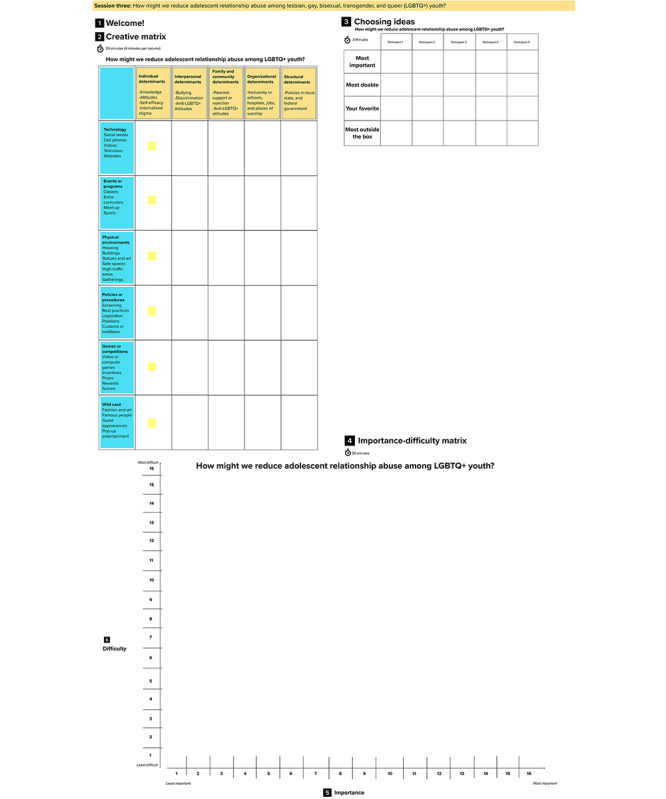
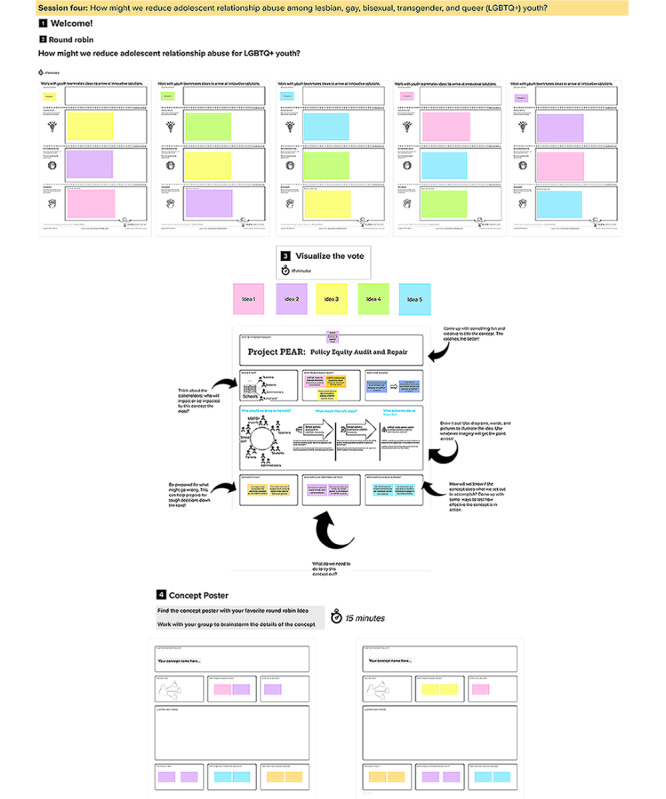
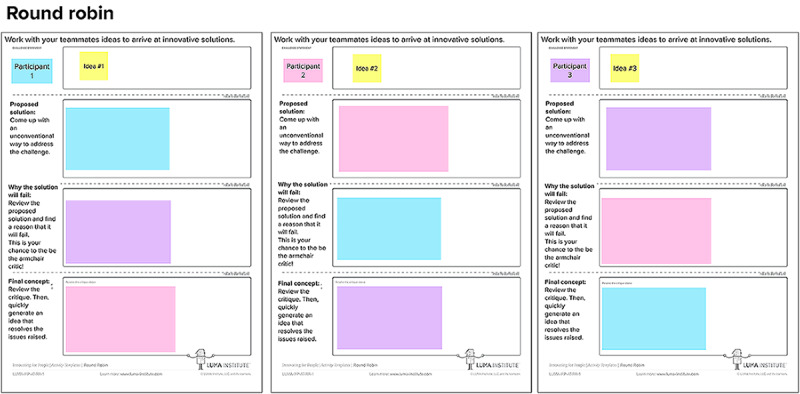
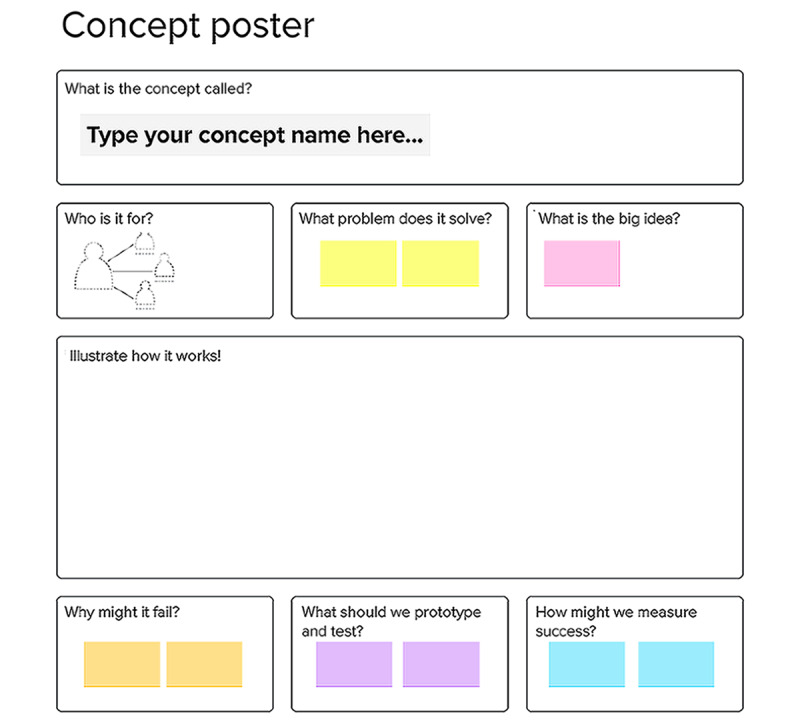
We are conducting a longitudinal, web-based human-centered design study with 45-60 SGMY (aged between 14 and 18 years) recruited via social media from across the United States. Using MURAL (a collaborative, visual web-based workspace) and Zoom (a videoconferencing platform), the SGMY will participate in four group-based sessions (1.5 hours each). In session 1, the SGMY will use rose-thorn-bud to individually document their ideas about healthy and unhealthy relationship characteristics and then use affinity clustering as a group to categorize their self-reported ideas based on similarities and differences. In session 2, the SGMY will use rose-thorn-bud to individually critique a universal evidence-based intervention to reduce ARA and affinity clustering to aggregate their ideas as a group. In session 3, the SGMY will use a creative matrix to generate intervention ideas for reducing ARA among them and force-rank the intervention ideas based on their potential ease of implementation and potential impact using an importance-difficulty matrix. In session 4, the SGMY will generate and refine intervention concepts (from session 3 ideations) to reduce ARA using round robin (for rapid iteration) and concept poster (for fleshing out ideas more fully). We will use content analyses to document the intervention concepts. In a follow-up survey, the SGMY will complete validated measures about the feasibility, acceptability, and appropriateness of the web-based human-centered design methods (a priori benchmarks for success: means >3.75 on each 5-point scale).
This study was funded in February 2020. Data collection began in August 2020 and will be completed by April 2021.
Through rigorous testing of the feasibility of our web-based human-centered design methodology, our study may help demonstrate the use of human-centered design methods to engage harder-to-reach stakeholders and actively involve them in the co-creation of relevant interventions. Successful completion of this project also has the potential to catalyze intervention research to address ARA inequities for SGMY. Finally, our approach may be transferable to other populations and health topics, thereby advancing prevention science and health equity.
INTERNATIONAL REGISTERED REPORT IDENTIFIER (IRRID): DERR1-10.2196/26554.
性取向和性别少数青年(SGMY,例如女同性恋、男同性恋、双性恋和跨性别青年)比其顺性别异性恋同龄人遭受青少年恋爱暴力(ARA,浪漫关系中的身体、性或心理暴力)的风险更高。然而,针对减少SGMY群体中ARA的有效干预措施却很匮乏。为了填补这一干预空白,我们设计了一种新颖的基于网络的方法,利用以人为本的设计领域,与SGMY共同生成多个ARA干预概念。
本文旨在描述一项试点研究的程序,以严格测试使用基于网络的以人为本的设计方法与SGMY共同创建新颖的、由利益相关者驱动的ARA干预概念的可行性、可接受性和适用性。
我们正在开展一项基于网络的纵向以人为本的设计研究,通过社交媒体从美国各地招募45至60名SGMY(年龄在14至18岁之间)。使用MURAL(一个基于网络的协作式可视化工作区)和Zoom(一个视频会议平台),SGMY将参加四个小组会议(每次1.5小时)。在会议1中,SGMY将使用“玫瑰-荆棘-花蕾”工具分别记录他们关于健康和不健康恋爱关系特征的想法,然后作为一个小组使用亲和聚类法根据异同对他们自我报告的想法进行分类。在会议2中,SGMY将使用“玫瑰-荆棘-花蕾”工具分别对一项通用的基于证据的减少ARA的干预措施进行评判,并使用亲和聚类法将他们的想法汇总成一个小组。在会议3中,SGMY将使用创意矩阵生成减少他们之间ARA的干预想法,并使用重要性-难度矩阵根据潜在的实施难易程度和潜在影响对干预想法进行强制排序。在会议4中,SGMY将使用循环法(用于快速迭代)和概念海报(用于更全面地阐述想法)生成并完善干预概念(来自会议3的构思)以减少ARA。我们将使用内容分析法记录干预概念。在后续调查中,SGMY将完成关于基于网络的以人为本的设计方法的可行性、可接受性和适用性的有效测量(成功的先验基准:在每个5分制量表上的平均分>3.75)。
本研究于2020年2月获得资助。数据收集于2020年8月开始,并将于2021年4月完成。
通过对我们基于网络的以人为本的设计方法的可行性进行严格测试,我们的研究可能有助于证明使用以人为本的设计方法来接触难以触及的利益相关者,并积极让他们参与相关干预措施的共同创建。该项目的成功完成还有可能促进干预研究,以解决SGMY群体中ARA的不平等问题。最后,我们的方法可能适用于其他人群和健康主题,从而推动预防科学和健康公平。
国际注册报告识别码(IRRID):DERR1-10.2196/26554。