Department of Entomology, Purdue University.
Department of Biology, York University, Toronto, Ontario, Canada.
Genome Biol Evol. 2019 Mar 1;11(3):937-948. doi: 10.1093/gbe/evz018.
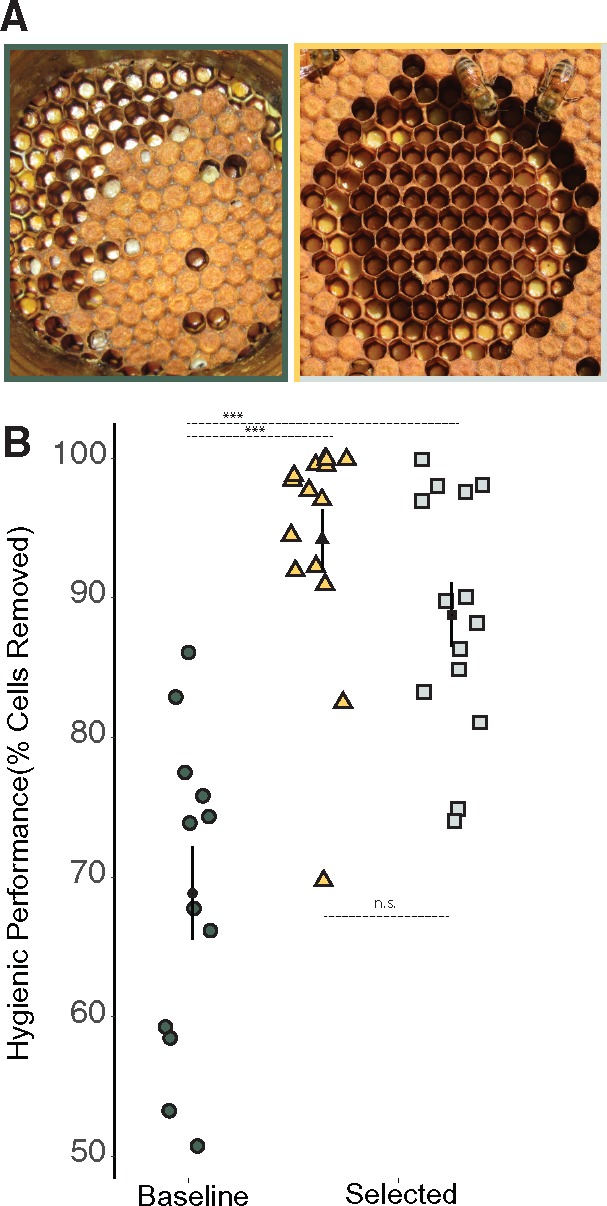
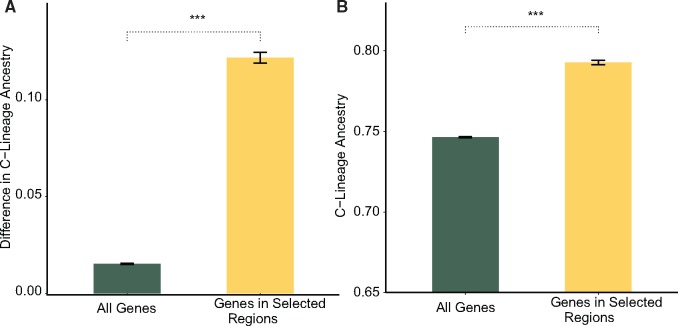
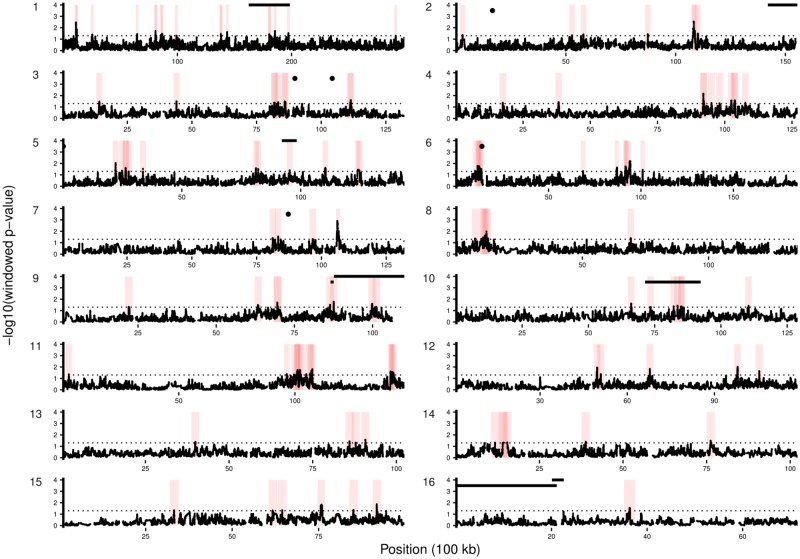
Social organisms combat pathogens through individual innate immune responses or through social immunity-behaviors among individuals that limit pathogen transmission within groups. Although we have a relatively detailed understanding of the genetics and evolution of the innate immune system of animals, we know little about social immunity. Addressing this knowledge gap is crucial for understanding how life-history traits influence immunity, and identifying if trade-offs exist between innate and social immunity. Hygienic behavior in the Western honey bee, Apis mellifera, provides an excellent model for investigating the genetics and evolution of social immunity in animals. This heritable, colony-level behavior is performed by nurse bees when they detect and remove infected or dead brood from the colony. We sequenced 125 haploid genomes from two artificially selected highly hygienic populations and a baseline unselected population. Genomic contrasts allowed us to identify a minimum of 73 genes tentatively associated with hygienic behavior. Many genes were within previously discovered QTLs associated with hygienic behavior and were predictive of hygienic behavior within the unselected population. These genes were often involved in neuronal development and sensory perception in solitary insects. We found that genes associated with hygienic behavior have evidence of positive selection within honey bees (Apis), supporting the hypothesis that social immunity contributes to fitness. Our results indicate that genes influencing developmental neurobiology and behavior in solitary insects may have been co-opted to give rise to a novel and adaptive social immune phenotype in honey bees.
社会生物通过个体先天免疫反应或个体之间的社会免疫行为来对抗病原体,这些行为限制了群体内部病原体的传播。尽管我们对动物先天免疫系统的遗传学和进化有相对详细的了解,但我们对社会免疫知之甚少。解决这一知识差距对于理解生活史特征如何影响免疫以及确定先天免疫和社会免疫之间是否存在权衡至关重要。西方蜜蜂(Apis mellifera)的卫生行为为研究动物社会免疫的遗传学和进化提供了一个极好的模型。这种可遗传的、群体水平的行为是由护理蜂在发现并从群体中清除感染或死亡的幼虫时执行的。我们对两个经过人工选择的高度卫生种群和一个未经过选择的基线种群的 125 个单倍体基因组进行了测序。基因组对比使我们能够确定至少 73 个与卫生行为有关的基因。许多基因都在与卫生行为相关的先前发现的 QTL 内,并且可以预测未选择种群中的卫生行为。这些基因通常参与独居昆虫的神经元发育和感觉感知。我们发现,与卫生行为相关的基因在蜜蜂(Apis)中存在正选择的证据,支持了社会免疫有助于适应度的假设。我们的研究结果表明,影响独居昆虫发育神经生物学和行为的基因可能已经被共同选择,从而在蜜蜂中产生了一种新的适应性社会免疫表型。