Ali Naser, Teixeira Joao A, Addali Abdulmajid, Saeed Maryam, Al-Zubi Feras, Sedaghat Ahmad, Bahzad Husain
Cranfield University, School of Aerospace, Transport and Manufacturing (SATM), MK430AL Cranfield, England, UK.
Nanotechnology and Advanced Materials Program, Energy and Building Research Center, Kuwait Institute for Scientific Research, Safat 13109, Kuwait.
Materials (Basel). 2019 Feb 14;12(4):571. doi: 10.3390/ma12040571.
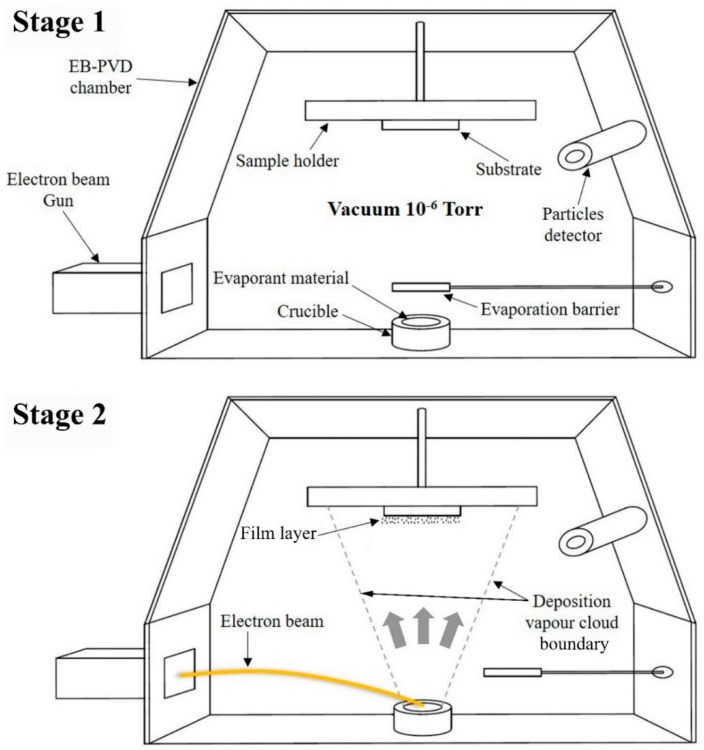
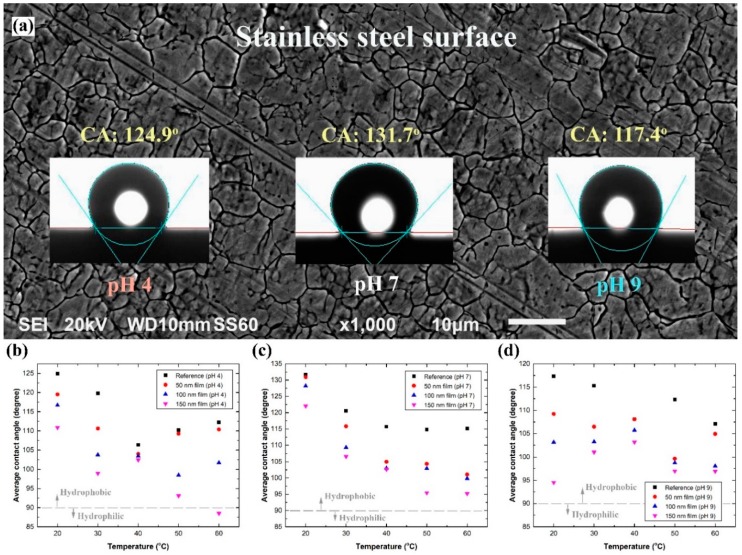
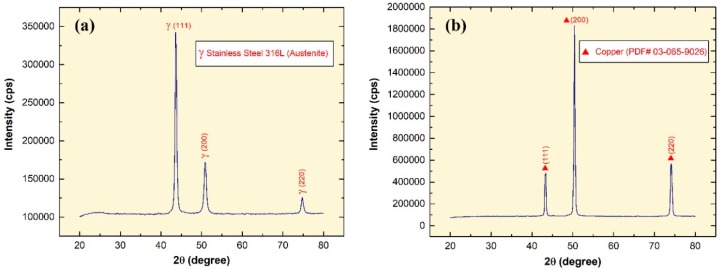
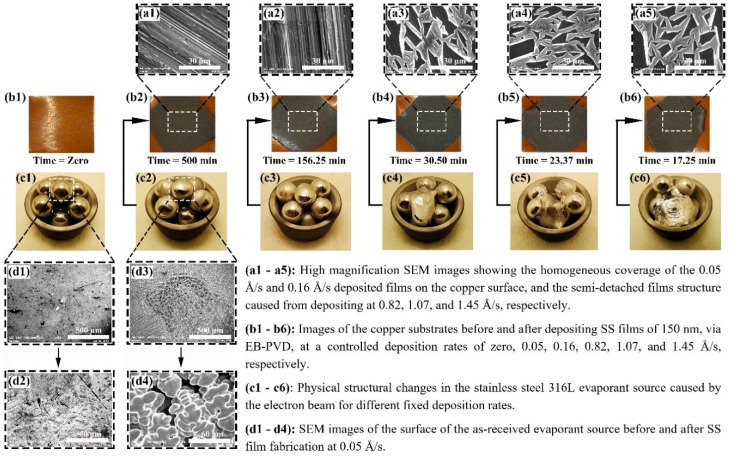
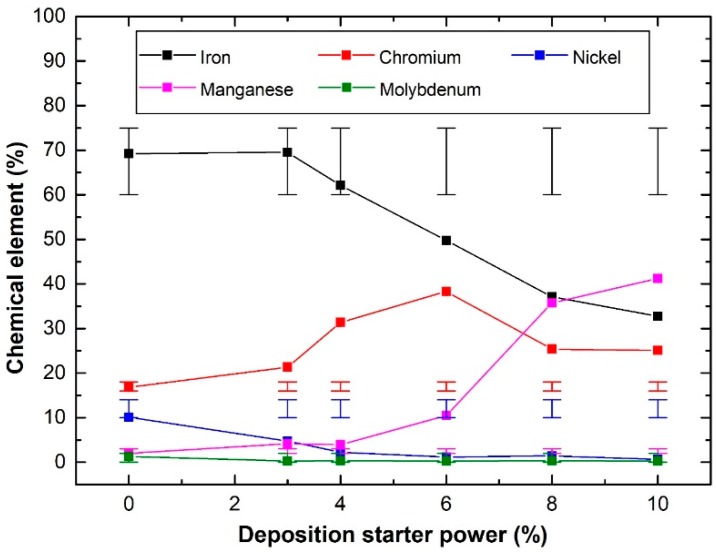
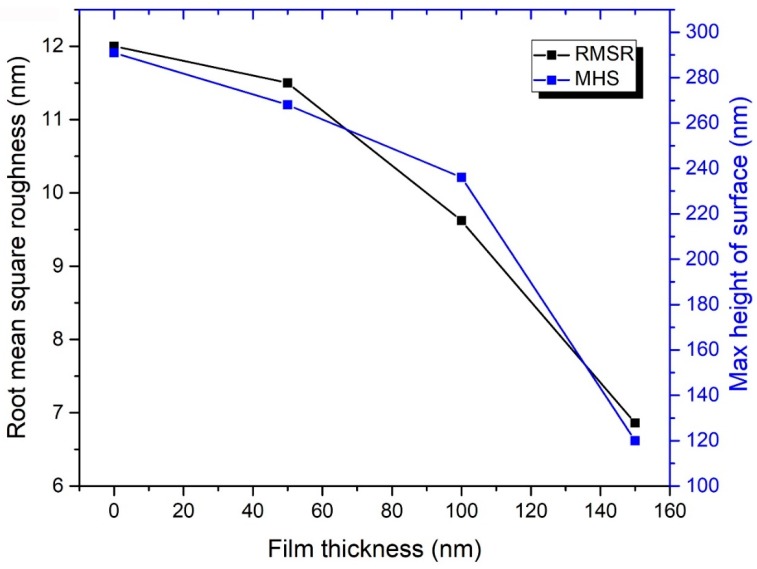
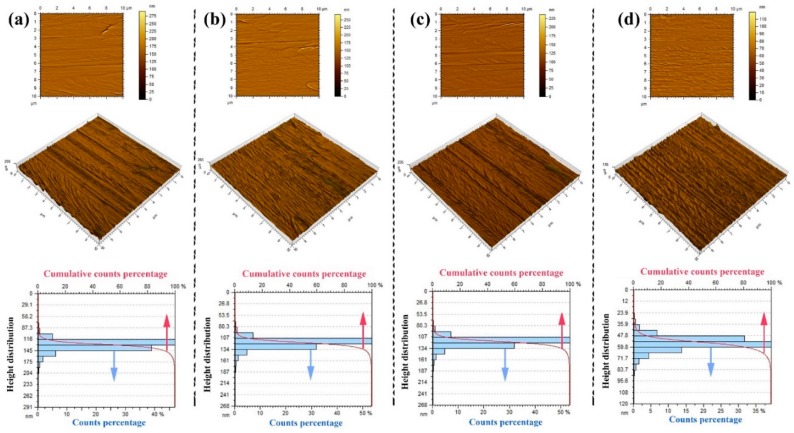
This study demonstrates an electron beam physical vapour deposition approach as an alternative stainless steel thin films fabrication method with controlled layer thickness and uniform particles distribution capability. The films were fabricated at a range of starting electron beam power percentages of 3⁻10%, and thickness of 50⁻150 nm. Surface topography and wettability analysis of the samples were investigated to observe the changes in surface microstructure and the contact angle behaviour of 20 °C to 60 °C deionised waters, of pH 4, pH 7, and pH 9, with the as-prepared surfaces. The results indicated that films fabricated at low controlled deposition rates provided uniform particles distribution and had the closest elemental percentages to stainless steel 316L and that increasing the deposition thickness caused the surface roughness to reduce by 38%. Surface wettability behaviour, in general, showed that the surface hydrophobic nature tends to weaken with the increase in temperature of the three examined fluids.
本研究展示了一种电子束物理气相沉积方法,作为一种替代的不锈钢薄膜制造方法,该方法能够控制层厚并使颗粒分布均匀。这些薄膜是在3%-10%的起始电子束功率百分比范围内制备的,厚度为50-150纳米。对样品进行了表面形貌和润湿性分析,以观察表面微观结构的变化以及20°C至60°C的pH值为4、pH值为7和pH值为9的去离子水与制备好的表面之间的接触角行为。结果表明,在低控制沉积速率下制备的薄膜具有均匀的颗粒分布,并且其元素百分比与不锈钢316L最接近,增加沉积厚度会使表面粗糙度降低38%。总体而言,表面润湿性行为表明,在所研究的三种流体中,随着温度升高,表面疏水性趋于减弱。