Killaars Anouk R, Grim Joseph C, Walker Cierra J, Hushka Ella A, Brown Tobin E, Anseth Kristi S
Program of Materials Science and Engineering and BioFrontiers Institute University of Colorado Boulder Jennie Smoly Caruthers Biotechnology Building, 3415 Colorado Ave Boulder CO 80303 USA.
Department of Chemical and Biological Engineering and BioFrontiers Institute University of Colorado Boulder Jennie Smoly Caruthers Biotechnology Building, 3415 Colorado Ave Boulder CO 80303 USA.
Adv Sci (Weinh). 2018 Dec 10;6(3):1801483. doi: 10.1002/advs.201801483. eCollection 2019 Feb 6.
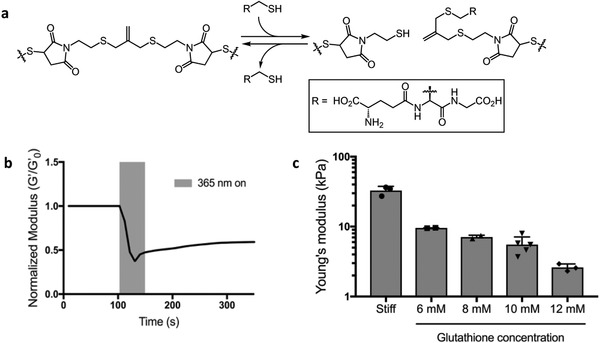
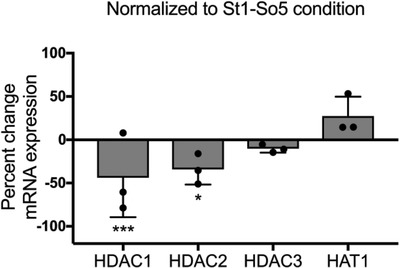
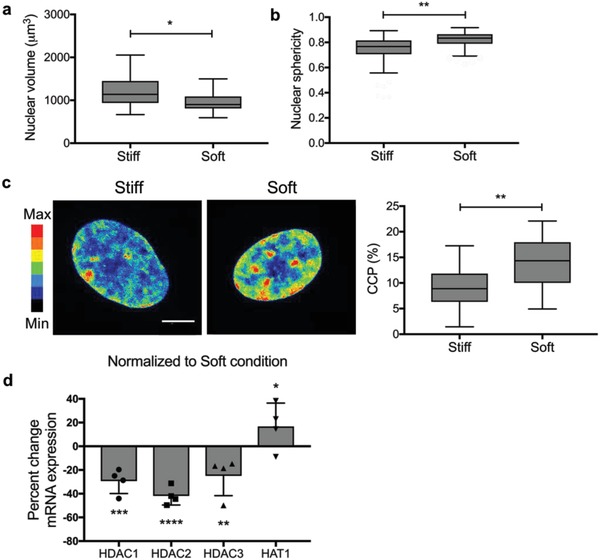
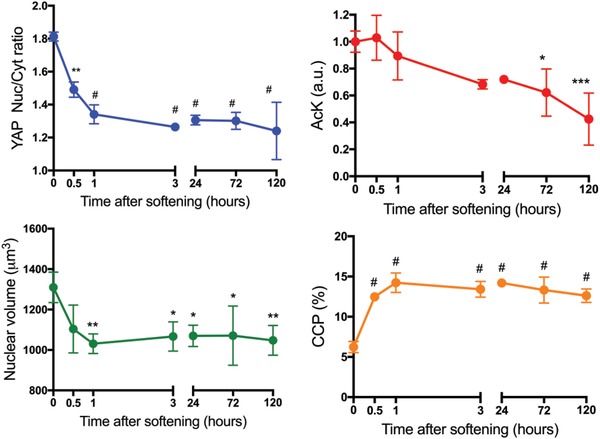
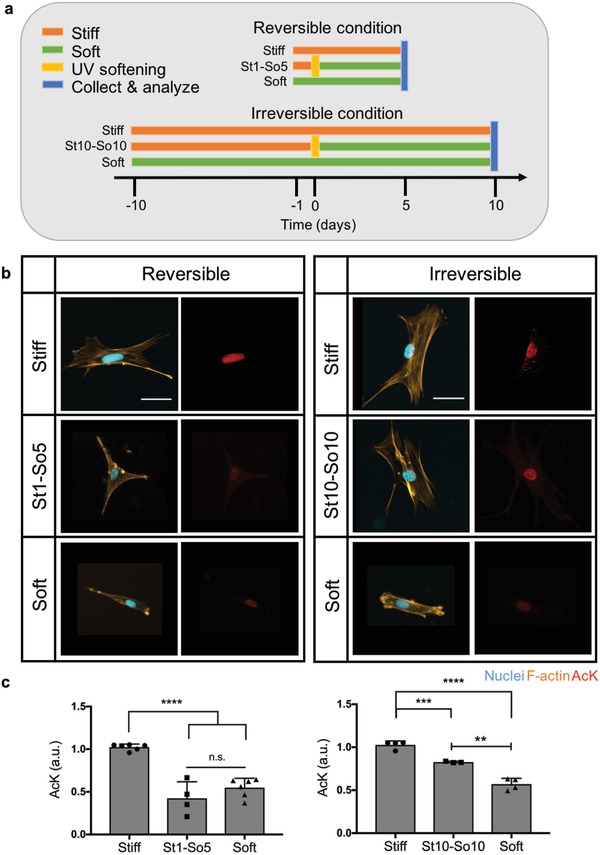
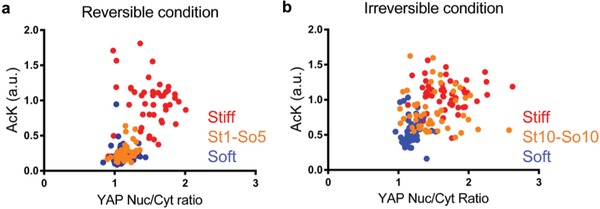
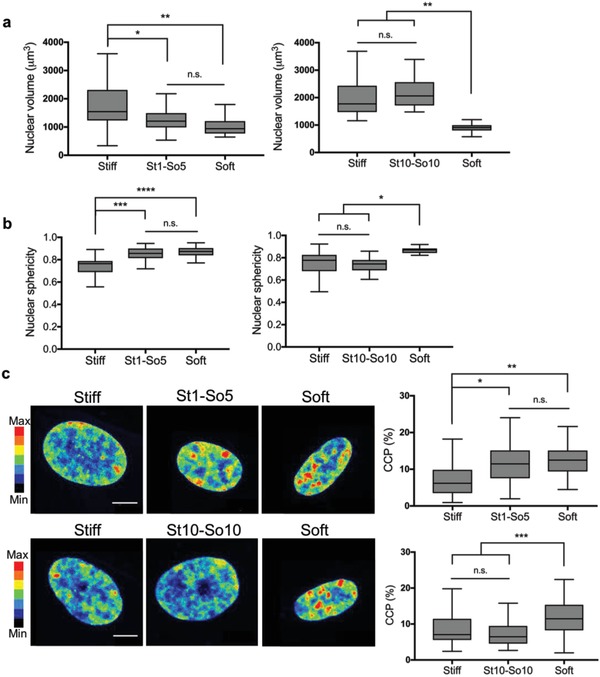
Bone marrow derived human mesenchymal stem cells (hMSCs) are a promising cell source for regenerative therapies; however, ex vivo expansion is often required to achieve clinically useful cells numbers. Recent results reveal that when MSCs are cultured in stiff microenvironments, their regenerative capacity can be altered in a manner that is dependent on time (e.g., a mechanical dosing analogous to a chemical one). It is hypothesized that epigenomic modifications are involved in storing these mechanical cues, regulating gene expression, and ultimately leading to a mechanical memory. Using hydrogels containing an allyl sulfide cross-linker and a radical-mediated addition-fragmentation chain transfer process, in situ softened hMSC-laden hydrogels at different time points are achieved and the effects of short-term and long-term mechanical dosing on epigenetic modifications in hMSCs are quantified. Results show that histone acetylation and chromatin organization adapt rapidly after softening and can be reversible or irreversible depending on time of exposure to stiff microenvironments. Furthermore, epigenetic modulators are differentially expressed depending on the culture history. Collectively, these experiments suggest that epigenetic remodeling can be persistent and might be a memory keeper.
骨髓来源的人间充质干细胞(hMSCs)是再生治疗中一种很有前景的细胞来源;然而,通常需要进行体外扩增以获得临床上可用的细胞数量。最近的研究结果表明,当间充质干细胞在坚硬的微环境中培养时,其再生能力会以一种依赖于时间的方式发生改变(例如,类似于化学剂量的机械剂量)。据推测,表观基因组修饰参与存储这些机械信号、调节基因表达,并最终导致机械记忆。通过使用含有烯丙基硫醚交联剂和自由基介导的加成-断裂链转移过程的水凝胶,在不同时间点实现了原位软化的负载hMSCs的水凝胶,并对短期和长期机械剂量对hMSCs表观遗传修饰的影响进行了量化。结果表明,组蛋白乙酰化和染色质组织在软化后迅速适应,并且根据暴露于坚硬微环境的时间,可能是可逆的或不可逆的。此外,表观遗传调节剂根据培养历史而有差异地表达。总体而言,这些实验表明表观遗传重塑可能是持久的,并且可能是记忆的保持者。