Jiang Tongmeng, Xu Guojie, Wang Qiuyan, Yang Lihui, Zheng Li, Zhao Jinmin, Zhang Xingdong
Guangxi Engineering Center in Biomedical Materials for Tissue and Organ Regeneration, The First Affiliated Hospital of Guangxi Medical University, Nanning 530021, China.
Department of Orthopaedics Trauma and Hand Surgery, The First Affiliated Hospital of Guangxi Medical University, Nanning 530021, China.
Cell Death Dis. 2017 Jun 1;8(6):e2851. doi: 10.1038/cddis.2017.215.
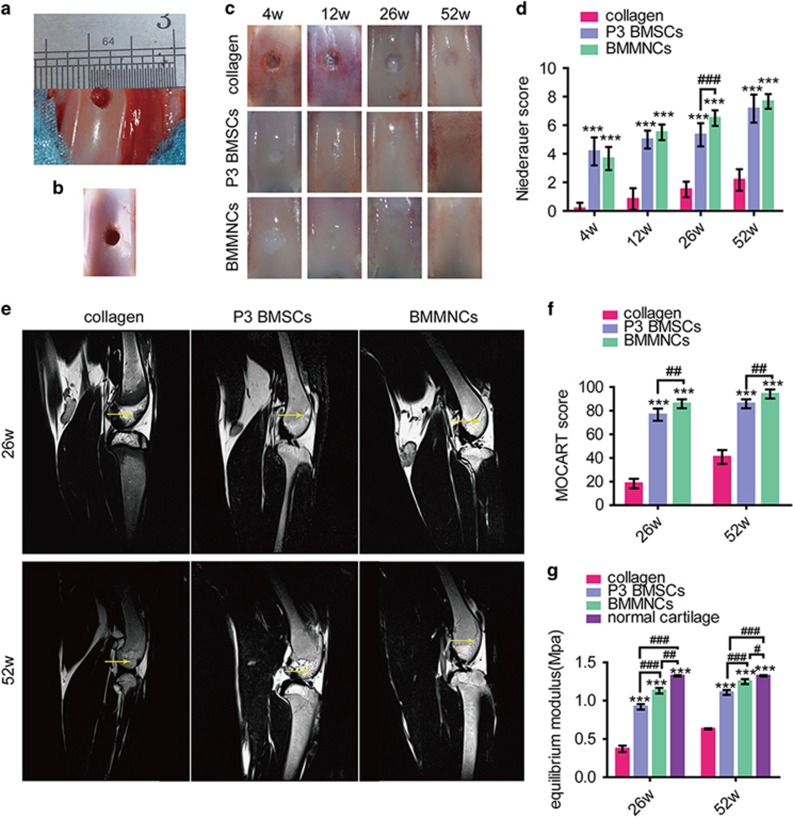
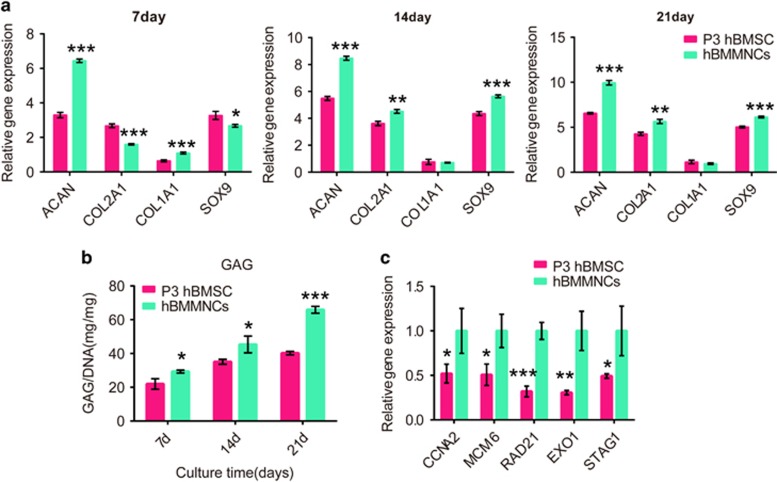
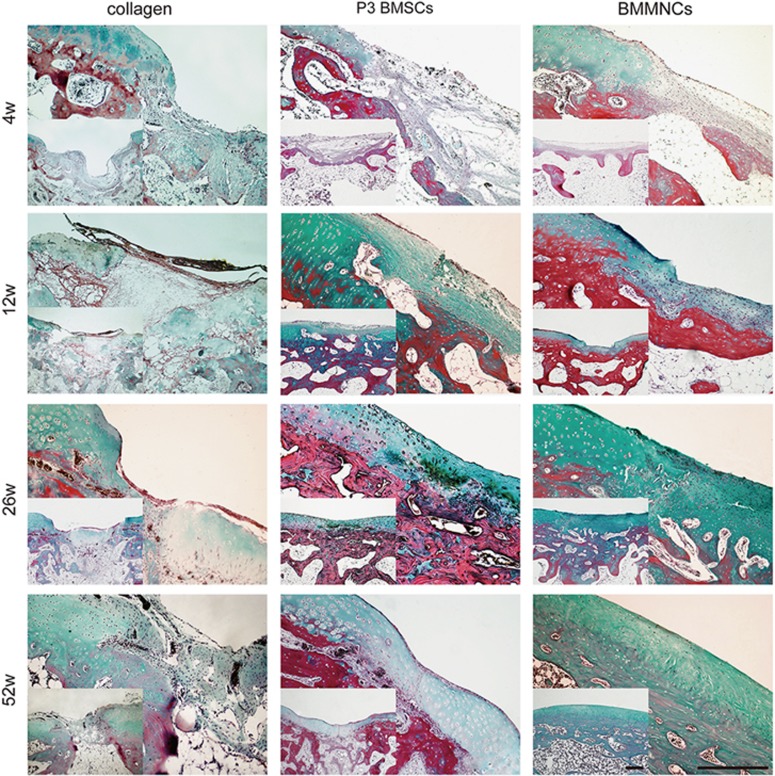
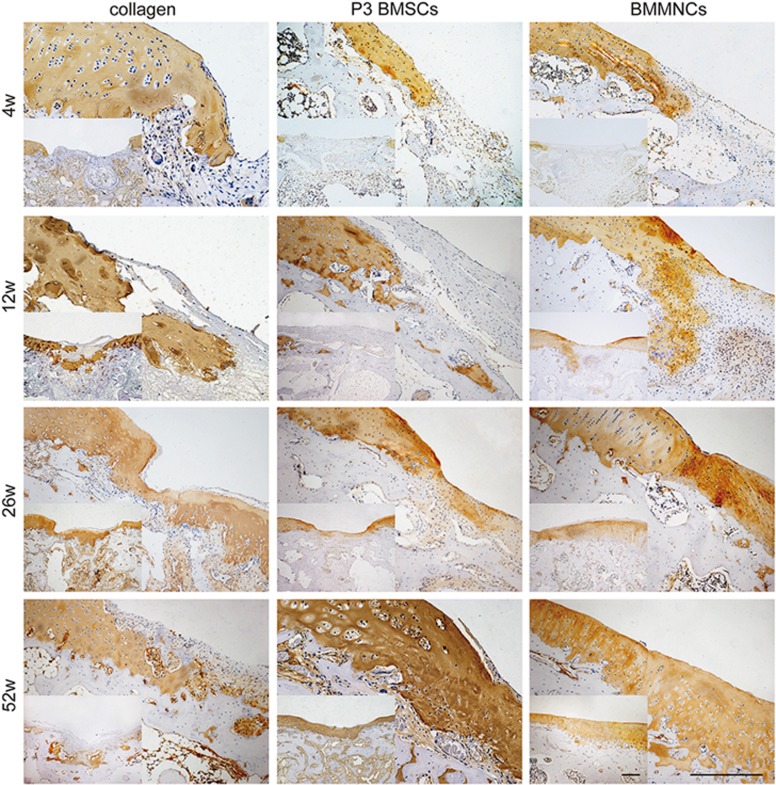
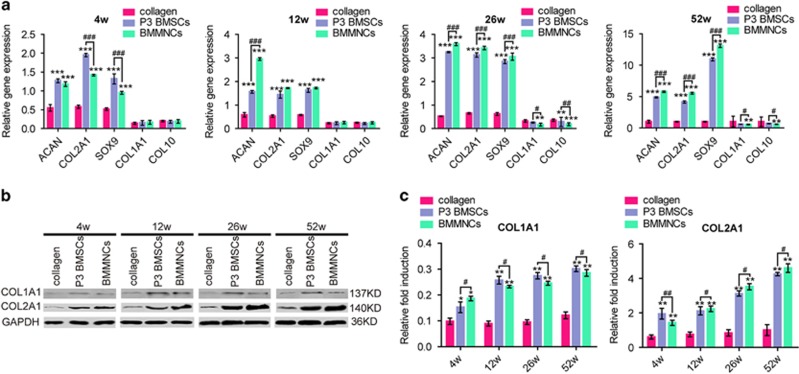
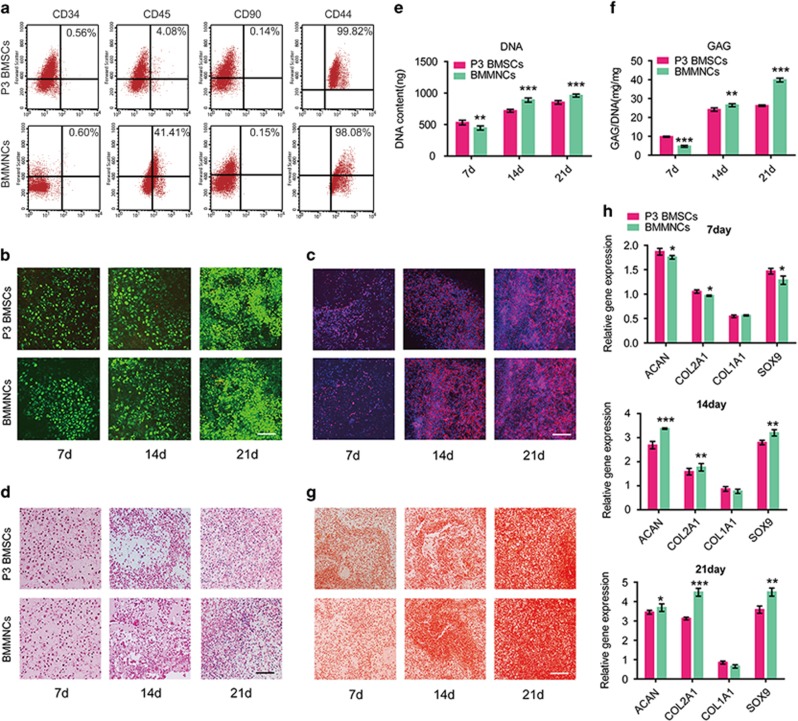
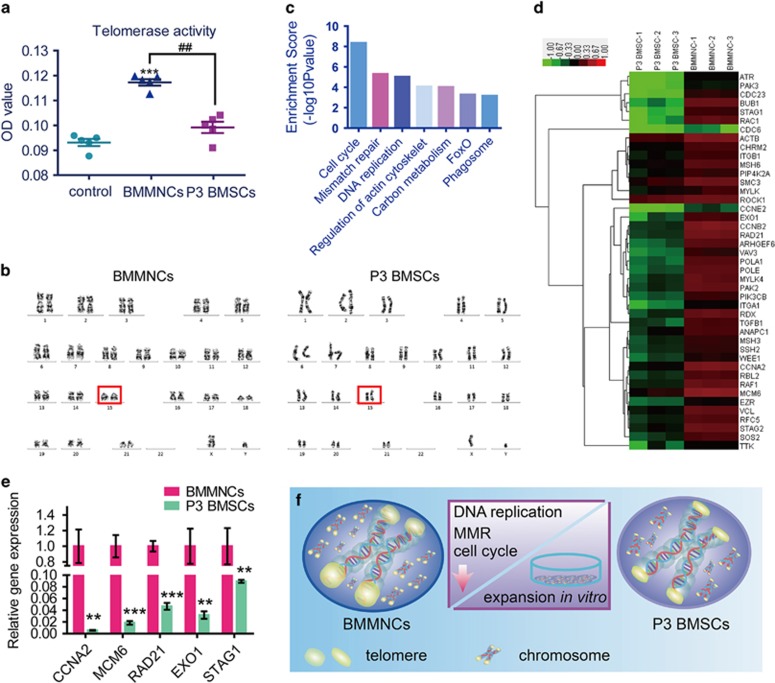
In vitro cultured autologous mesenchymal stem cells (MSCs) within passage 5 have been approved for clinical application in stem cell-based treatment of cartilage defects. However, their chondrogenic potential has not yet been questioned or verified. In this study, the chondrogenic potential of bone marrow MSCs at passage 3 (P3 BMSCs) was investigated both in cartilage repair and in vitro, with freshly isolated bone marrow mononuclear cells (BMMNCs) as controls. The results showed that P3 BMSCs were inferior to BMMNCs not only in their chondrogenic differentiation ability but also as candidates for long-term repair of cartilage defects. Compared with BMMNCs, P3 BMSCs presented a decay in telomerase activity and a change in chromosomal morphology with potential anomalous karyotypes, indicating senescence. In addition, interindividual variability in P3 BMSCs is much higher than in BMMNCs, demonstrating genomic instability. Interestingly, remarkable downregulation in cell cycle, DNA replication and mismatch repair (MMR) pathways as well as in multiple genes associated with telomerase activity and chromosomal stability were found in P3 BMSCs. This result indicates that telomerase and chromosome anomalies might originate from expansion, leading to impaired stemness and pluripotency of stem cells. In vitro culture and expansion are not recommended for cell-based therapy, and fresh BMMNCs are the first choice.
体外培养的第5代以内的自体间充质干细胞(MSCs)已被批准用于基于干细胞的软骨缺损治疗的临床应用。然而,它们的软骨生成潜力尚未受到质疑或验证。在本研究中,以新鲜分离的骨髓单个核细胞(BMMNCs)作为对照,对第3代骨髓间充质干细胞(P3 BMSCs)在软骨修复和体外的软骨生成潜力进行了研究。结果表明,P3 BMSCs不仅在软骨分化能力方面不如BMMNCs,而且作为软骨缺损长期修复的候选细胞也不如BMMNCs。与BMMNCs相比,P3 BMSCs的端粒酶活性下降,染色体形态发生变化,具有潜在的异常核型,表明细胞衰老。此外,P3 BMSCs的个体间变异性远高于BMMNCs,表明基因组不稳定。有趣的是,在P3 BMSCs中发现细胞周期、DNA复制和错配修复(MMR)途径以及与端粒酶活性和染色体稳定性相关的多个基因显著下调。这一结果表明,端粒酶和染色体异常可能源于细胞扩增,导致干细胞的干性和多能性受损。不建议将体外培养和扩增用于细胞治疗,新鲜的BMMNCs是首选。