Perco Paul, Pena Michelle, Heerspink Hiddo J L, Mayer Gert
Department of Internal Medicine IV (Nephrology and Hypertension), Medical University Innsbruck, Innsbruck, Austria.
Department of Clinical Pharmacy and Pharmacology, University of Groningen, University Medical Center Groningen, Groningen, the Netherlands.
Kidney Int Rep. 2018 Dec 18;4(2):212-221. doi: 10.1016/j.ekir.2018.12.001. eCollection 2019 Feb.
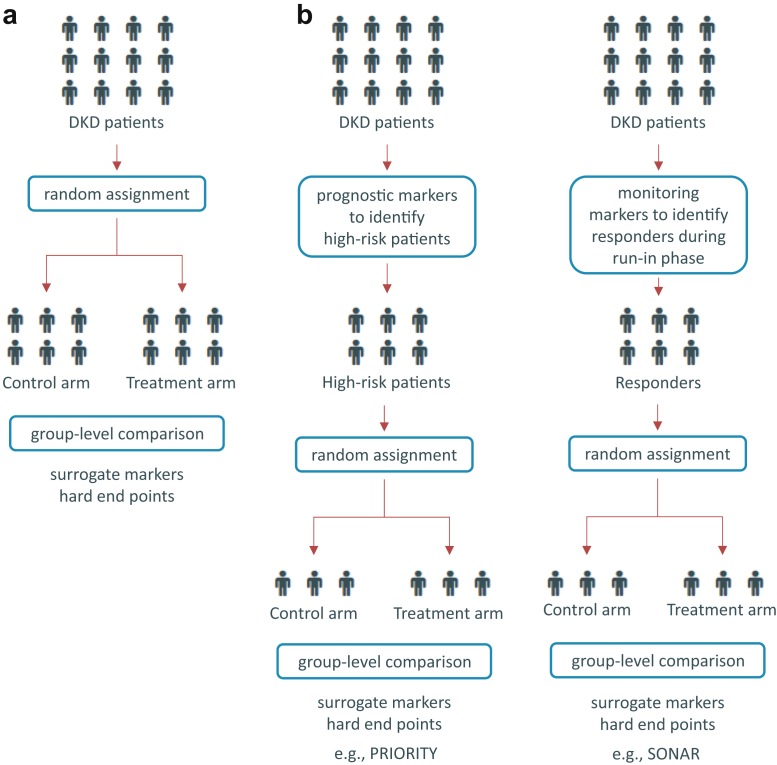
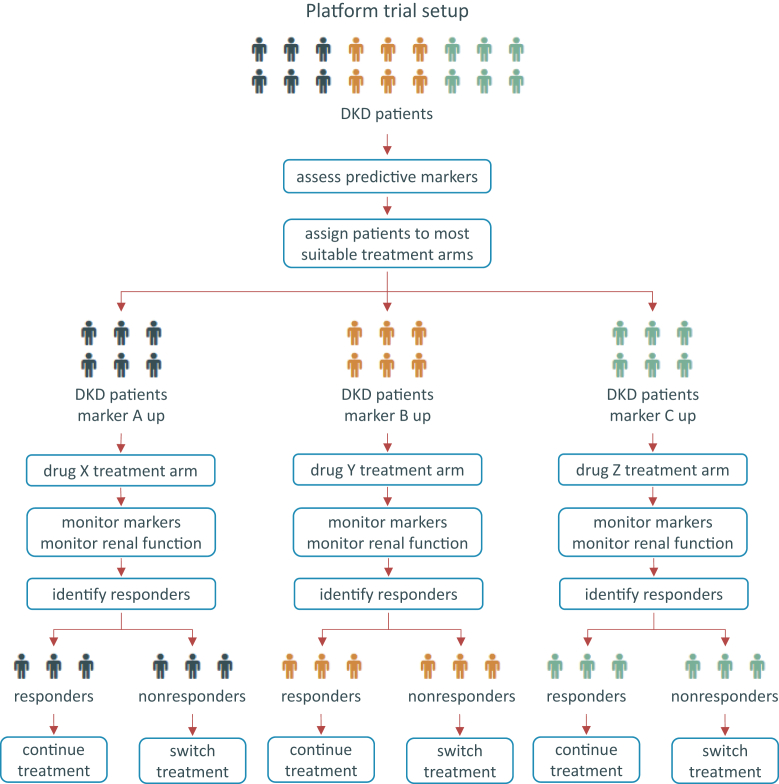
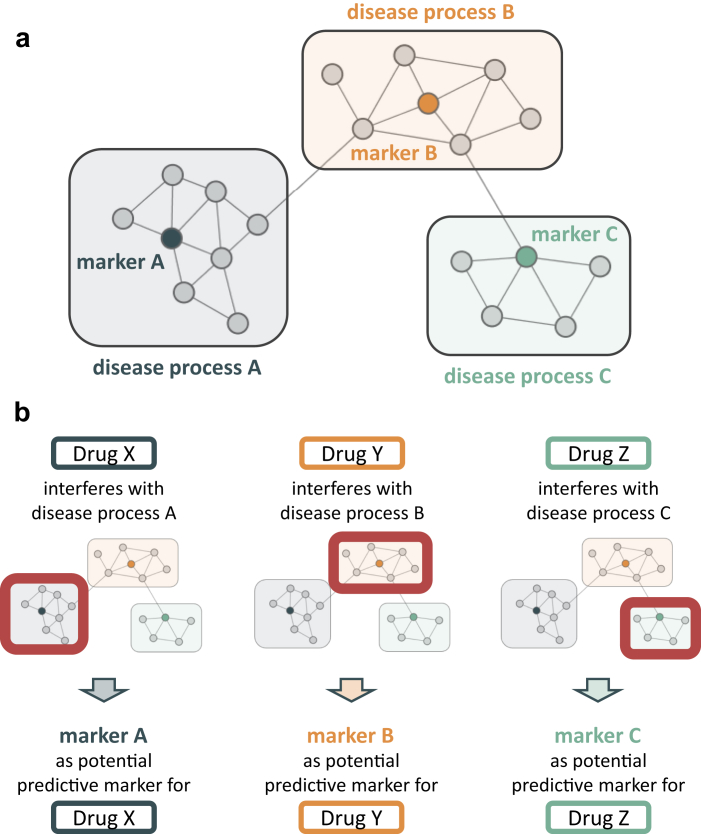
Diabetic kidney disease (DKD) is a complex and multifactorial disorder associated with deregulations in a large number of different biological pathways on the molecular level. Using the 2 established biomarkers, estimated glomerular filtration rate (eGFR) and albuminuria will not allow allocating patients to tailored therapy. Molecular multimarker panels as sensors for the deregulation of the various disease mechanisms combined with a better understanding of how investigational as well as approved drugs interfere with these disease processes forms the basis for platform trials in DKD. In these platform trials, patients with DKD are assigned to the most suitable treatment arm based on their molecular marker profile. Close monitoring of biomarkers after treatment initiation together with assessment of renal function and "off-target" effects will allow identification of therapy responders, with nonresponders shifted to the next-best treatment arm based on their molecular profile. In this viewpoint article, we summarize evidence on the variation of DKD disease progression as well as the response to therapy and outline procedures to model disease pathophysiology supporting biomarker panel construction. Finally, the use of biomarkers in clinical trial setup is discussed.
糖尿病肾病(DKD)是一种复杂的多因素疾病,在分子水平上与大量不同生物途径的失调有关。使用两种既定的生物标志物,即估计肾小球滤过率(eGFR)和蛋白尿,无法将患者分配到量身定制的治疗方案中。分子多标志物组合作为各种疾病机制失调的传感器,再加上对研究性药物和已批准药物如何干扰这些疾病进程的更好理解,构成了DKD平台试验的基础。在这些平台试验中,DKD患者根据其分子标志物谱被分配到最合适的治疗组。治疗开始后密切监测生物标志物,同时评估肾功能和“脱靶”效应,将有助于识别治疗反应者,无反应者则根据其分子谱转到次优治疗组。在这篇观点文章中,我们总结了关于DKD疾病进展变化以及治疗反应的证据,并概述了支持生物标志物组合构建的疾病病理生理学建模程序。最后,讨论了生物标志物在临床试验设置中的应用。