Department of Pathology, University of Michigan, Ann Arbor, MI, USA.
British Columbia Cancer Research Centre, Vancouver, Canada.
Mol Oncol. 2019 May;13(5):1121-1136. doi: 10.1002/1878-0261.12471. Epub 2019 Mar 5.
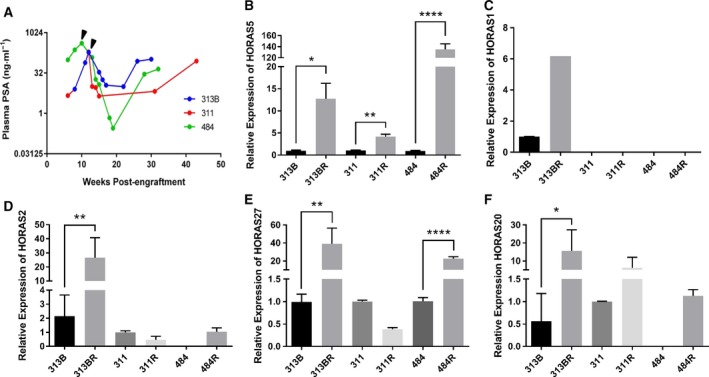
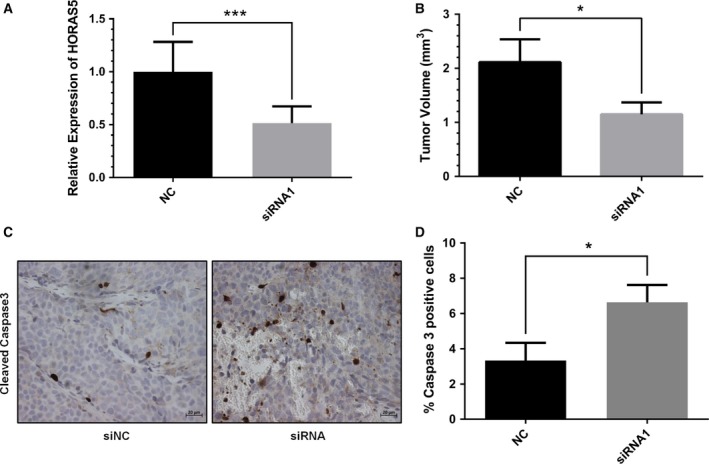
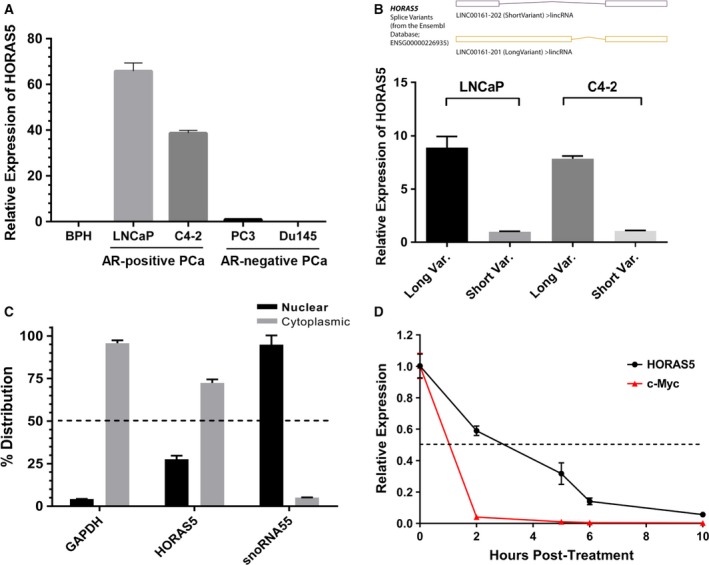
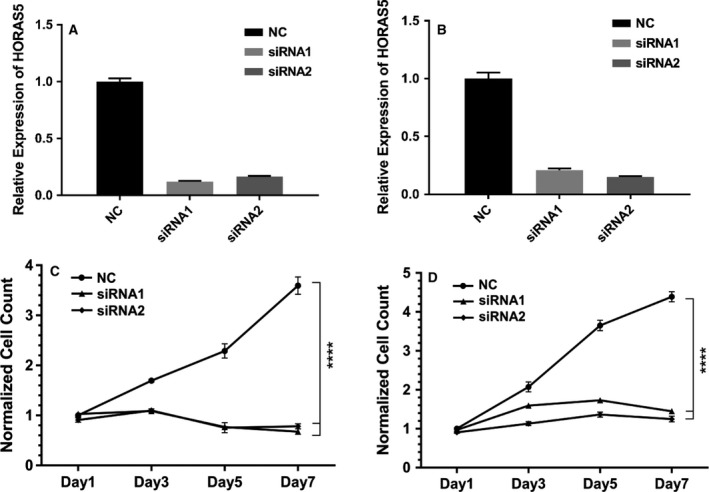
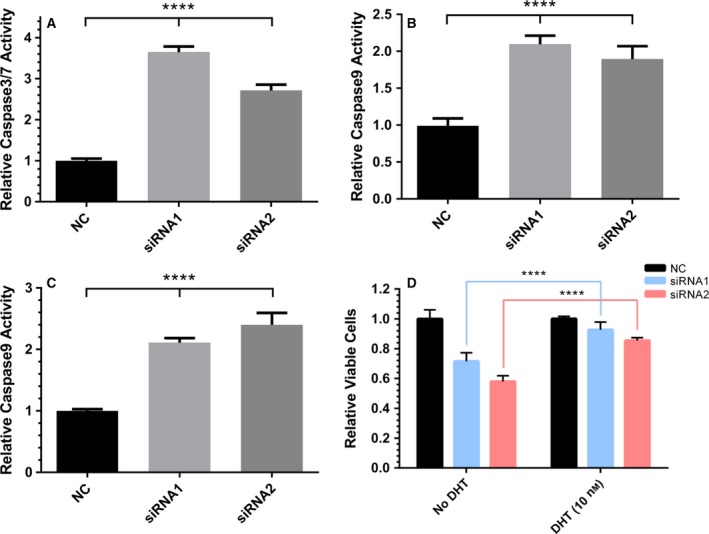
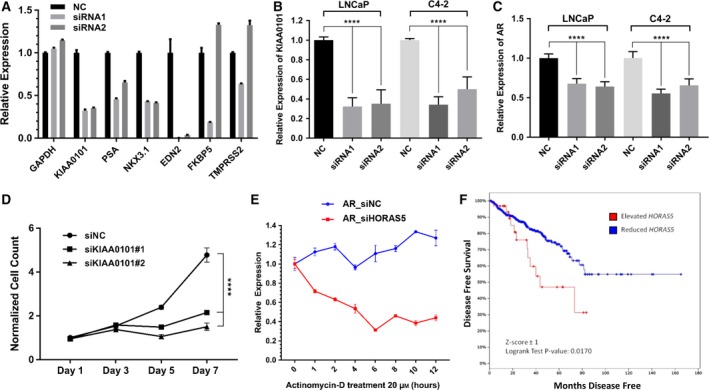
Prostate cancer (PCa) is driven by the androgen receptor (AR)-signaling axis. Hormonal therapy often mitigates PCa progression, but a notable number of cases progress to castration-resistant PCa (CRPC). CRPC retains AR activity and is incurable. Long noncoding RNA (lncRNA) represent an uncharted region of the transcriptome. Several lncRNA have been recently described to mediate oncogenic functions, suggesting that these molecules can be potential therapeutic targets. Here, we identified CRPC-associated lncRNA by analyzing patient-derived xenografts (PDXs) and clinical data. Subsequently, we characterized one of the CRPC-promoting lncRNA, HORAS5, in vitro and in vivo. We demonstrated that HORAS5 is a stable, cytoplasmic lncRNA that promotes CRPC proliferation and survival by maintaining AR activity under androgen-depleted conditions. Most strikingly, knockdown of HORAS5 causes a significant reduction in the expression of AR itself and oncogenic AR targets such as KIAA0101. Elevated expression of HORAS5 is also associated with worse clinical outcomes in patients. Our results from HORAS5 inhibition in in vivo models further confirm that HORAS5 is a viable therapeutic target for CRPC. Thus, we posit that HORAS5 is a novel, targetable mediator of CRPC through its essential role in the maintenance of oncogenic AR activity. Overall, this study adds to our mechanistic understanding of how lncRNA function in cancer progression.
前列腺癌(PCa)受雄激素受体(AR)信号轴驱动。激素治疗通常可减轻 PCa 的进展,但仍有相当数量的病例进展为去势抵抗性前列腺癌(CRPC)。CRPC 保留 AR 活性且无法治愈。长链非编码 RNA(lncRNA)代表转录组中一个未被探索的区域。最近有几项 lncRNA 被描述为介导致癌功能,这表明这些分子可能是潜在的治疗靶点。在这里,我们通过分析患者来源的异种移植(PDX)和临床数据来鉴定与 CRPC 相关的 lncRNA。随后,我们在体外和体内对促进 CRPC 的 lncRNA 之一 HORAS5 进行了表征。我们证明 HORAS5 是一种稳定的细胞质 lncRNA,它通过在雄激素耗竭条件下维持 AR 活性来促进 CRPC 的增殖和存活。最引人注目的是,HORAS5 的敲低导致 AR 本身和致癌 AR 靶标(如 KIAA0101)的表达显著减少。HORAS5 的高表达也与患者的临床结局较差相关。我们在体内模型中对 HORAS5 抑制的研究结果进一步证实,HORAS5 是 CRPC 的一个可行治疗靶点。因此,我们假设 HORAS5 通过其在维持致癌 AR 活性中的重要作用,是 CRPC 的一种新型可靶向调节因子。总的来说,这项研究增加了我们对 lncRNA 在癌症进展中作用的机制理解。