Seattle Children's Research Institute, Center for Global Infectious Disease Research, 1900 Ninth Ave., Seattle, WA, 98101-1309, USA.
Seattle Children's Research Institute, Center for Global Infectious Disease Research, 1900 Ninth Ave., Seattle, WA, 98101-1309, USA; Dept. of Global Health, Pathobiology Program, University of Washington, Seattle, WA, USA.
Cancer Lett. 2019 May 1;449:106-113. doi: 10.1016/j.canlet.2019.02.024. Epub 2019 Feb 16.
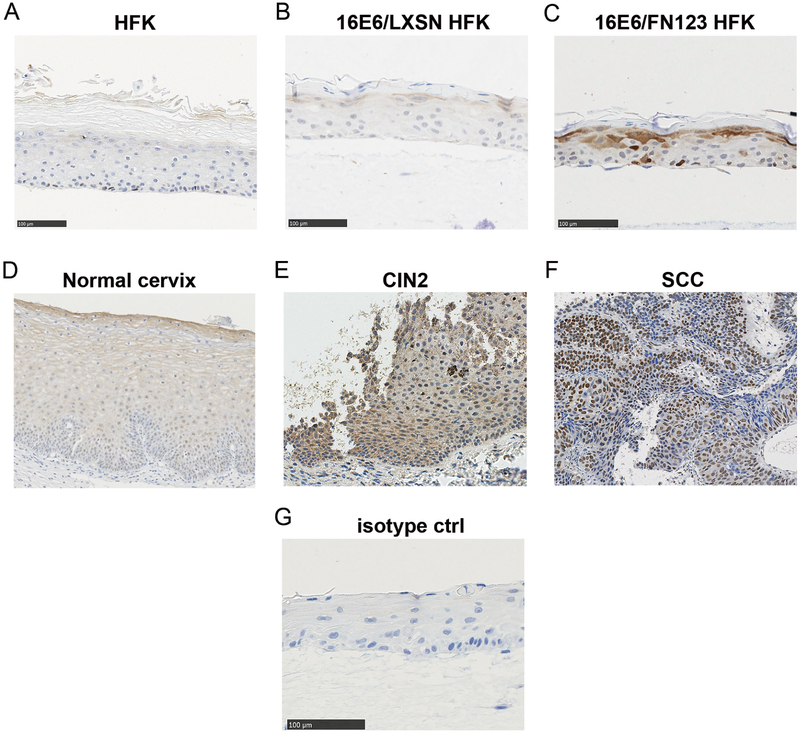
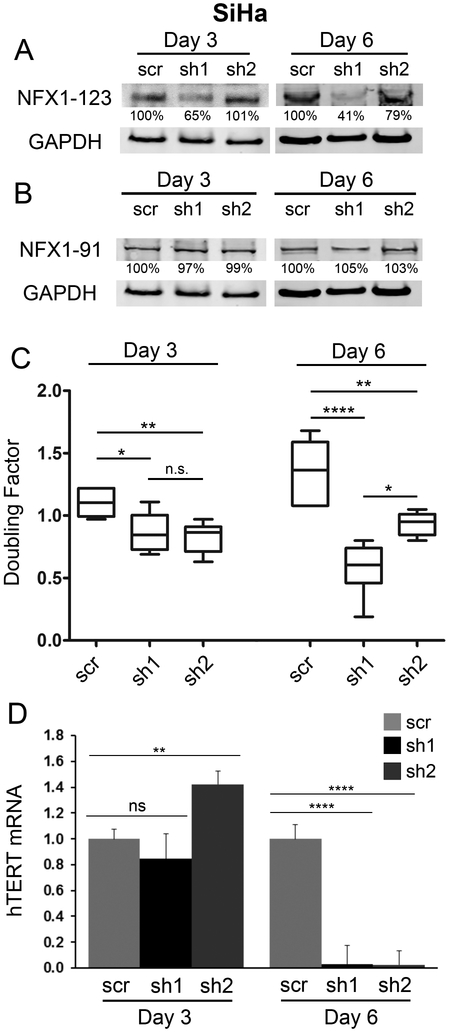
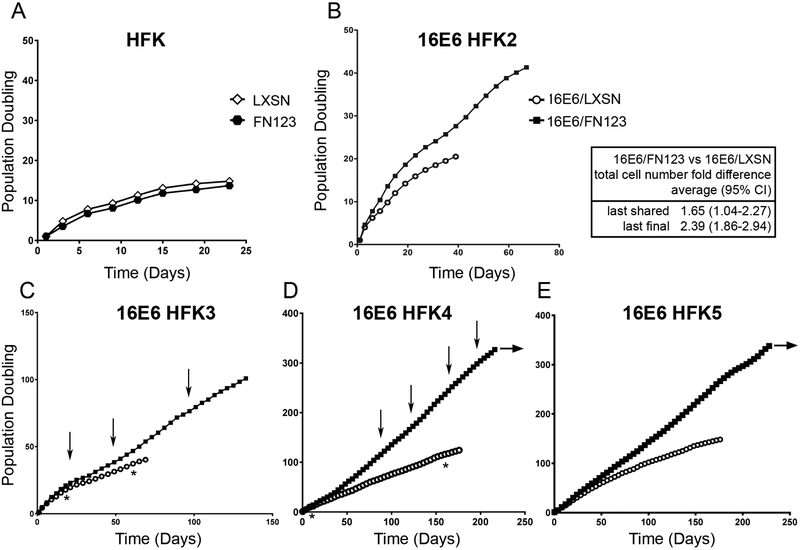
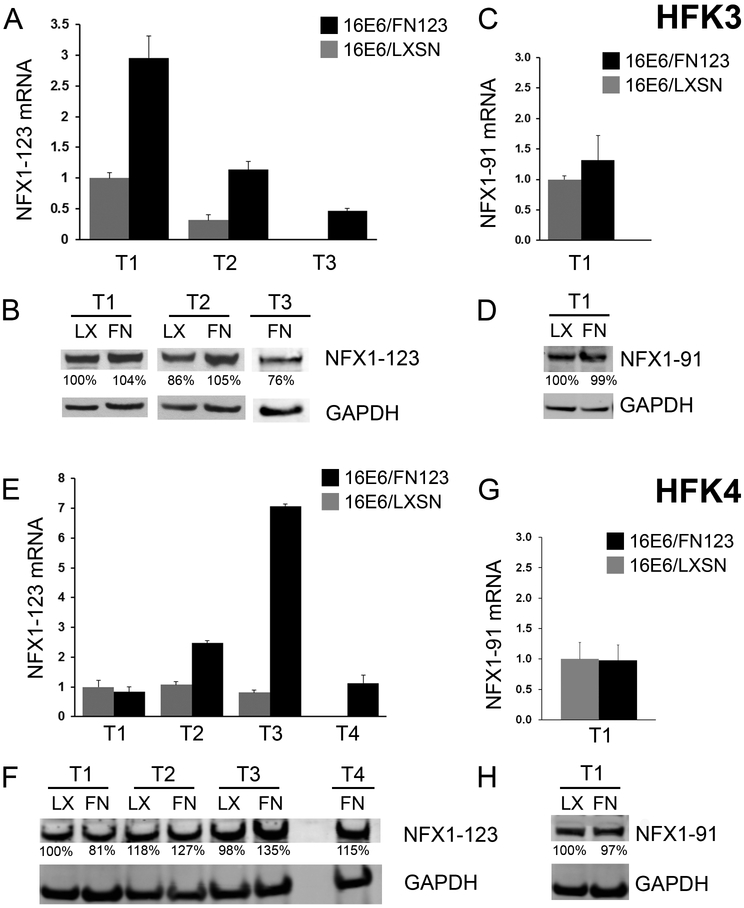
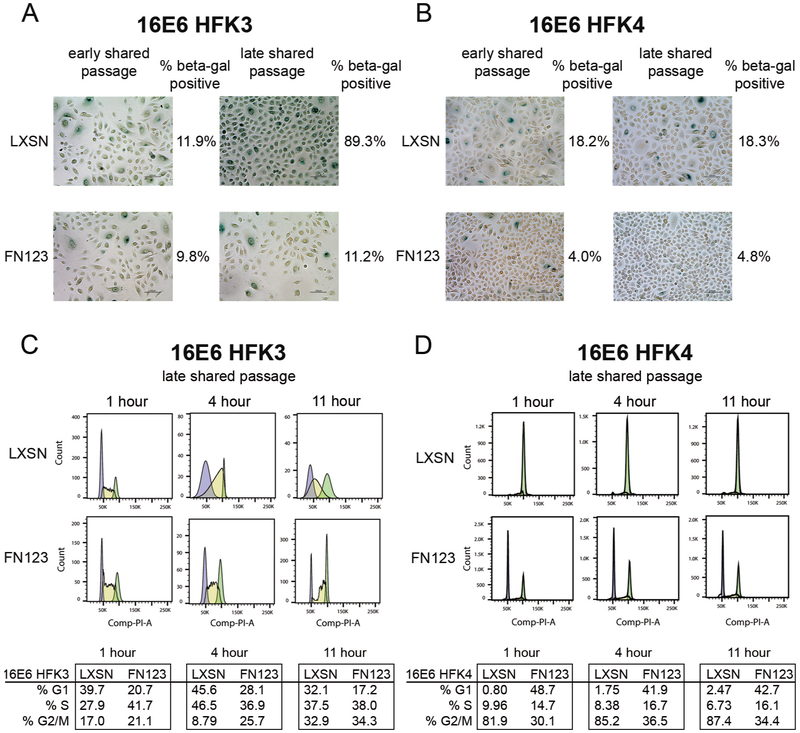
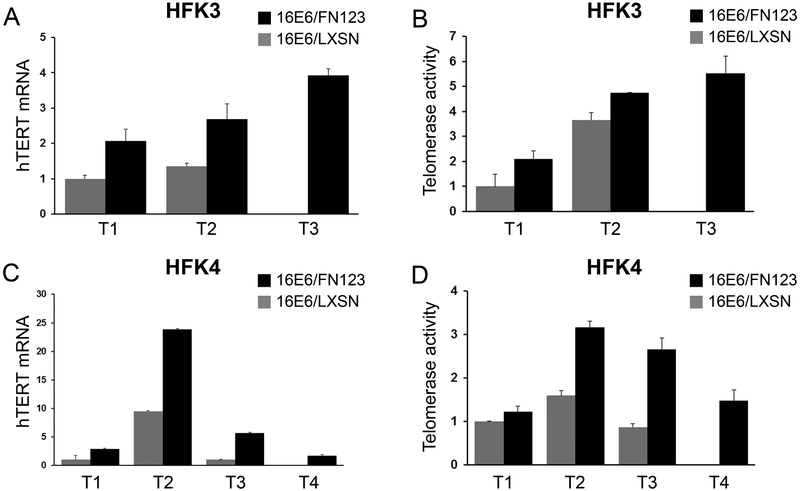
A significant contributor to women's cancer mortality worldwide is cervical cancer, which is caused by high-risk human papillomavirus (HR HPV). The two viral oncoproteins of HR HPV, E6 and E7, partner with host cell proteins to target oncogenic proteins and pathways. Previously, we have shown HR HPV type 16 E6 (16E6) interacts with the host protein NFX1-123 to target telomerase and cellular immortalization, requiring NFX1-123 to fully upregulate telomerase activity. We now report that NFX1-123 is highly expressed in primary cervical cancers. In vitro, cells expressing 16E6 and overexpressing NFX1-123 have extended active growth, decreased senescence marker staining, and more rapid cell cycling compared to 16E6 expressing cells with endogenous amounts of NFX1-123. These findings were associated with increased telomerase activity and augmented expression of its catalytic subunit, hTERT. In complement, HPV 16 positive cervical cancer cell lines with knocked down NFX1-123 had slowed growth and reduced hTERT over time. In cells that express HR HPV E6, greater expression of NFX1-123 can modify active cellular growth and augment hTERT expression and telomerase activity over time, potentially supporting the initiation and progression of HPV-associated cancers.
全球范围内,宫颈癌是导致女性癌症死亡的一个重要因素,而宫颈癌是由高危型人乳头瘤病毒(HR HPV)引起的。HR HPV 的两种病毒癌蛋白 E6 和 E7,与宿主细胞蛋白相互作用,靶向致癌蛋白和途径。先前,我们已经表明 HR HPV 型 16 E6(16E6)与宿主蛋白 NFX1-123 相互作用,以靶向端粒酶和细胞永生化,需要 NFX1-123 来完全上调端粒酶活性。我们现在报告 NFX1-123 在原发性宫颈癌中高度表达。在体外,表达 16E6 和过表达 NFX1-123 的细胞与表达 16E6 但内源性 NFX1-123 量的细胞相比,具有延长的活跃生长、减少衰老标志物染色和更快的细胞周期。这些发现与端粒酶活性增加和其催化亚基 hTERT 的表达增强有关。作为补充,NFX1-123 敲低的 HPV 16 阳性宫颈癌细胞系随时间推移生长速度减慢,hTERT 表达减少。在表达 HR HPV E6 的细胞中,NFX1-123 的表达增加可以改变细胞的活跃生长,并随时间推移增加 hTERT 表达和端粒酶活性,可能支持 HPV 相关癌症的发生和进展。