Queensland University of Technology, Institute of Health & Biomedical Innovation, Centre for Children's Health Research, 62 Graham Street, South Brisbane, Qld, 4101, Australia.
Menzies Health Institute Queensland and School of Dentistry and Oral Health, Gold Coast Campus, Griffith University, Gold Coast, Qld, 4222, Australia.
Int J Equity Health. 2019 Feb 18;18(1):34. doi: 10.1186/s12939-019-0937-y.
The oral health of a child not only impacts the physical well-being of the child, but can have quality of life implications for parents and families as they endeavour to provide care and support their child's oral health needs. Within Australia, Aboriginal and Torres Strait Islander children are thought to experience a disproportionate burden of poor oral heath compared to non-Indigenous children. Despite the prevalence of oral health challenges, there are limited qualitative studies investigating the oral health experiences of families. The objective of the study was to explore 'from the perspective of urban, Aboriginal and Torres Strait Islander parents and carers' the impact child oral health has on families.
Yarning circles and face-to-face interviews were used to document the experiences of (N = 20) parents of urban, Aboriginal and Torres Strait Islander children. Participants were recruited from an Aboriginal-owned and operated primary health clinic in northern Brisbane, Australia and through word of mouth. Information collected was transcribed and analysed thematically. Codes and themes were confirmed by the researcher and two participants.
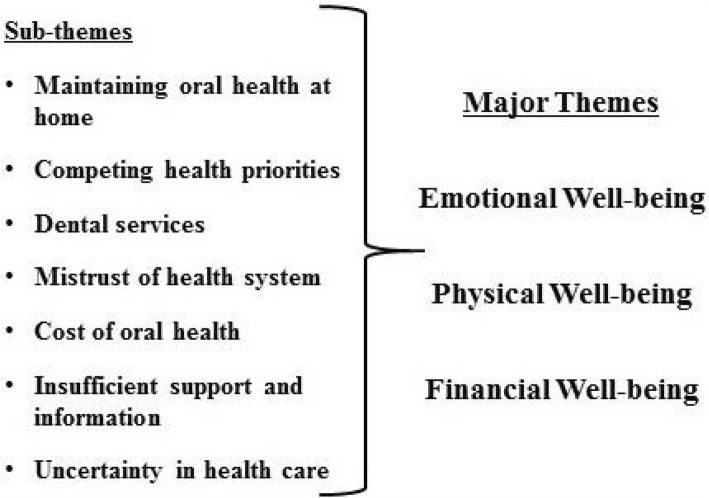
The findings indicate that oral health is an important issue for urban Indigenous families and maintaining oral health to a desired standard is having emotional, physical and financial impacts. Themes identified were financial concerns, worry about the future and juggling multiple priorities, all of which were inter-related and cyclical.
Families in this study have demonstrated that with the current policy arrangements, oral health is impacting their quality of life, contributing to stress, financial challenges and at times affecting their physical health. To address these challenges, oral health education and promotion needs a multidisciplinary approach that reaches families before children are school-aged.
儿童的口腔健康不仅影响儿童的身体健康,而且会对父母和家庭的生活质量产生影响,因为他们努力提供照顾和支持孩子的口腔健康需求。在澳大利亚,与非土著儿童相比,土著和托雷斯海峡岛民儿童的口腔健康状况被认为较差。尽管存在口腔健康挑战,但很少有定性研究调查家庭的口腔健康体验。本研究的目的是从城市土著和托雷斯海峡岛民父母和照顾者的角度探讨儿童口腔健康对家庭的影响。
采用聊天圈和面对面访谈的方式记录了(N=20)来自澳大利亚布里斯班北部一家土著所有和经营的初级保健诊所的城市土著和托雷斯海峡岛民儿童的父母的经历。参与者是通过该诊所招募的,也通过口口相传招募。收集到的信息被转录并进行主题分析。研究人员和两名参与者对代码和主题进行了确认。
研究结果表明,口腔健康对城市土著家庭来说是一个重要问题,保持口腔健康到理想标准对他们的情绪、身体和经济都有影响。确定的主题包括经济问题、对未来的担忧和多重优先事项的平衡,这些主题都是相互关联和循环的。
本研究中的家庭表明,在当前的政策安排下,口腔健康正在影响他们的生活质量,导致压力、经济挑战,有时还会影响他们的身体健康。为了解决这些挑战,口腔健康教育和宣传需要多学科的方法,在儿童上学前就触及到家庭。