Department of Gynecology and Obstetrics, Asklepios-Klinik Barmbek, Hamburg, Germany.
Department of Gynecology, University Medical Center Hamburg-Eppendorf, Hamburg, Germany.
Sci Rep. 2019 Feb 19;9(1):2318. doi: 10.1038/s41598-018-37259-2.
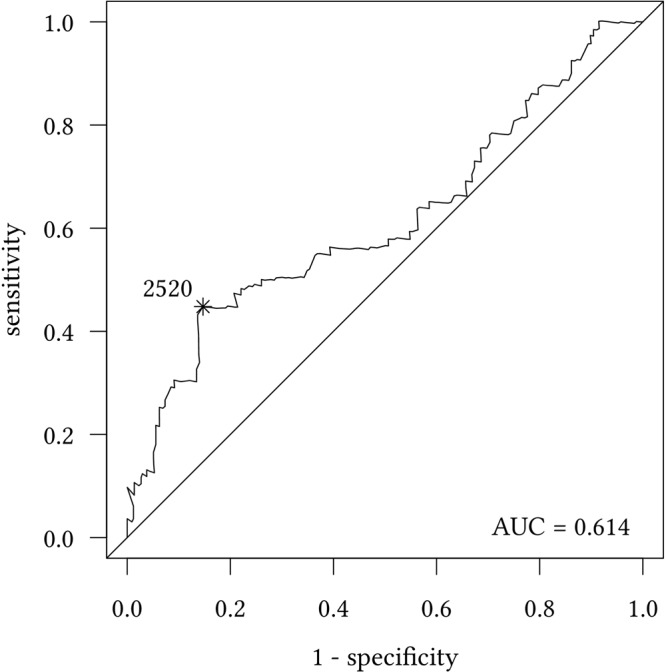
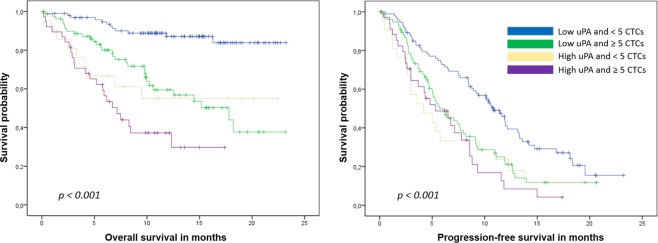
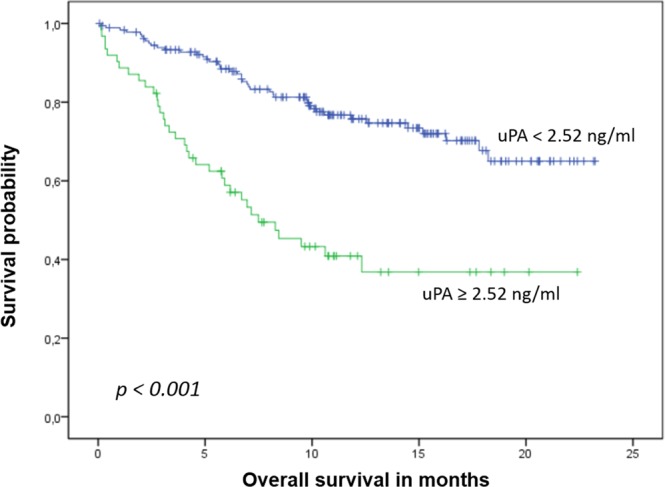
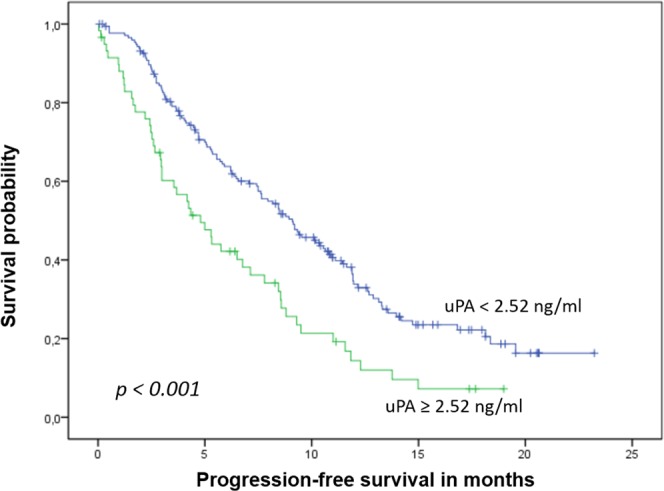
In breast cancer (BC), elevated levels of urokinase-type plasminogen activator (uPA) in tumor tissue have been confirmed as a strong prognostic factor in level-of-evidence-1 studies. The aim of the present study was to evaluate the clinical relevance of uPA levels in serum of metastatic BC patients and to compare uPA with other blood-based biomarkers. 252 patients were enrolled in this prospective, multicentre study. Blood samples were collected before begin of first-line or later-line systemic treatment. Serum uPA was quantified by a commercially available ELISA. Circulating tumor cells (CTCs) were detected using CellSearch; other biomarkers (EGFR, VEGF, HER2, RAS p21, TIMP1, CAIX) by ELISA. Using the ROC analysis, the optimal cut-off value (determined by the Youden index) of serum uPA was 2.52 ng/ml. Using this value, 26% of patients had elevated uPA levels. Patients with visceral metastasis and more than one metastatic site were significantly more likely to present with elevated uPA levels. CTC status, serum HER2, RAS p21, CAIX, TIMP1 and VEGF correlated significantly with uPA levels. Elevated uPA levels predicted shorter overall and progression-free survival in univariate analysis (median OS: 7.5 months [95%-CI 4.5-10.5 months] vs. not reached, p < 0.001; PFS: 4.8 [95%-CI: 3.1-6.5] vs. 9.1 [7.4-10.8] months, p < 0.001). In multivariate analysis, elevated uPA, presence of ≥5 CTCs, elevated RAS p21, higher grading and higher line of therapy were independent predictors of shorter OS, while elevated CTC counts, higher line of therapy and negative estrogen receptor status were independent predictors of shorter PFS. In conclusion, elevated uPA levels independently predict reduced overall survival and improved prognostication in patients with known CTC status. Whether high serum uPA might identify patients most likely to benefit from therapies targeting uPA, remains to be evaluated in future trials.
在乳腺癌 (BC) 中,肿瘤组织中尿激酶型纤溶酶原激活物 (uPA) 水平升高已被证实是具有 1 级证据水平的强有力的预后因素。本研究旨在评估转移性 BC 患者血清 uPA 水平的临床相关性,并将其与其他基于血液的生物标志物进行比较。本前瞻性、多中心研究共纳入 252 例患者。在开始一线或二线全身治疗前采集血样。采用商业上可用的 ELISA 定量测定血清 uPA。使用 CellSearch 检测循环肿瘤细胞 (CTC);其他生物标志物(EGFR、VEGF、HER2、RAS p21、TIMP1、CAIX)通过 ELISA 检测。通过 ROC 分析,血清 uPA 的最佳截断值(由 Youden 指数确定)为 2.52ng/ml。以此值为界,26%的患者 uPA 水平升高。有内脏转移和多个转移部位的患者 uPA 水平升高的可能性显著更高。CTC 状态、血清 HER2、RAS p21、CAIX、TIMP1 和 VEGF 与 uPA 水平显著相关。在单因素分析中,uPA 水平升高预测总生存期和无进展生存期较短(中位 OS:7.5 个月[95%-CI 4.5-10.5 个月]vs.未达到,p<0.001;PFS:4.8 [95%-CI:3.1-6.5] vs. 9.1 [7.4-10.8]个月,p<0.001)。在多因素分析中,uPA 升高、存在≥5 个 CTC、RAS p21 升高、高分级和高线治疗是 OS 较短的独立预测因素,而 CTC 计数升高、高线治疗和雌激素受体阴性是 PFS 较短的独立预测因素。总之,uPA 水平升高独立预测已知 CTC 状态患者的总生存期缩短和预后改善。高血清 uPA 是否能识别最有可能从靶向 uPA 的治疗中获益的患者,仍有待未来试验评估。