Sobhgol Sahar Sadat, Priddis Holly, Smith Caroline A, Dahlen Hannah Grace
School of Nursing and Midwifery, Western Sydney University, Locked Bag 1797, Penrith, NSW, 2751, Australia.
NICM Health Research Institute, Western Sydney University, Locked Bag 1797, Penrith, NSW, 2751, Australia.
Trials. 2019 Feb 20;20(1):144. doi: 10.1186/s13063-019-3226-6.
Sexual dysfunction can have a negative impact on women's quality of life and relationships. There is limited information about female sexual function and treatment, particularly during pregnancy and the postpartum period. The effect of pelvic floor muscle exercise (PFME) on sexual function (SF) has not been studied adequately. The purpose of this study is to investigate the effect of antenatal PFME on female SF during pregnancy and the first 3 months following birth.
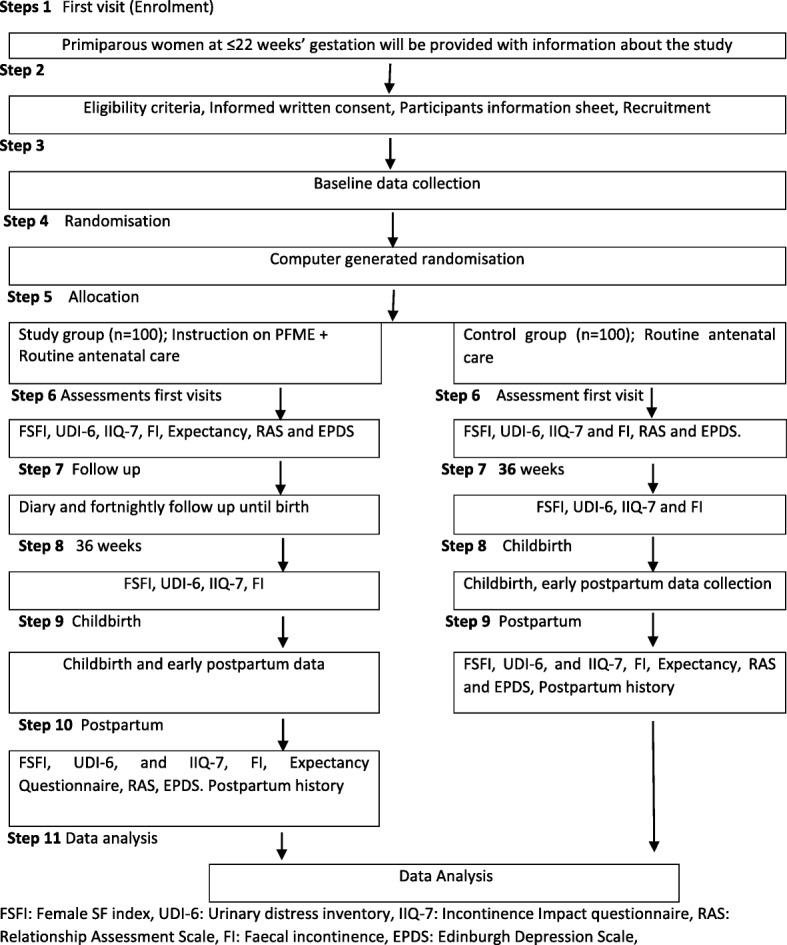
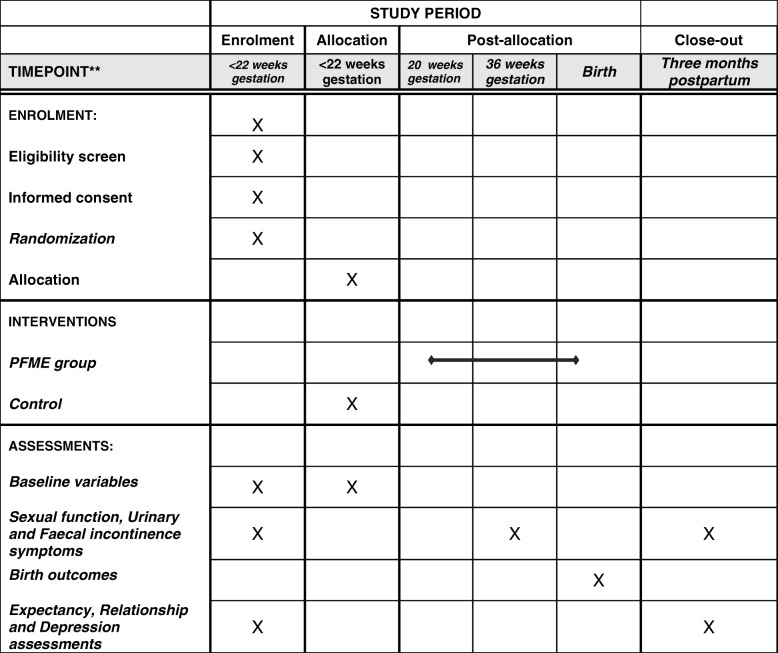
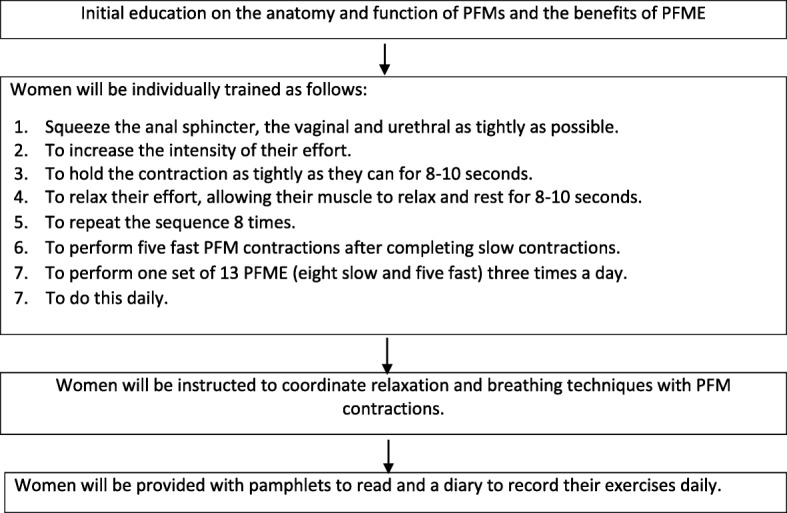
METHODS/DESIGN: This is a pragmatic, randomised controlled trial which will compare a structured antenatal PFME programme combined with standard antenatal care to standard antenatal care alone. Eligible women who are less than 22 weeks' gestation will be recruited from the antenatal clinics of one hospital located in Western Sydney, Australia. A sample of 200 primiparous pregnant women who meet the inclusion criteria will be randomised to either control or intervention groups. This sample size will allow for detecting a minimum difference of 9% in the female SF score between the two groups. The duration of the PFME programme is from approximately 20 weeks' gestation until birth. Female SF will be measured via questionnaires at < 22 weeks' gestation, at 36 weeks' gestation and at 3 months following birth. Baseline characteristics, such as partner relationship and mental health, will be collected using surveys and questionnaires. Data collected for secondary outcomes include the effect of PFME on childbirth outcomes, urinary and faecal incontinence symptoms and quality of life.
The findings of this study will provide more information on whether a hospital-based antenatal PFME has any effect on female SF, urinary and faecal incontinence during pregnancy and the first 3 months following birth. The study will also provide information on the effectiveness of antenatal PFME on childbirth outcomes.
Australian New Zealand Clinical Trials registry, ACTRN12617001030369 . Registered on 17 July 2017.
性功能障碍会对女性的生活质量和人际关系产生负面影响。关于女性性功能及治疗的信息有限,尤其是在孕期和产后。盆底肌肉锻炼(PFME)对性功能(SF)的影响尚未得到充分研究。本研究的目的是调查产前PFME对孕期及产后前3个月女性性功能的影响。
方法/设计:这是一项实用的随机对照试验,将比较结构化的产前PFME计划联合标准产前护理与单纯标准产前护理。将从澳大利亚悉尼西部一家医院的产前诊所招募妊娠小于22周的符合条件的女性。200名符合纳入标准的初产妇将被随机分为对照组或干预组。这个样本量将能够检测出两组女性性功能评分至少9%的差异。PFME计划的持续时间从大约妊娠20周直至分娩。将在妊娠<22周、妊娠36周和产后3个月通过问卷调查来测量女性性功能。将使用调查和问卷收集基线特征,如伴侣关系和心理健康状况。为次要结局收集的数据包括PFME对分娩结局、尿失禁和粪失禁症状以及生活质量的影响。
本研究的结果将提供更多关于基于医院的产前PFME对孕期及产后前3个月女性性功能、尿失禁和粪失禁是否有影响的信息。该研究还将提供产前PFME对分娩结局有效性的信息。
澳大利亚新西兰临床试验注册中心,ACTRN12617001030369。于2017年7月17日注册。