Alex Anoop, Antunes Agostinho
CIIMAR/CIMAR, Interdisciplinary Centre of Marine and Environmental Research, University of Porto, Porto, Portugal.
Department of Biology, Faculty of Sciences, University of Porto, Porto, Portugal.
Front Microbiol. 2019 Feb 6;10:5. doi: 10.3389/fmicb.2019.00005. eCollection 2019.
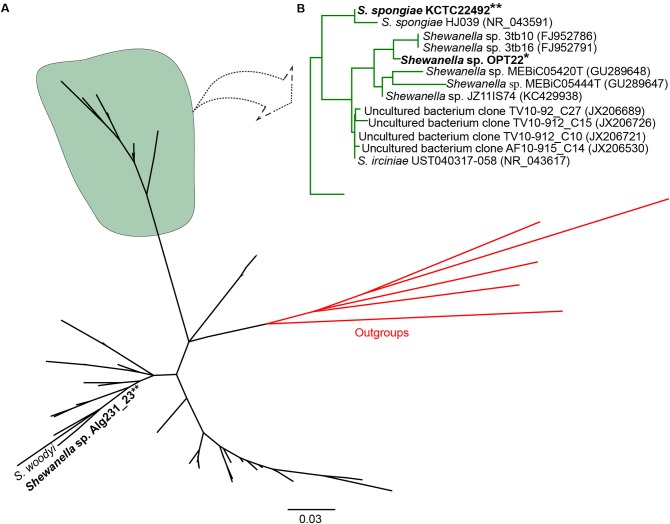
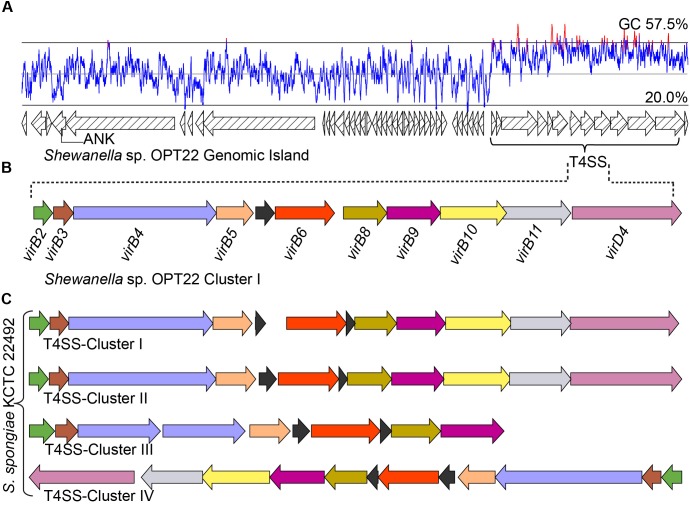
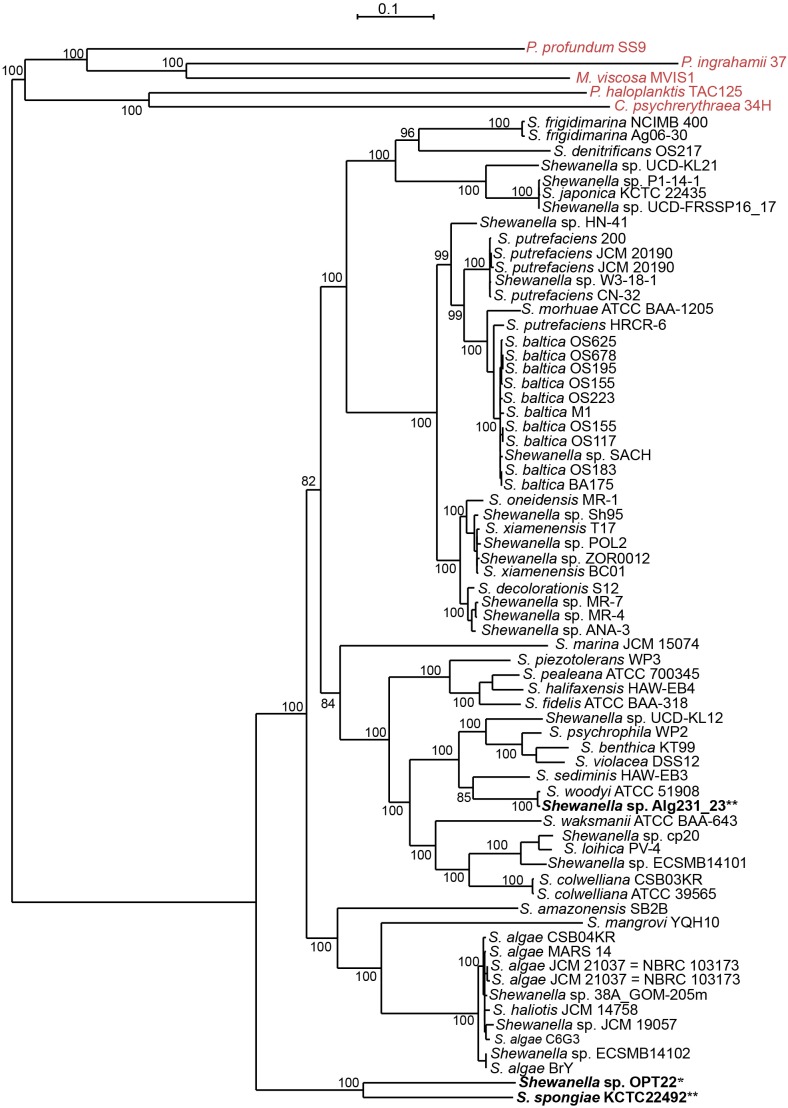
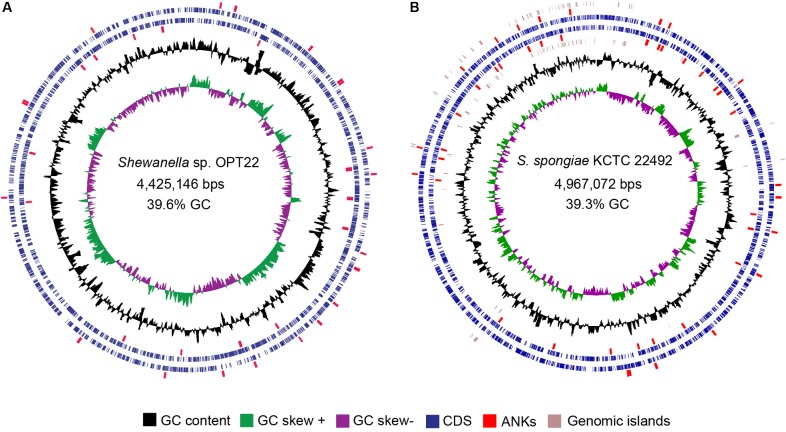
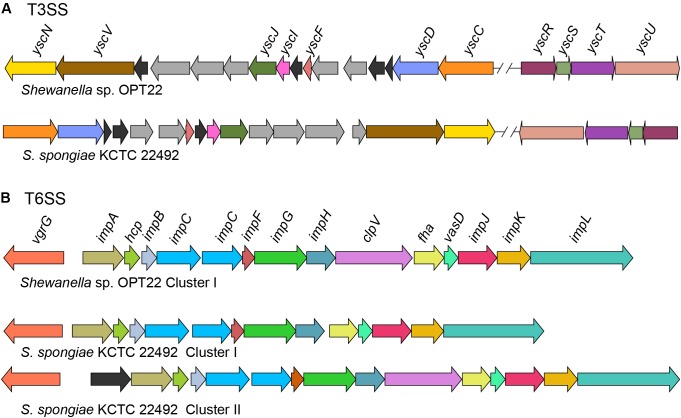
The bacterial members of the genus are widely distributed and inhabit both freshwater and marine environments. Some members of have gained considerable attention due to its ability to survive in redox-stratified environments. However, a gap of knowledge exists on the key genomic features of the sponge-associated sp. involving the successful host-bacteria interaction, as sponge-symbiotic are largely underrepresented in the public repositories. With the aim of identifying the genomic signatures of sponge- association, we generated a high-quality genome data of a sponge-associated, sp. OPT22, isolated from the intertidal marine sponge and performed comprehensive comparative analyses of 68 genome strains of the genus including two previously reported genomes of sponge-associated bacteria, KCTC 22492 and sp. Alg231_23. The 16S rRNA-based phylogenetic reconstruction showed the well-supported affiliation of OPT22 and KCTC 22492 with previously reported sponge-associated bacteria, affirming the "sponge-specific" nature of these two bacterial strains isolated from different marine sponge species from the Atlantic and Pacific (East Sea) Oceans, respectively. The genome comparison of the 68 strains of inhabiting different habitats revealed the unusual/previously unreported abundance of genes encoding for ankyrin-repeat containing proteins (ANKs) in the genomes of the two sponge-associated strains, OPT22 (ANKs; = 45) and KCTC 22492 (ANKs; = 52), which might be involved in sponge- interactions. Focused analyses detected the syntenic organization of the gene cluster encoding major secretion system (type III/IV/VI) components and the presence of effector homologs in OPT22 and KCTC 22492 that seem to play a role in the virulence of the sponge bacteria. The genomic island (GI) of sp. OPT22 was identified to localize a gene cluster encoding T4SS components and ANK ( = 1), whereas KCTC 22492 harbored a total of seven ANKs within multiple GIs. GIs may play a pivotal role in the dissemination of symbioses-related genes (ANKs) through the horizontal gene transfer, contributing to the diversification and adaptation of sponge-associated . Overall, the genome analyses of isolates from marine sponges revealed genomic repertoires that might be involved in establishing successful symbiotic relationships with the sponge hosts.
该属的细菌成员分布广泛,栖息于淡水和海洋环境。由于其在氧化还原分层环境中的生存能力,该属的一些成员受到了广泛关注。然而,关于与海绵相关的某菌株的关键基因组特征,尤其是涉及成功的宿主 - 细菌相互作用方面,存在知识空白,因为海绵共生菌在公共数据库中的代表性严重不足。为了确定海绵关联的基因组特征,我们生成了从潮间带海洋海绵中分离出的与海绵相关的某菌株OPT22的高质量基因组数据,并对该属的68个基因组菌株进行了全面的比较分析,其中包括两个先前报道的与海绵相关细菌的基因组,即KCTC 22492和某菌株Alg231_23。基于16S rRNA的系统发育重建显示,OPT22和KCTC 22492与先前报道的与海绵相关细菌的亲缘关系得到了有力支持,证实了分别从大西洋和太平洋(东海)不同海洋海绵物种中分离出的这两种细菌菌株具有“海绵特异性”。对栖息于不同生境的68个该属菌株的基因组比较揭示,在两种与海绵相关的菌株OPT22(锚蛋白重复序列;数量 = 45)和KCTC 22492(锚蛋白重复序列;数量 = 52)的基因组中,编码含锚蛋白重复序列蛋白(ANKs)的基因存在异常/先前未报道的丰富情况,这可能参与了与海绵的相互作用。重点分析检测到编码主要分泌系统(III/IV/VI型)成分的基因簇的共线性组织,以及OPT22和KCTC 22492中效应子同源物的存在,这些似乎在海绵细菌的毒力中发挥作用。某菌株OPT22的基因组岛(GI)被确定定位了一个编码IV型分泌系统(T4SS)成分和ANK(数量 = 1)的基因簇,而KCTC 22492在多个基因组岛中共含有七个ANKs。基因组岛可能在通过水平基因转移传播与共生相关的基因(ANKs)中起关键作用,有助于与海绵相关的该属细菌的多样化和适应性。总体而言,对来自海洋海绵的该属分离株的基因组分析揭示了可能参与与海绵宿主建立成功共生关系的基因组组成。