Matvienko Tatiana, Sokolova Viktoriya, Prylutska Svitlana, Harahuts Yuliia, Kutsevol Nataliya, Kostjukov Viktor, Evstigneev Maxim, Prylutskyy Yuriy, Epple Matthias, Ritter Uwe
Taras Shevchenko National University of Kyiv, Volodymyrska Str., 64, 01601 Kyiv, Ukraine.
Institute of Inorganic Chemistry and Center for Nanointegration Duisburg-Essen (CeNIDE), University of Duisburg-Essen, University Str., 5-7, 45117 Essen, German.
Bioimpacts. 2019;9(1):57-63. doi: 10.15171/bi.2019.07. Epub 2018 Oct 14.
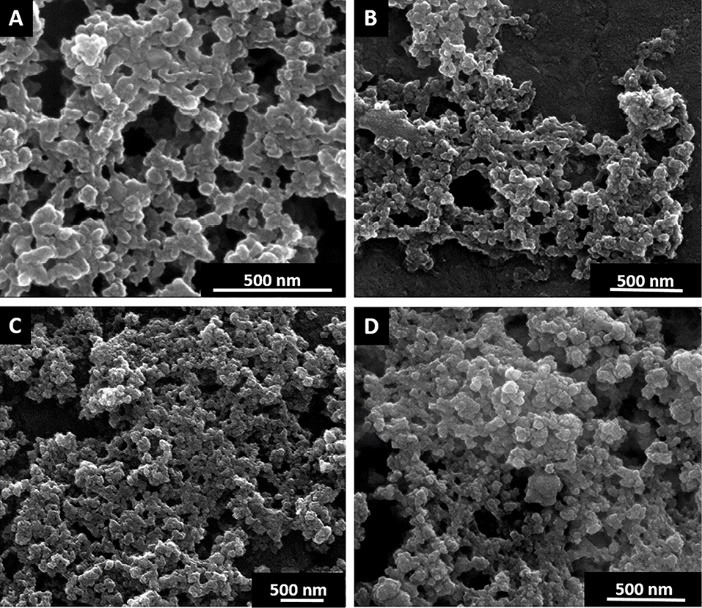
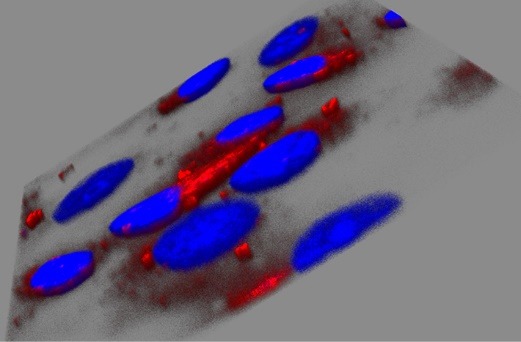
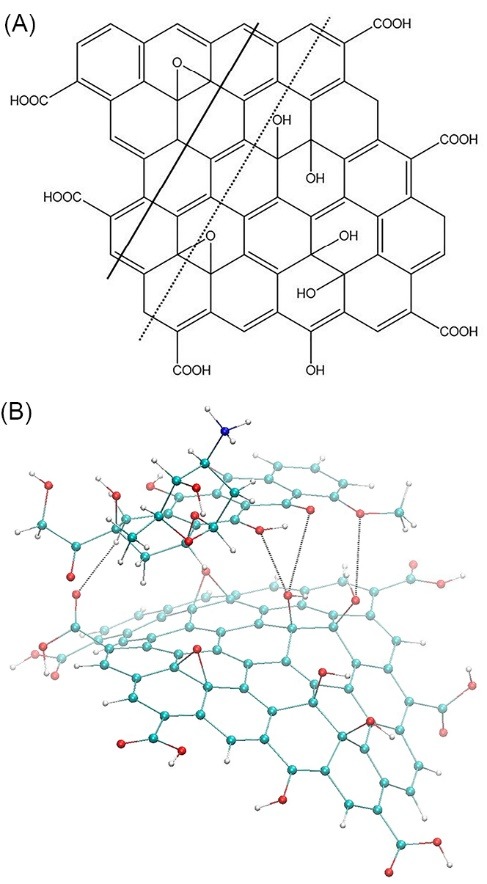
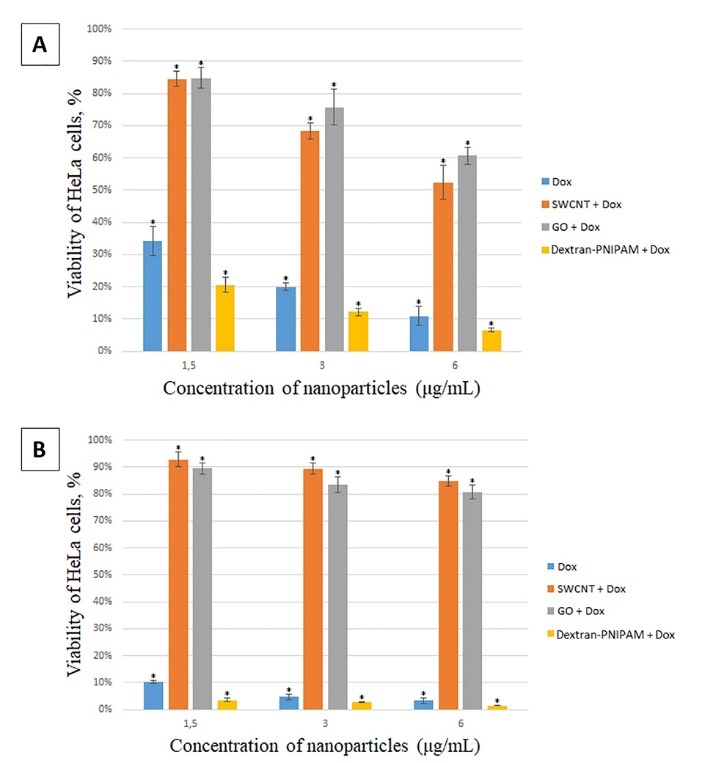
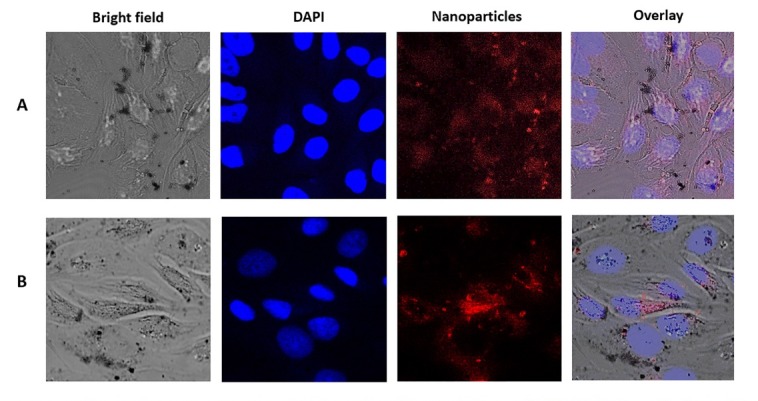
The aim of this research was to study the impact of various doxorubicin (Dox)-containing nanofluids, e.g. singlewalled carbon nanotube (SWCNT)+Dox, graphene oxide (GO)+Dox and DextranPNIPAM (copolymer)+Dox mixtures on HeLa cells (human transformed cervix epithelial cells, as a model for cancer cells) depending on their concentration. Structural analysis of GO+Dox complex was accomplished using Hartree-Fock level of theory in 6-31G** basis set in Gaussian. Dynamic light scattering (DLS), zeta-potential, scanning electron microscopy and confocal laser scanning microscopy were used. The cell viability was analyzed by the MTT assay. The viability of HeLa cells was studied with the MTT assay after the incubation with various Dox-containing dispersions depending on their concentration. The size of the particles was determined by DLS. The morphology of the nanoparticles (NPs) was studied by scanning electron microscopy and their uptake into cells was visualized by confocal laser scanning microscopy. It was found that the Dextran-PNIPAM+Dox nanofluid in contrast to Dox alone showed higher toxicity towards HeLa cells up to 80% after 24 hours of incubation, whereas the SWCNT+Dox and GO+Dox nanofluids at the same concentrations protected cells from Dox. The importance of Dextran-PNIPAM copolymer as a universal platform for drug delivery was established, and the huge potential of Dextran-PNIPAM+Dox NPs as novel anticancer agents was noted. Based on the in vitro study of the SWCNT+Dox and GO+Dox nanofluids, it was concluded that SWCNT and GO NPs can be effective cytoprotectors against the highly toxic drugs.
本研究的目的是研究各种含阿霉素(Dox)的纳米流体,如单壁碳纳米管(SWCNT)+Dox、氧化石墨烯(GO)+Dox和葡聚糖聚N-异丙基丙烯酰胺(共聚物)+Dox混合物对HeLa细胞(人转化宫颈上皮细胞,作为癌细胞模型)的影响,具体取决于它们的浓度。使用高斯软件中6-31G**基组的哈特里-福克理论水平完成了GO+Dox复合物的结构分析。采用动态光散射(DLS)、zeta电位、扫描电子显微镜和共聚焦激光扫描显微镜进行研究。通过MTT法分析细胞活力。在用各种含Dox的分散体孵育后,根据其浓度,用MTT法研究HeLa细胞的活力。通过DLS测定颗粒大小。通过扫描电子显微镜研究纳米颗粒(NPs)的形态,并通过共聚焦激光扫描显微镜观察它们在细胞中的摄取情况。结果发现,与单独的Dox相比,葡聚糖-聚N-异丙基丙烯酰胺+Dox纳米流体在孵育24小时后对HeLa细胞显示出高达80%的更高毒性,而相同浓度下的SWCNT+Dox和GO+Dox纳米流体则保护细胞免受Dox的伤害。确立了葡聚糖-聚N-异丙基丙烯酰胺共聚物作为药物递送通用平台的重要性,并指出了葡聚糖-聚N-异丙基丙烯酰胺+Dox NPs作为新型抗癌剂的巨大潜力。基于对SWCNT+Dox和GO+Dox纳米流体的体外研究,得出结论:SWCNT和GO NPs可以作为针对高毒性药物的有效细胞保护剂。