University of Turin, Dept. Veterinary Science, Grugliasco, Torino, Italy.
Istituto Zooprofilattico Sperimentale della Sardegna, Sassari, Italy.
PLoS One. 2019 Feb 21;14(2):e0212585. doi: 10.1371/journal.pone.0212585. eCollection 2019.
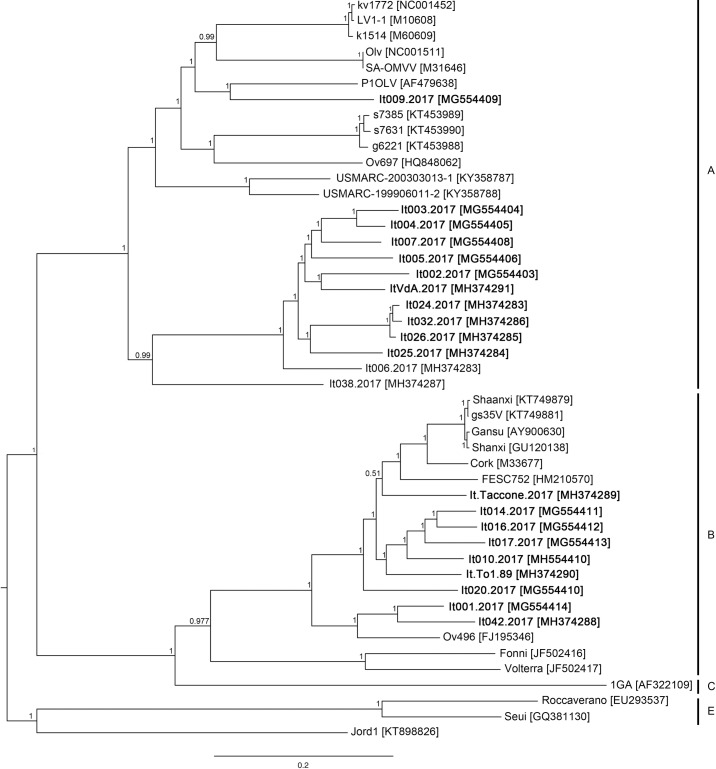
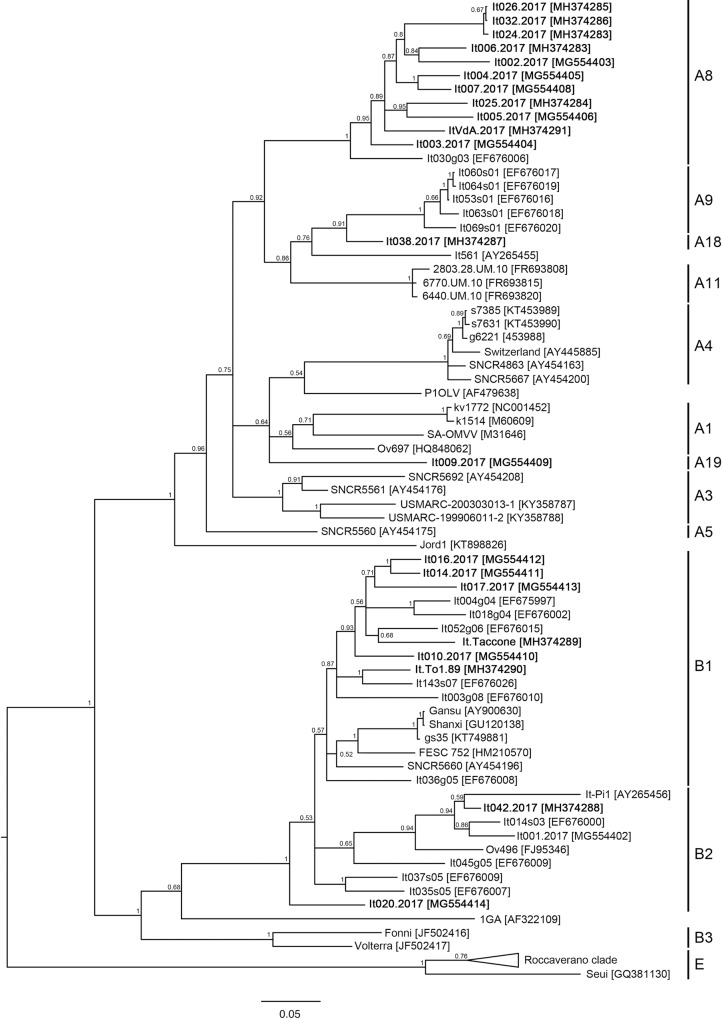
Small Ruminant Lentiviruses (SRLV) include at least 4 viral highly divergent genotypes. Genotypes A and B are widely distributed and genotypes C and E have been recognized in restricted geographic areas. New phylogroups have been identified targeting conserved regions. However, this approach suffers from the potential risk to misamplify highly divergent strains. Pathogenic strains are easily adapted to fibroblastic cells, but non-pathogenic strains isolation may require a different approach. We developed a fast and effective method for SRLV full genome characterization after cell culture isolation. Spleen samples were collected during regular slaughter from sheep and goats in northwestern Italy. Spleen-derived macrophage cultures were monitored for reverse transcriptase activity and RNA was extracted from the supernatant of positive cultures. Using Illumina MiSeq platform 22 new full genome sequences were obtained. The success of this approach is based on the following features: spleen is one of the main target for SRLV persistence; red pulp is a reserve of resident macrophages, the main target for SRLV replication in vivo; RTA is a sensitive assay for any replicating retrovirus; de novo sequencing do not require genetic knowledge in advance.
小反刍兽瘟病毒(SRLV)至少包括 4 种高度分化的病毒基因型。基因型 A 和 B 分布广泛,基因型 C 和 E 仅在特定地理区域发现。针对保守区域已鉴定出新型系统发育群。然而,这种方法可能存在高度分化株错误扩增的风险。致病性株容易适应成纤维细胞,但非致病性株的分离可能需要不同的方法。我们开发了一种快速有效的方法,可在细胞培养分离后对 SRLV 全基因组进行特征描述。在意大利西北部的常规屠宰期间,采集了绵羊和山羊的脾脏样本。监测源自脾脏的巨噬细胞培养物的逆转录酶活性,并从阳性培养物的上清液中提取 RNA。使用 Illumina MiSeq 平台获得了 22 个新的全基因组序列。该方法的成功基于以下特点:脾脏是 SRLV 持续存在的主要靶器官之一;红髓是驻留巨噬细胞的储备库,是体内 SRLV 复制的主要靶器官;RTA 是检测任何复制性逆转录病毒的敏感方法;从头测序不需要事先了解遗传知识。