Department of Psychiatry and Behavioral Neurosciences, Wayne State University School of Medicine, Detroit, Michigan.
Department of Psychiatry, University of Michigan Medical School, Ann Arbor, Michigan.
Brain Behav. 2019 Mar;9(3):e01222. doi: 10.1002/brb3.1222. Epub 2019 Feb 20.
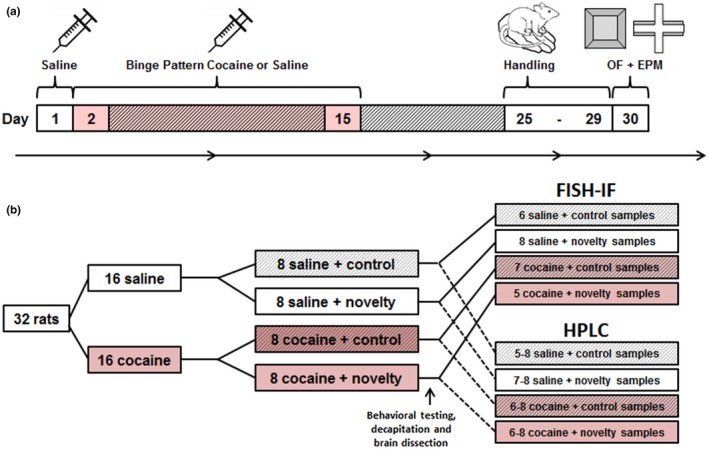
Chronic administration of cocaine causes a disinhibited, hyperexploratory response to novel environments. As the norepinephrine (NE) system regulates exploration and is dysregulated following cocaine exposure, we hypothesized that this cocaine-mediated hyperexploratory response is associated with increased locus coeruleus (LC) reactivity.
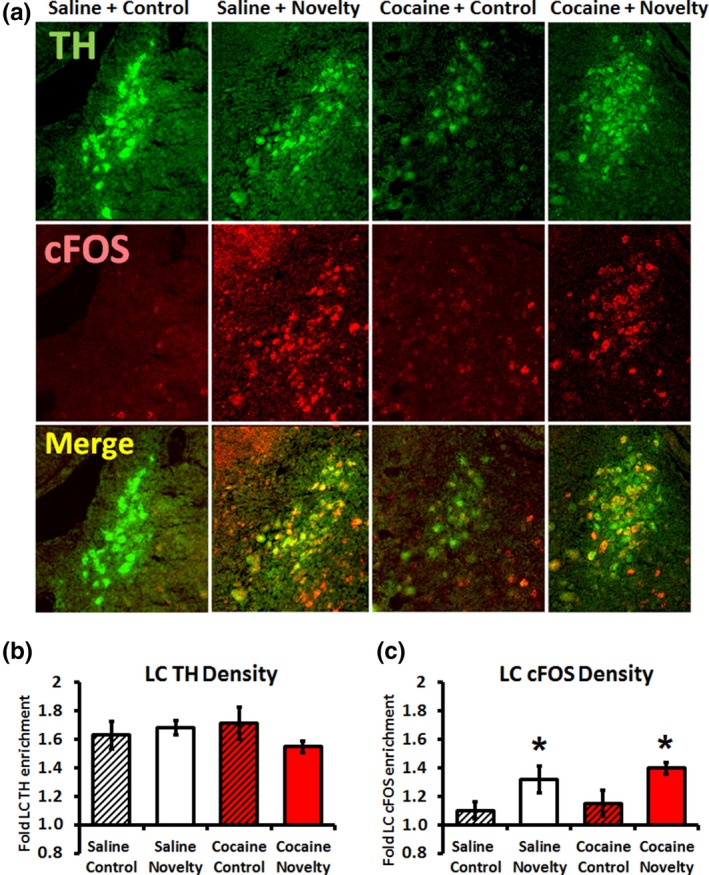
To test this hypothesis, we used dual fluorescent in situ hybridization immunofluorescence to analyze novelty-induced c-fos and tyrosine hydroxylase expression in the LC and high-pressure liquid chromatography to measure dopamine (DA) and NE concentrations in key catecholamine projection regions following exposure to cocaine.
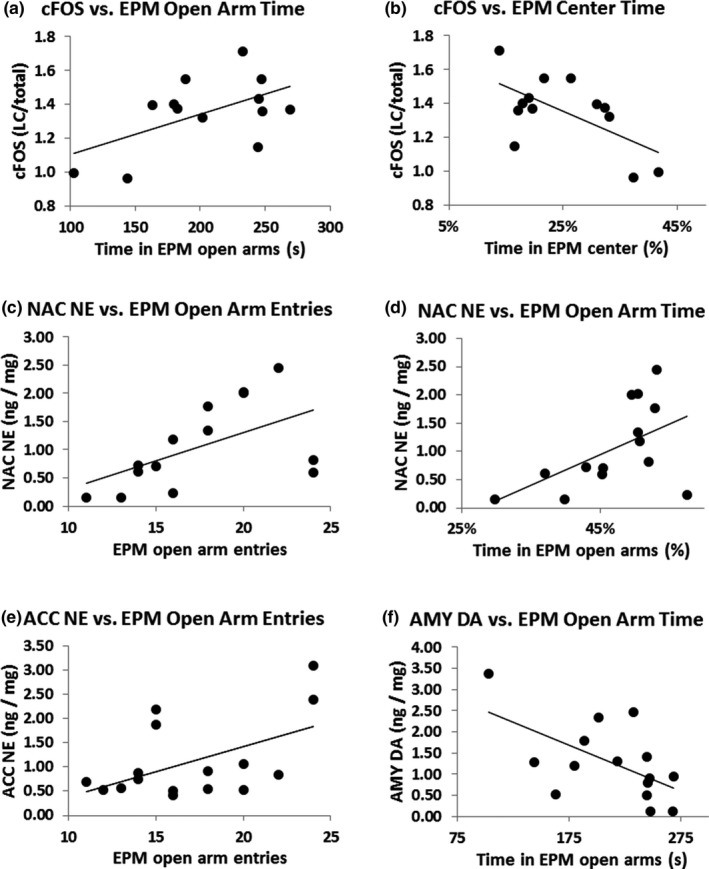
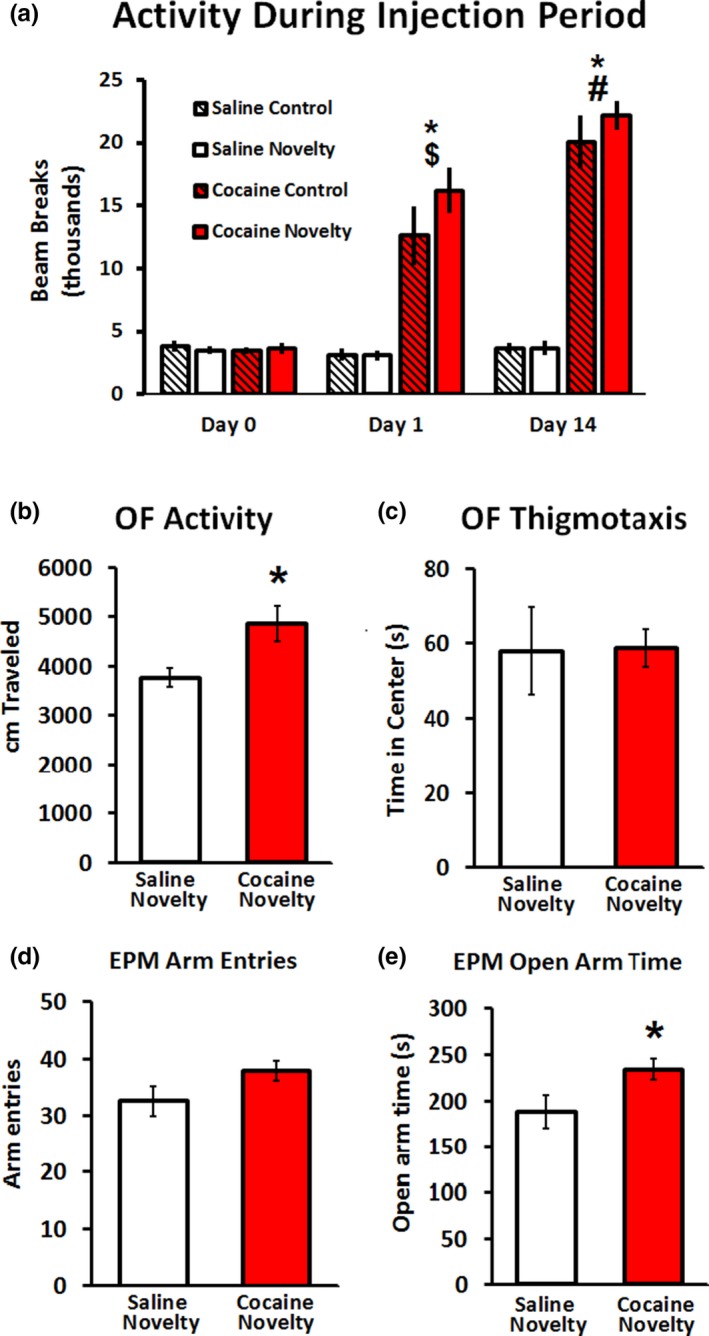
Repeated cocaine exposure followed by a 14-day drug-free period increased exploration of novel environments, replicating previous findings. Novelty exposure increased LC c-fos expression, increased anterior cingulate NE, and decreased ventral tegmental area DA. Cocaine exposure decreased amygdala (AMY) DA, but had no effect on LC c-fos expression or NE in any tested brain region. No interactions between cocaine and novelty were found. Open arm exploration was positively correlated with LC c-fos expression and NE concentrations in both the anterior cingulate and nucleus accumbens, and negatively correlated with AMY DA concentration.
Our findings confirm that exposure to novel environments increases LC activity and NE in the anterior cingulate cortex, that long-term exposure to cocaine dysregulates AMY DA, and that disinhibited exploration in novel environments correlates with NE and DA in regions that modulate risk-taking and avoidance behavior. Further studies investigating the effects of cocaine on brain catecholamine systems are important in understanding the long-lasting effects of cocaine on brain function.
慢性可卡因给药会导致对新环境产生不受抑制的过度探索反应。由于去甲肾上腺素(NE)系统调节探索,并且在可卡因暴露后失调,我们假设这种可卡因介导的过度探索反应与蓝斑(LC)反应性增加有关。
为了验证这一假设,我们使用双荧光原位杂交免疫荧光技术分析 LC 中新奇诱导的 c-fos 和酪氨酸羟化酶表达,并用高压液相色谱法测量暴露于可卡因后关键儿茶酚胺投射区域中的多巴胺(DA)和去甲肾上腺素(NE)浓度。
重复可卡因暴露后 14 天无药物期增加了对新环境的探索,复制了先前的发现。新奇暴露增加了 LC 的 c-fos 表达,增加了前扣带皮层的 NE,并减少了腹侧被盖区的 DA。可卡因暴露降低了杏仁核(AMY)的 DA,但对 LC 中的 c-fos 表达或任何测试脑区的 NE 均无影响。未发现可卡因与新奇之间存在相互作用。开放臂探索与 LC 的 c-fos 表达和 NE 浓度呈正相关,与 AMY 的 DA 浓度呈负相关,在两个前扣带皮层和伏隔核中均如此。
我们的研究结果证实,暴露于新环境会增加 LC 活性和 NE 在前扣带皮层中的表达,长期暴露于可卡因会使 AMY 的 DA 失调,而在新环境中不受抑制的探索与调节风险规避行为的区域中的 NE 和 DA 呈负相关。进一步研究可卡因对脑儿茶酚胺系统的影响对于理解可卡因对大脑功能的持久影响很重要。