Department of Neurosurgery, Third XiangYa Hospital, Central South University, No.138 Tongzipo Road, Changsha, 410013, China.
Department of Physiology and Pharmacology, Loma Linda University, 11041 Campus St. Risley Hall, Loma Linda, CA, 92354, USA.
J Neuroinflammation. 2019 Feb 21;16(1):47. doi: 10.1186/s12974-019-1432-5.
Subarachnoid hemorrhage (SAH) is a life-threatening subtype of stroke with high mortality and disabilities. Retinoid X receptor (RXR) has been shown to be neuroprotective against ischemia/reperfusion injury. This study aimed to investigate the effects of the selective RXR agonist bexarotene on neuroinflammation in a rat model of SAH.
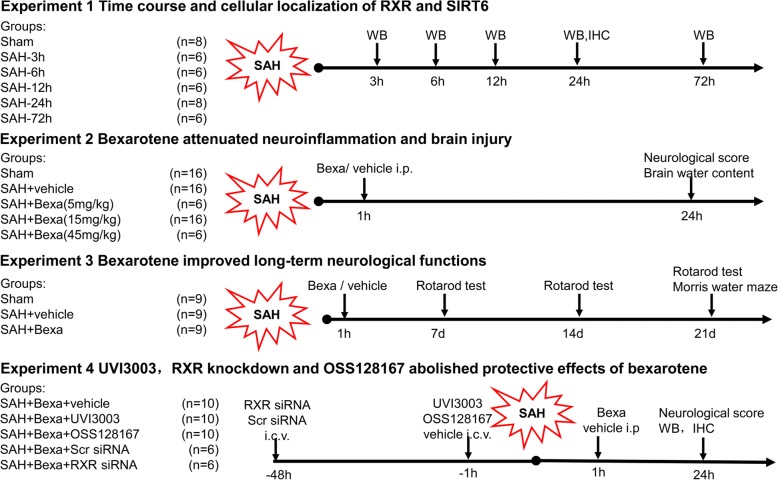
Two hundred male Sprague-Dawley rats were used. The endovascular perforation induced SAH. Bexarotene was administered intraperitoneally at 1 h after SAH induction. To investigate the underlying mechanism, the selective RXR antagonist UVI3003 and RXR siRNA or SIRT6 inhibitor OSS128167 was administered via intracerebroventricular 1 h before SAH induction. Post-SAH assessments including SAH grade, neurological score, brain water content, Western blot, and immunofluorescence were performed.
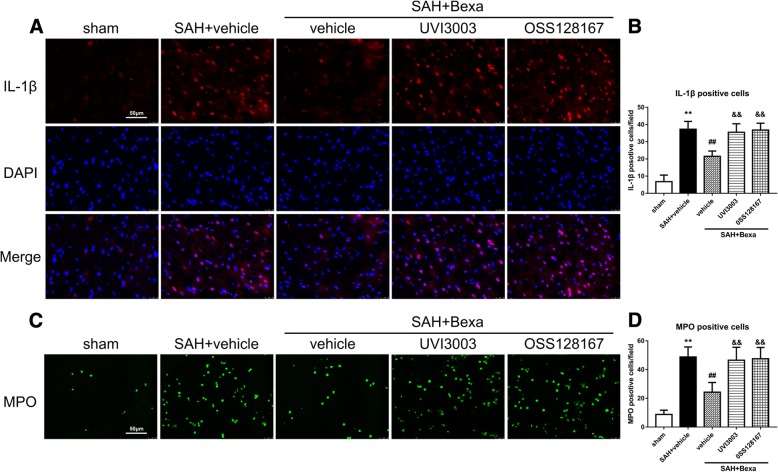
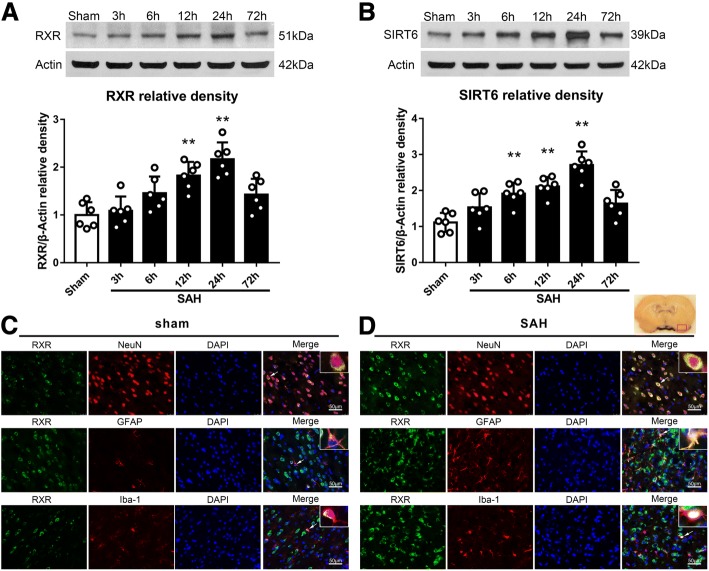
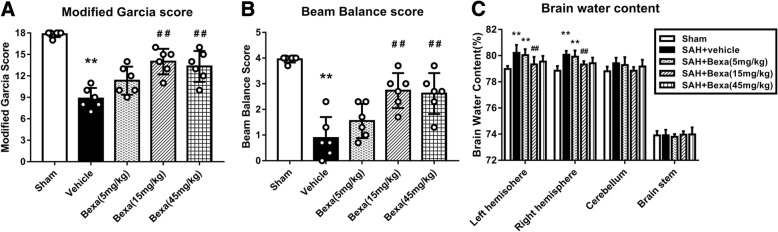
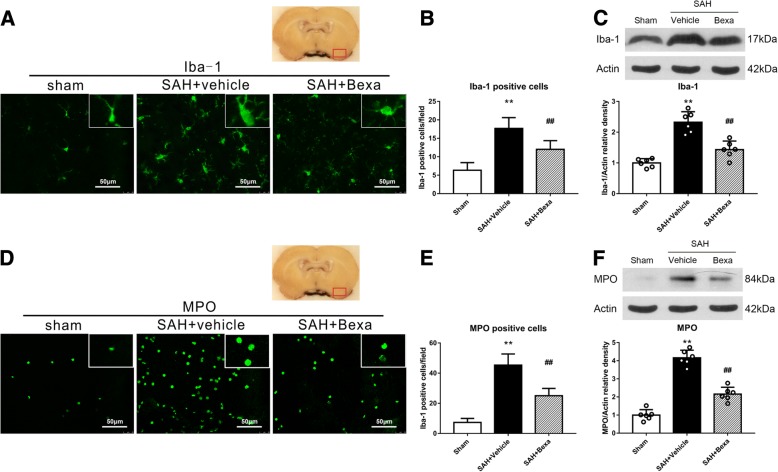
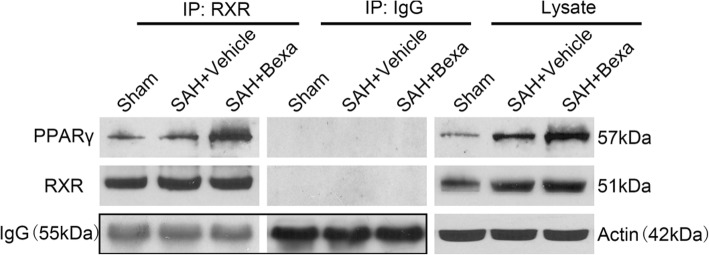
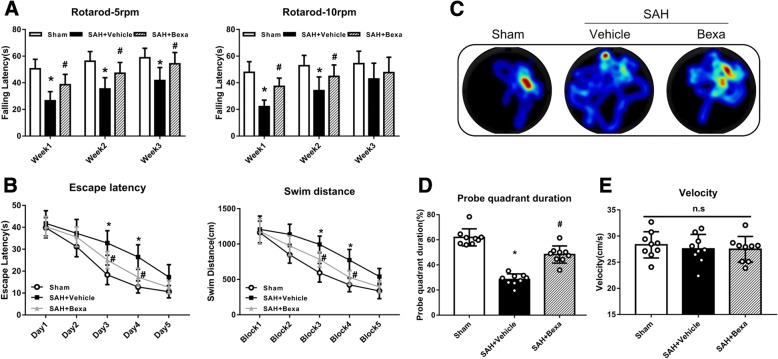
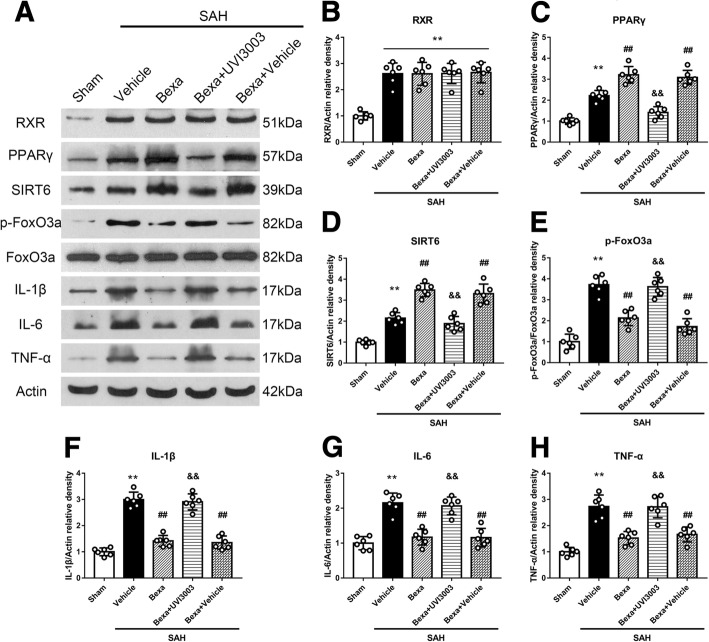
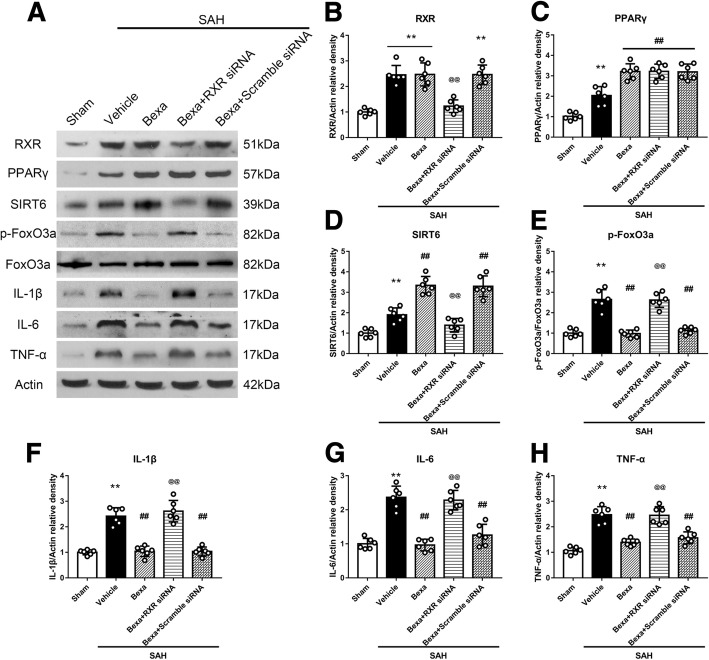
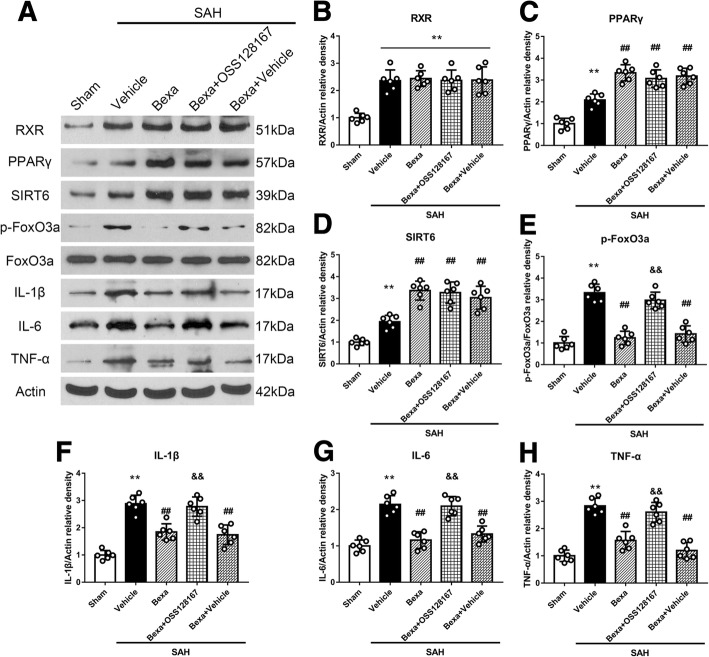
The endogenous RXR and sirtuin 6 (SIRT6) protein levels were increased after SAH. Bexarotene treatment significantly reduced brain edema and improved the short-/long-term neurological deficit after SAH. Mechanistically, bexarotene increased the levels of PPARγ and SIRT6; decreased the expression of phosphorylated FoxO3a (p-FoxO3a), IL-6, IL-1β, and TNF-a; and inhibited the microglia activation and neutrophils infiltration at 24 h after SAH. Either UVI3003, OSS128167, or RXR siRNA abolished the neuroprotective effects of bexarotene and its regulation on protein levels of PPARγ/SIRT6/p-FoxO3a after SAH.
The activation of RXR by bexarotene attenuated neuroinflammation and improved neurological deficits after SAH. The anti-neuroinflammatory effect was at least partially through regulating PPARγ/SIRT6/FoxO3a pathway. Bexarotene may be a promising therapeutic strategy in the management of SAH patients.
蛛网膜下腔出血(SAH)是一种具有高死亡率和残疾率的危及生命的中风亚型。视黄醇 X 受体(RXR)已被证明对缺血/再灌注损伤具有神经保护作用。本研究旨在探讨选择性 RXR 激动剂贝沙罗汀对 SAH 大鼠模型中神经炎症的影响。
使用 200 只雄性 Sprague-Dawley 大鼠。血管内穿孔诱导 SAH。贝沙罗汀在 SAH 诱导后 1 小时腹腔内给药。为了研究潜在机制,在 SAH 诱导前 1 小时通过脑室内给予选择性 RXR 拮抗剂 UVI3003 和 RXR siRNA 或 SIRT6 抑制剂 OSS128167。进行 SAH 后评估,包括 SAH 分级、神经评分、脑水含量、Western blot 和免疫荧光。
SAH 后内源性 RXR 和 Sirtuin 6(SIRT6)蛋白水平增加。贝沙罗汀治疗可显著减轻脑水肿,并改善 SAH 后的短期和长期神经功能缺损。在机制上,贝沙罗汀增加了 PPARγ 和 SIRT6 的水平;降低了磷酸化 FoxO3a(p-FoxO3a)、IL-6、IL-1β 和 TNF-a 的表达;并抑制了 SAH 后 24 小时的小胶质细胞激活和中性粒细胞浸润。UVI3003、OSS128167 或 RXR siRNA 均消除了贝沙罗汀的神经保护作用及其对 SAH 后 PPARγ/SIRT6/p-FoxO3a 蛋白水平的调节作用。
贝沙罗汀激活 RXR 可减轻 SAH 后的神经炎症和改善神经功能缺损。抗炎作用至少部分是通过调节 PPARγ/SIRT6/FoxO3a 通路。贝沙罗汀可能是治疗 SAH 患者的一种有前途的治疗策略。