1Institute of Molecular Biology, Academia Sinica, 128, Academia Rd., Sec. 2, Taipei, 11529 Taiwan.
2Mouse Imaging Centre, Hospital for Sick Children, Toronto, Canada.
Mol Autism. 2019 Feb 11;10:5. doi: 10.1186/s13229-019-0257-5. eCollection 2019.
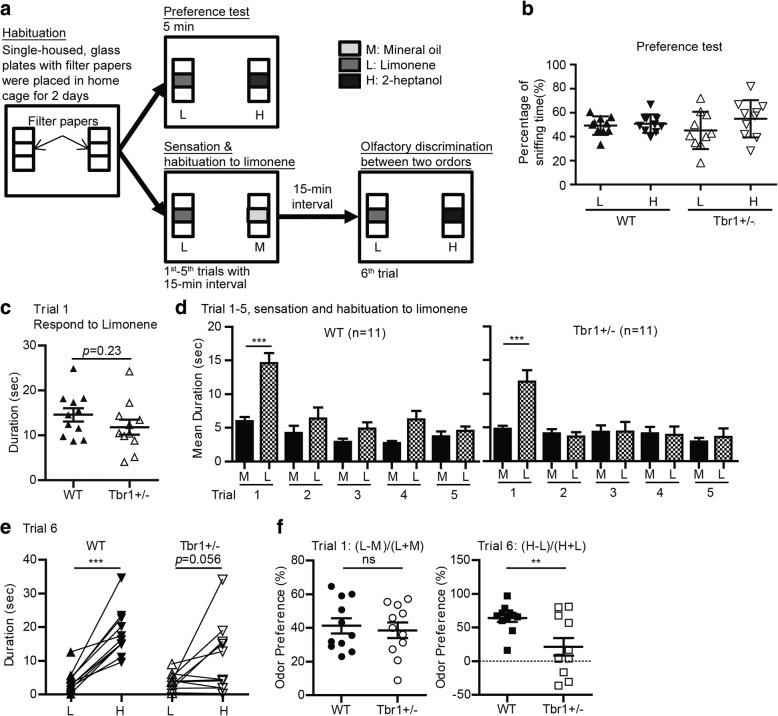
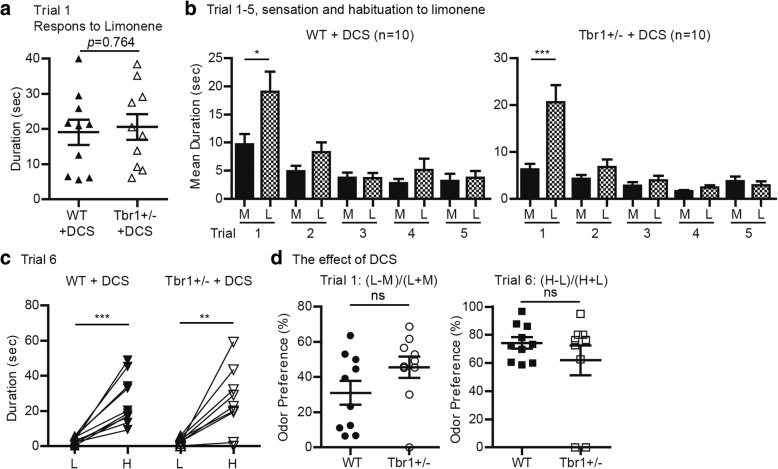
Autism spectrum disorders (ASD) exhibit two clusters of core symptoms, i.e., social and communication impairment, and repetitive behaviors and sensory abnormalities. Our previous study demonstrated that TBR1, a causative gene of ASD, controls axonal projection and neuronal activation of amygdala and regulates social interaction and vocal communication in a mouse model. Behavioral defects caused by haploinsufficiency can be ameliorated by increasing neural activity via D-cycloserine treatment, an N-methyl-D-aspartate receptor (NMDAR) coagonist. In this report, we investigate the role of TBR1 in regulating olfaction and test whether D-cycloserine can also improve olfactory defects in mutant mice.
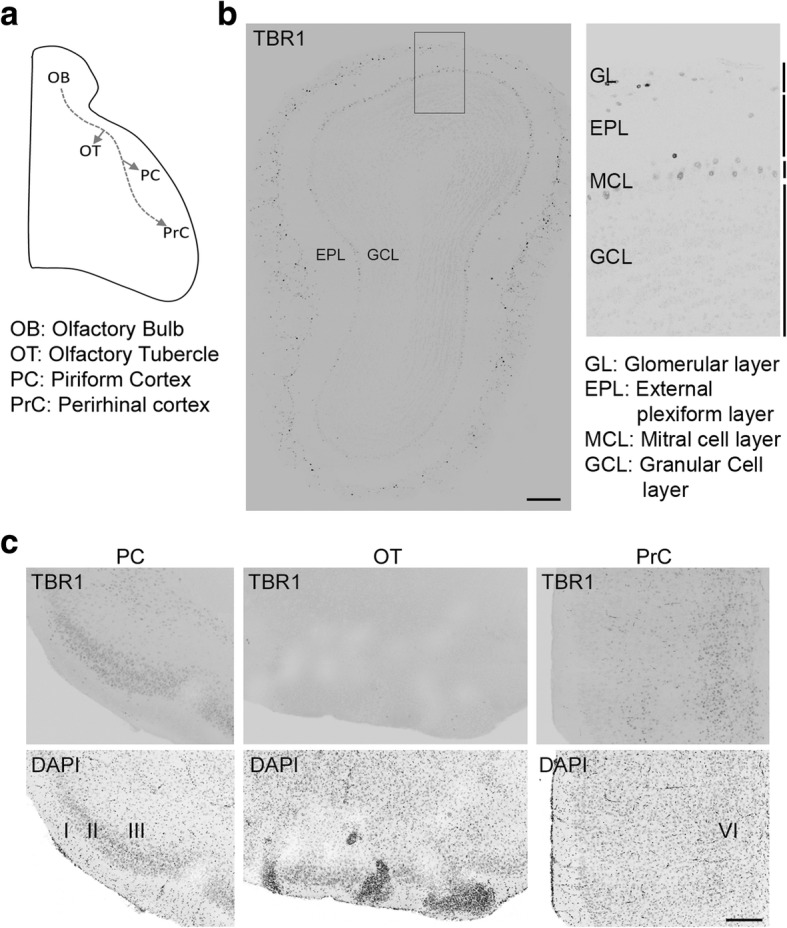
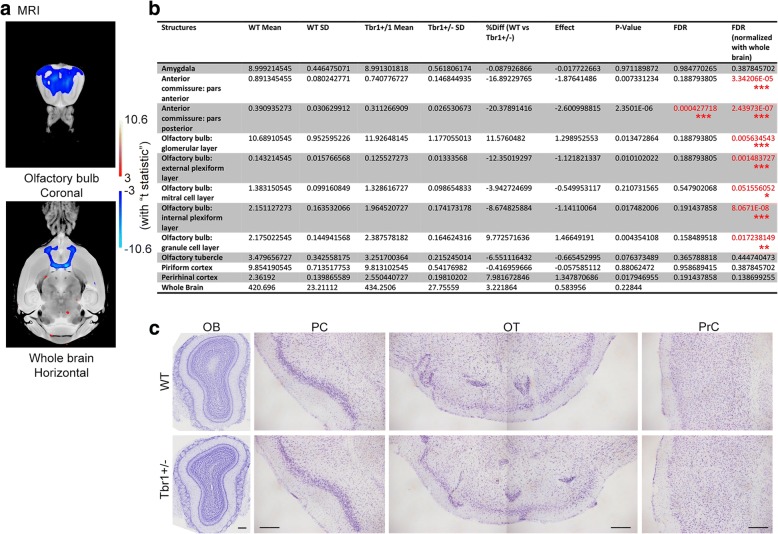
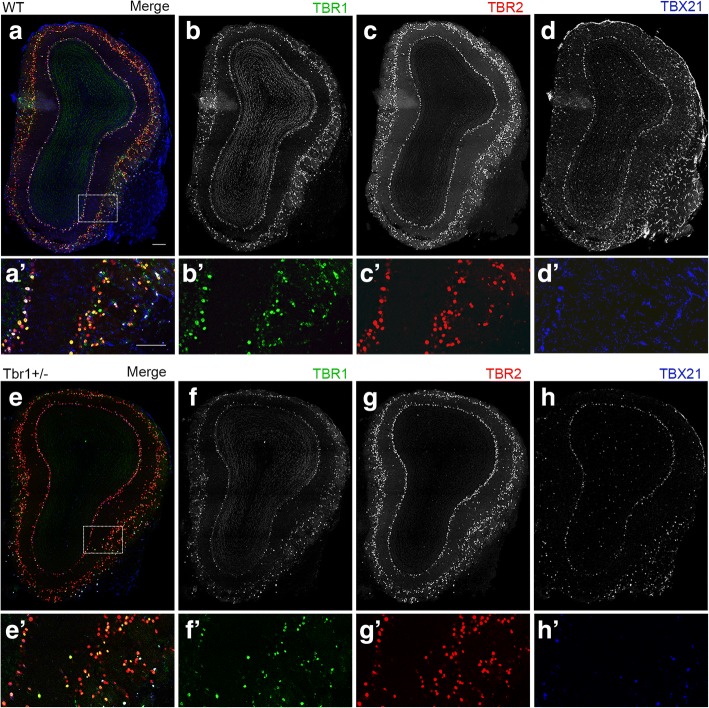
We used mice as a model to investigate the function of TBR1 in olfactory sensation and discrimination of non-social odors. We employed a behavioral assay to characterize the olfactory defects of mice. Magnetic resonance imaging (MRI) and histological analysis were applied to characterize anatomical features. Immunostaining was performed to further analyze differences in expression of TBR1 subfamily members (namely TBR1, TBR2, and TBX21), interneuron populations, and dendritic abnormalities in olfactory bulbs. Finally, C-FOS staining was used to monitor neuronal activation of the olfactory system upon odor stimulation.
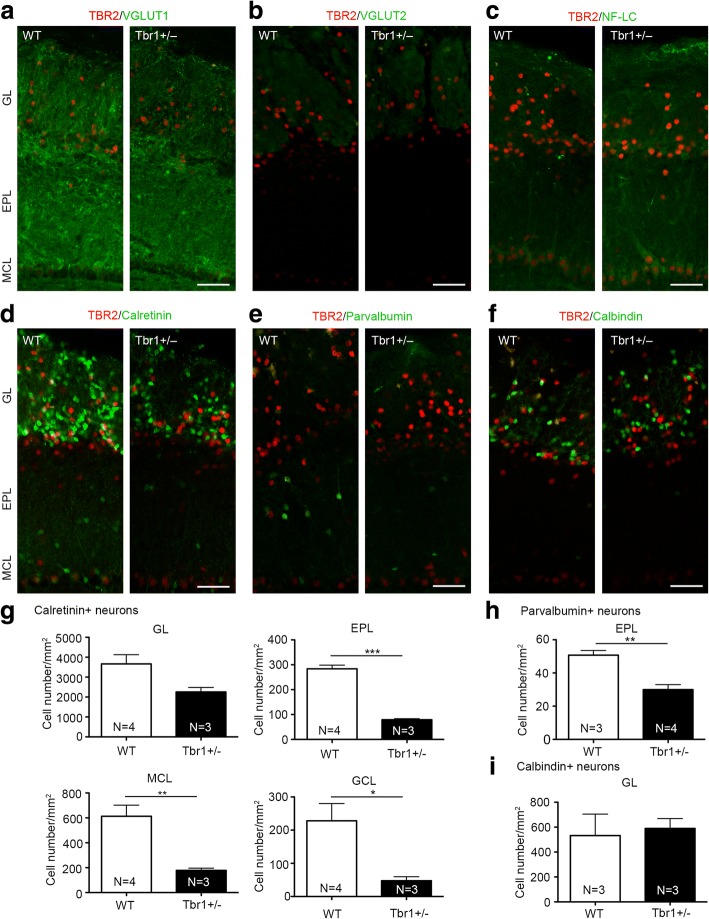
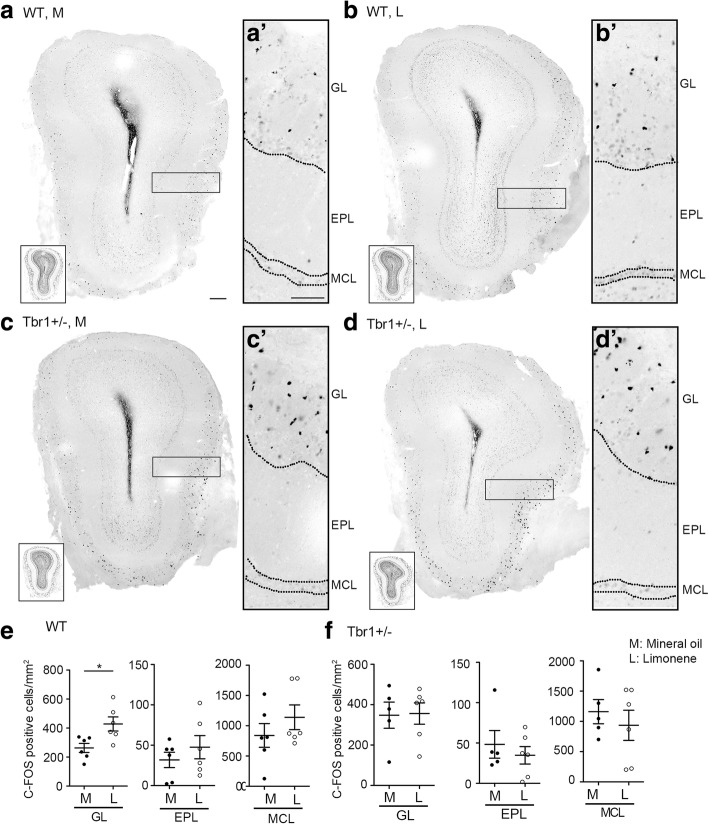
mice exhibited smaller olfactory bulbs and anterior commissures, reduced interneuron populations, and an abnormal dendritic morphology of mitral cells in the olfactory bulbs. haploinsufficiency specifically impaired olfactory discrimination but not olfactory sensation. Neuronal activation upon odorant stimulation was reduced in the glomerular layer of olfactory bulbs. Furthermore, although the sizes of piriform and perirhinal cortices were not affected by deficiency, neuronal activation was reduced in these two cortical regions in response to odorant stimulation. These results suggest an impairment of neuronal activation in olfactory bulbs and defective connectivity from olfactory bulbs to the upper olfactory system in mice. Systemic administration of D-cycloserine, an NMDAR co-agonist, ameliorated olfactory discrimination in mice, suggesting that increased neuronal activity has a beneficial effect on deficiency.
regulates neural circuits and activity in the olfactory system to control olfaction. mice can serve as a suitable model for revealing how an autism causative gene controls neuronal circuits, neural activity, and autism-related behaviors.
自闭症谱系障碍(ASD)表现出两组核心症状,即社交和沟通障碍以及重复行为和感觉异常。我们之前的研究表明,TBR1 是 ASD 的致病基因,它控制杏仁核的轴突投射和神经元激活,并调节小鼠模型中的社交互动和发声交流。通过使用 D-环丝氨酸治疗(一种 N-甲基-D-天冬氨酸受体(NMDAR)共激动剂)增加神经活动,可以改善由单倍不足引起的行为缺陷。在本报告中,我们研究了 TBR1 在调节嗅觉中的作用,并测试 D-环丝氨酸是否也可以改善突变小鼠的嗅觉缺陷。
我们使用 小鼠作为模型来研究 TBR1 在嗅觉感知和非社交气味辨别中的功能。我们采用行为测定法来描述 小鼠的嗅觉缺陷。磁共振成像(MRI)和组织学分析用于描述解剖特征。免疫染色用于进一步分析 TBR1 亚家族成员(即 TBR1、TBR2 和 TBX21)、中间神经元群体和嗅球中树突异常的表达差异。最后,使用 C-FOS 染色来监测嗅觉系统在气味刺激下的神经元激活。
小鼠表现出嗅球和前连合较小、中间神经元群体减少以及嗅球中僧帽细胞树突形态异常。TBR1 单倍不足特异性损害嗅觉辨别能力,而不损害嗅觉感知。气味刺激时嗅球中肾小球层的神经元激活减少。此外,尽管 缺乏对梨状皮层和旁嗅皮层的大小没有影响,但这两个皮层区域对气味刺激的神经元激活减少。这些结果表明 小鼠嗅球中的神经元激活受损,以及嗅球到上嗅觉系统的连接不良。全身给予 D-环丝氨酸(一种 NMDAR 共激动剂)可改善 小鼠的嗅觉辨别能力,表明增加神经元活动对 缺乏有益。
TBR1 调节嗅觉系统中的神经回路和活动以控制嗅觉。 小鼠可作为揭示自闭症致病基因如何控制神经元回路、神经活动和自闭症相关行为的合适模型。