1Department of Pharmacy, University of Split School of Medicine, Soltanska 2, Split, Croatia.
2Department of Pathophysiology, University of Split School of Medicine, Soltanska 2, Split, Croatia.
Antimicrob Resist Infect Control. 2019 Feb 11;8:30. doi: 10.1186/s13756-019-0495-5. eCollection 2019.
The aim of this study was to investigate whether marketed antibiotics package sizes are in accordance with treatment durations recommended in guidelines for prescribing antibiotics in sore throat and urinary tract infections.
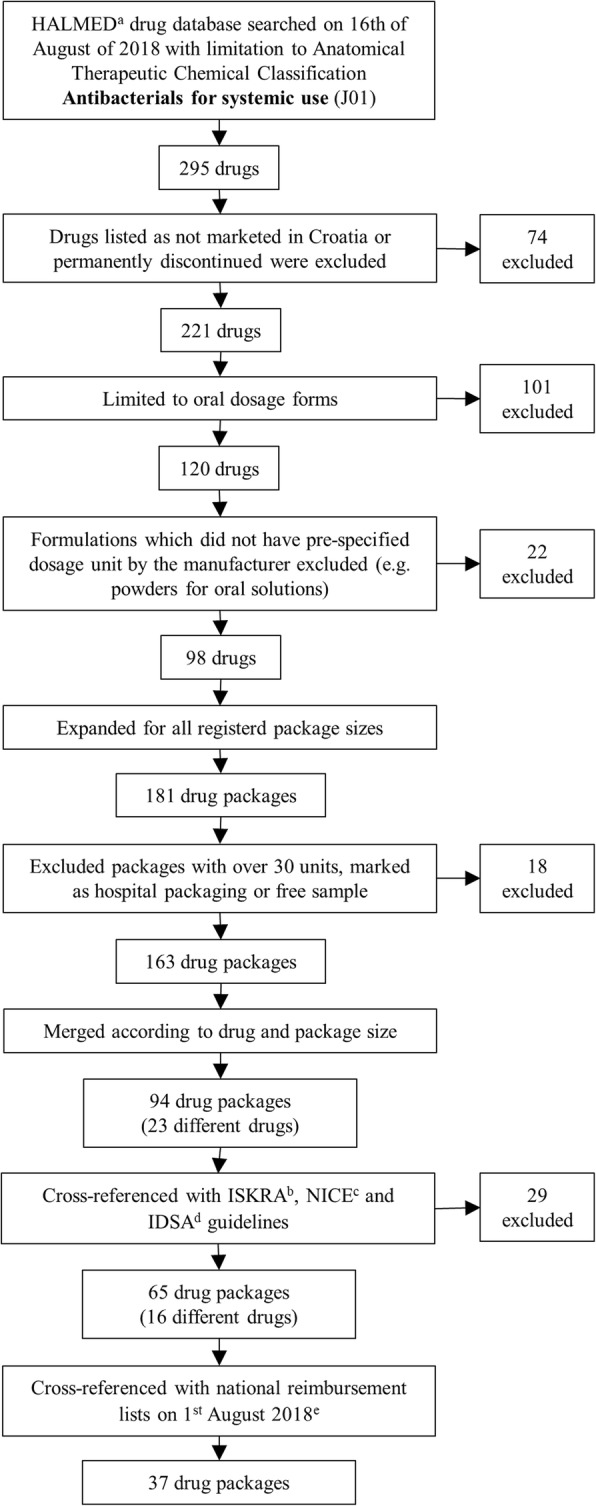
National drug database was searched with limitation to Antibacterials for systemic use. Formulations which did not have pre-specified dosage unit by the manufacturer were excluded (e.g. powders for oral solutions). The final list contained 94 drugs with 23 different active substances. This list was then cross-referenced with selected antimicrobial prescribing guidelines provided by Intersectoral Society for Antibiotic Resistance Control (ISKRA), National Institute for Health and Care Excellence (NICE) and The Infectious Diseases Society of America (IDSA).
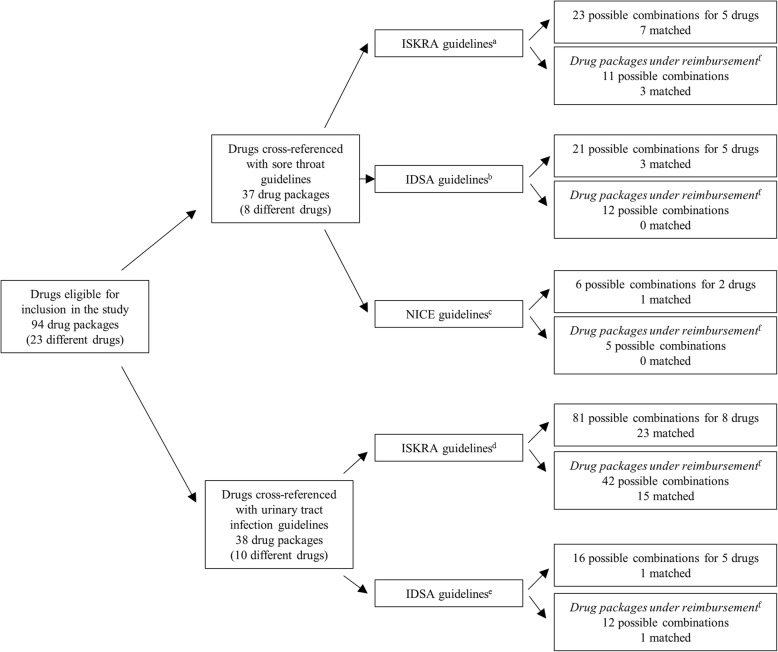
Seven packages matched ISKRA guidelines on sore throat while 16 were mismatched. Considering drug packages under reimbursement, 3 matched ISKRA guidelines and 8 were mismatched. Only 3 packages matched IDSA guidelines for comparable indications, and 18 were mismatched. When considering NICE guidelines there were 5 mismatched and only one package that was in accordance with the guidelines. ISKRA guidelines for urinary tract infections matched 23 packages and mismatched 58 packages. IDSA guidelines for urinary tract infections matched one package and were mismatched in 15 cases.
One of the causes of leftover antibiotics is poor accordance of antibiotic package size with treatment recommendation duration. This should be identified as a potential target for reduction of excess antibiotics in the community. Measures that promote patient adherence to therapy and patient education should be considered essential to manage proper handling of leftover antibiotics.
本研究旨在调查市售抗生素包装规格是否符合咽痛和尿路感染抗生素处方指南中推荐的治疗持续时间。
对国家药物数据库进行了限制为全身使用的抗菌药物的搜索。排除了制造商未按规定剂量单位规定的制剂(例如口服溶液的粉末)。最终清单包含 94 种药物,含有 23 种不同的活性物质。然后将该清单与由抗菌药物耐药性控制跨部门学会(ISKRA)、国家卫生与保健卓越研究所(NICE)和美国传染病学会(IDSA)提供的选定抗菌药物处方指南进行交叉引用。
7 种包装与 ISKRA 咽痛指南相符,16 种包装不符。考虑到报销的药物包装,3 种包装与 ISKRA 指南相符,8 种包装不符。只有 3 种包装与 IDSA 用于类似适应症的指南相符,18 种包装不符。考虑到 NICE 指南,有 5 种包装不符,只有一种包装符合指南。ISKRA 尿路感染指南与 23 种包装相符,与 58 种包装不符。IDSA 尿路感染指南与一种包装相符,15 种包装不符。
抗生素包装规格与治疗建议持续时间不一致是剩余抗生素的原因之一。这应被视为减少社区中多余抗生素的潜在目标。应考虑促进患者对治疗的依从性和患者教育的措施,以妥善处理剩余抗生素。