Chua Eng-Guan, Debowski Aleksandra W, Webberley K Mary, Peters Fanny, Lamichhane Binit, Loke Mun-Fai, Vadivelu Jamuna, Tay Chin-Yen, Marshall Barry J, Wise Michael J
The Marshall Centre for Infectious Diseases Research and Training, University of Western Australia, Perth, Western Australia, Australia.
School of Biomedical Sciences, Faculty of Health and Medical Sciences, University of Western Australia, Perth, Western Australia, Australia.
Gastroenterol Rep (Oxf). 2019 Feb;7(1):42-49. doi: 10.1093/gastro/goy048. Epub 2019 Jan 2.
Metronidazole is one of the first-line drugs of choice in the standard triple therapy used to eradicate infection. Hence, the global emergence of metronidazole resistance in poses a major challenge to health professionals. Inactivation of RdxA is known to be a major mechanism of conferring metronidazole resistance in However, metronidazole resistance can also arise in strains expressing functional RdxA protein, suggesting that there are other mechanisms that may confer resistance to this drug.
We performed whole-genome sequencing on 121 clinical strains, among which 73 were metronidazole-resistant. Sequence-alignment analysis of core protein clusters derived from clinical strains containing full-length RdxA was performed. Variable sites in each alignment were statistically compared between the resistant and susceptible groups to determine candidate genes along with their respective amino-acid changes that may account for the development of metronidazole resistance in
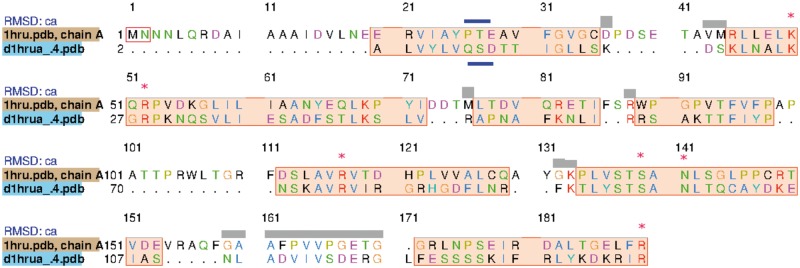
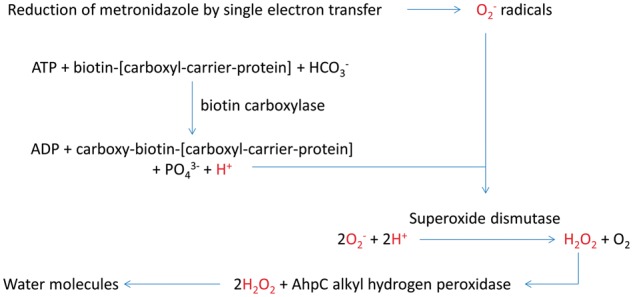
Resistance due to RdxA truncation was identified in 34% of metronidazole-resistant strains. Analysis of core protein clusters derived from the remaining 48 metronidazole-resistant strains and 48 metronidazole-susceptible identified four variable sites significantly associated with metronidazole resistance. These sites included R16H/C in RdxA, D85N in the inner-membrane protein RclC (HP0565), V265I in a biotin carboxylase protein (HP0370) and A51V/T in a putative threonylcarbamoyl-AMP synthase (HP0918).
Our approach identified new potential mechanisms for metronidazole resistance in that merit further investigation.
甲硝唑是用于根除幽门螺杆菌感染的标准三联疗法中的一线首选药物之一。因此,幽门螺杆菌对甲硝唑耐药性在全球范围内的出现给卫生专业人员带来了重大挑战。已知RdxA失活是幽门螺杆菌产生甲硝唑耐药性的主要机制。然而,表达功能性RdxA蛋白的幽门螺杆菌菌株也可能出现甲硝唑耐药性,这表明存在其他可能导致对该药物耐药的机制。
我们对121株幽门螺杆菌临床菌株进行了全基因组测序,其中73株对甲硝唑耐药。对含有全长RdxA的临床菌株衍生的核心蛋白簇进行了序列比对分析。在耐药组和敏感组之间对每个比对中的可变位点进行统计学比较,以确定可能导致幽门螺杆菌甲硝唑耐药性产生的候选基因及其各自的氨基酸变化。
在34%的甲硝唑耐药菌株中发现了由于RdxA截短导致的耐药性。对其余48株甲硝唑耐药菌株和48株甲硝唑敏感菌株衍生的核心蛋白簇进行分析,确定了四个与甲硝唑耐药性显著相关的可变位点。这些位点包括RdxA中的R16H/C、内膜蛋白RclC(HP0565)中的D85N、生物素羧化酶蛋白(HP0370)中的V265I以及假定的苏氨酰氨基甲酰-AMP合酶(HP0918)中的A51V/T。
我们的方法确定了幽门螺杆菌甲硝唑耐药性的新潜在机制,值得进一步研究。