Department of General Zoology and Neurobiology, ND7/31, Ruhr-University Bochum, Universitätsstr. 150, D-44780, Bochum, Germany.
Developmental Neurobiology, ND6/72, Ruhr-University Bochum, Universitätsstr. 150, D-44780, Bochum, Germany.
Commun Biol. 2019 Feb 14;2:60. doi: 10.1038/s42003-019-0292-y. eCollection 2019.
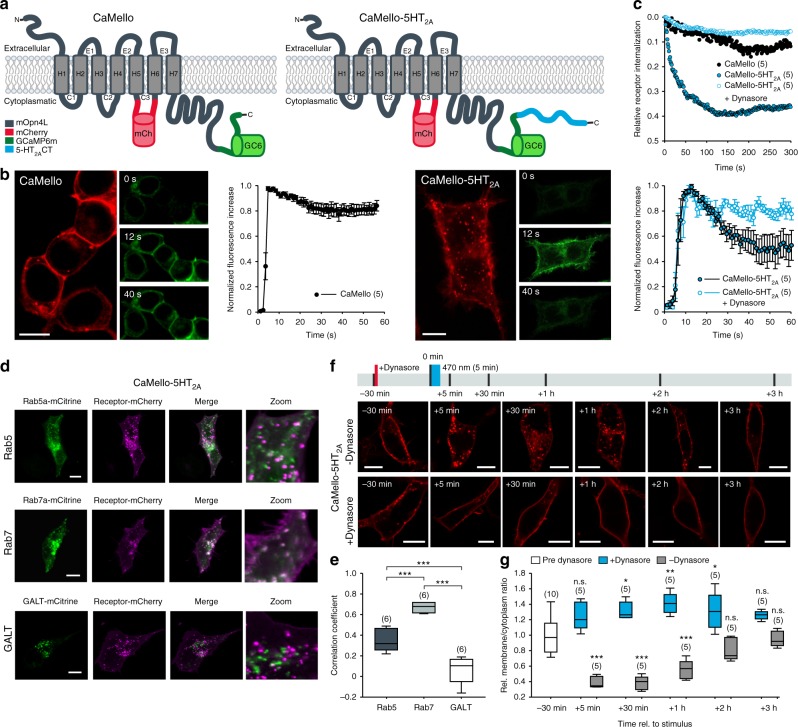
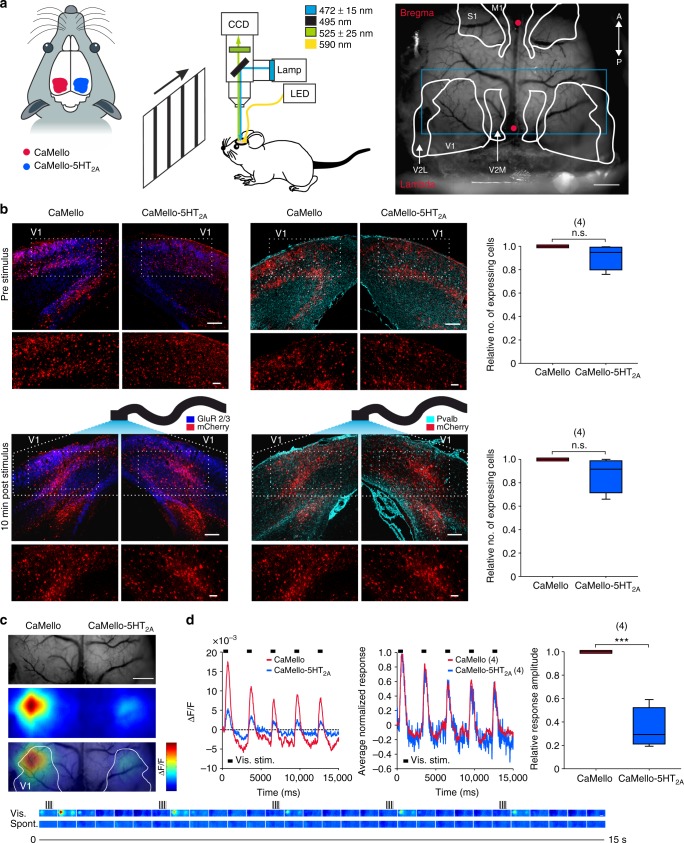
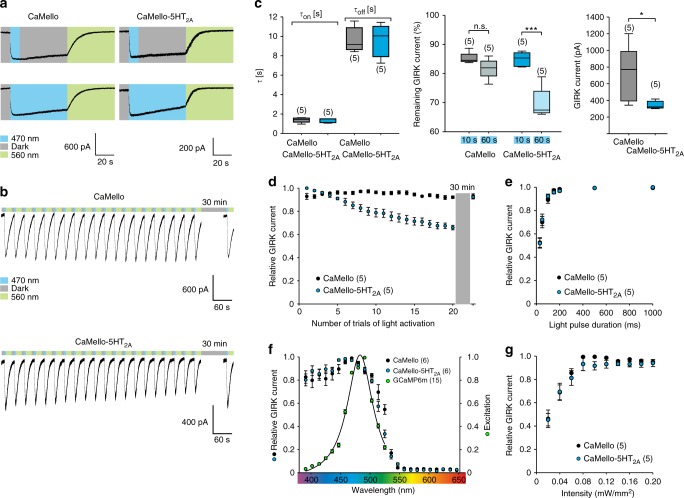
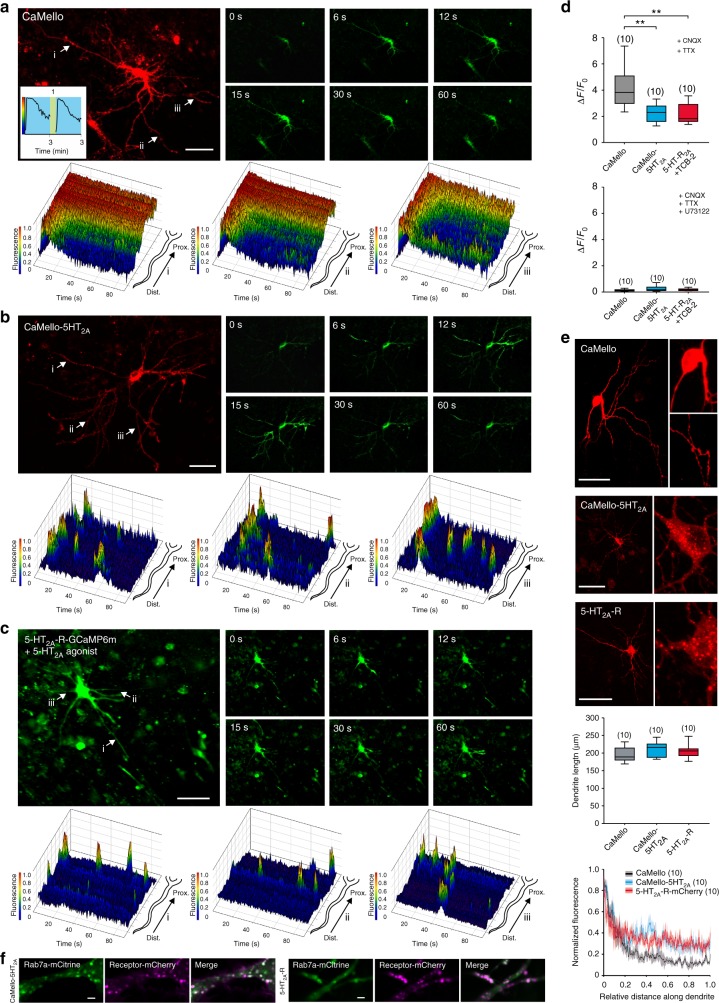
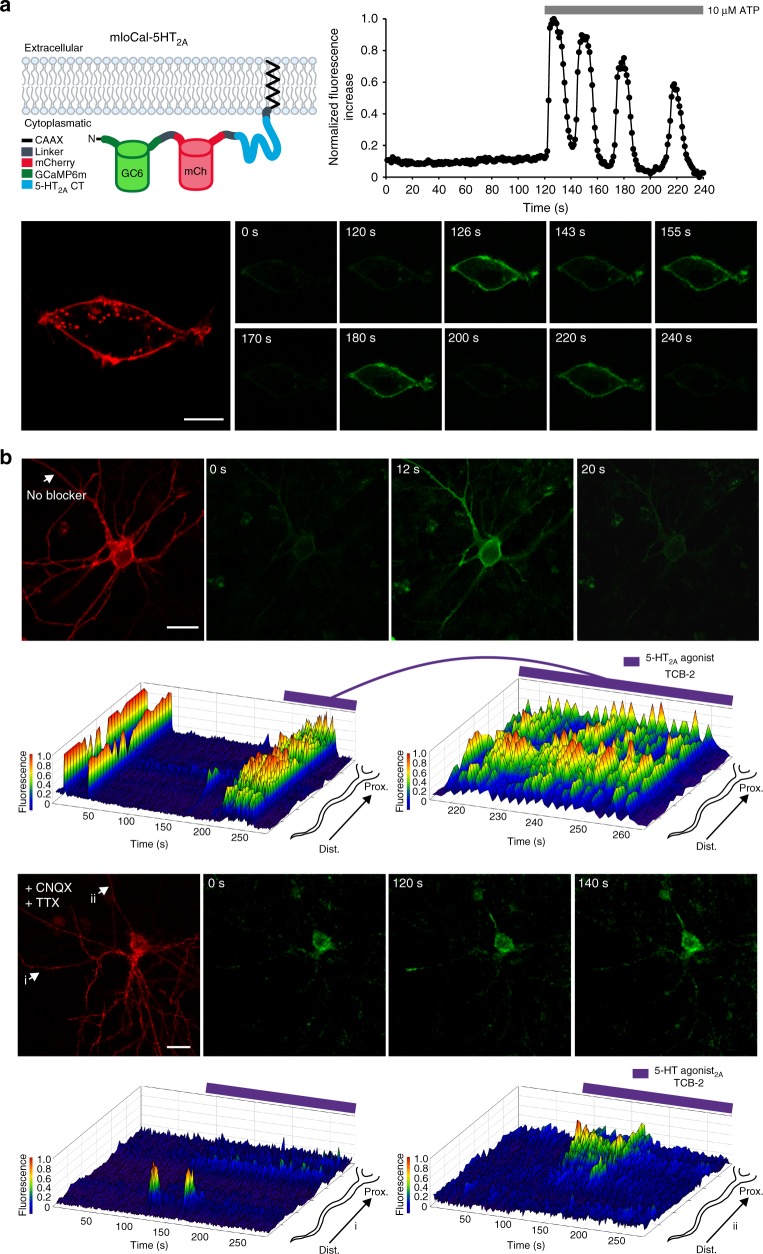
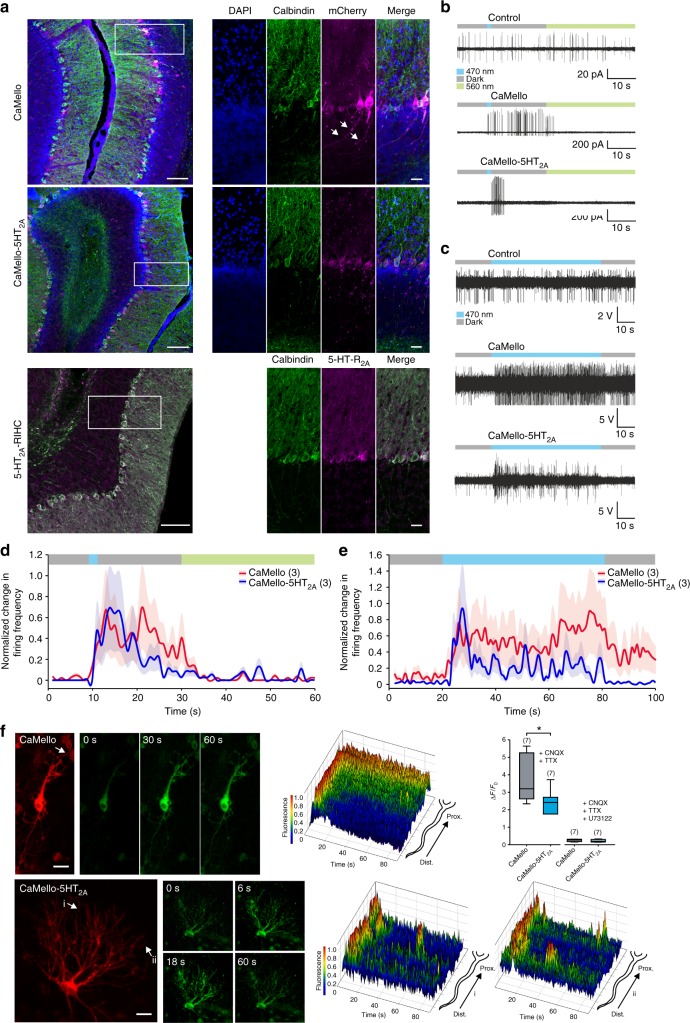
The signal specificity of G protein-coupled receptors (GPCRs) including serotonin receptors (5-HT-R) depends on the trafficking and localization of the GPCR within its subcellular signaling domain. Visualizing traffic-dependent GPCR signals in neurons is difficult, but important to understand the contribution of GPCRs to synaptic plasticity. We engineered CaMello (Ca-melanopsin-local-sensor) and CaMello-5HT for visualization of traffic-dependent Ca signals in 5-HT-R domains. These constructs consist of the light-activated G coupled melanopsin, mCherry and GCaMP6m for visualization of Ca signals and receptor trafficking, and the 5-HT C-terminus for targeting into 5-HT-R domains. We show that the specific localization of the GPCR to its receptor domain drastically alters the dynamics and localization of the intracellular Ca signals in different neuronal populations in vitro and in vivo. The CaMello method may be extended to every GPCR coupling to the G pathway to help unravel new receptor-specific functions in respect to synaptic plasticity and GPCR localization.
G 蛋白偶联受体(GPCRs)包括血清素受体(5-HT-R)的信号特异性取决于 GPCR 在其细胞内信号转导域中的运输和定位。在神经元中可视化依赖于运输的 GPCR 信号很困难,但对于了解 GPCR 对突触可塑性的贡献很重要。我们设计了 CaMello(Ca-黑视蛋白-局部传感器)和 CaMello-5HT,用于可视化 5-HT-R 结构域中依赖于运输的 Ca 信号。这些构建体由光激活的 G 偶联黑视蛋白、mCherry 和 GCaMP6m 组成,用于可视化 Ca 信号和受体运输,以及 5-HT C 末端,用于靶向 5-HT-R 结构域。我们表明,GPCR 特异性定位于其受体结构域会极大地改变不同神经元群体在体外和体内的细胞内 Ca 信号的动力学和定位。CaMello 方法可以扩展到与 G 途径偶联的每一个 GPCR,以帮助揭示与突触可塑性和 GPCR 定位相关的新的受体特异性功能。