School of Public Health, Dalian Medical University, No. 9W. Lvshun South Road, Dalian 116044, China.
State Key Laboratory of Natural Products and Functions, Institute of Materia Medica, Chinese Academy of Medical Sciences & Peking Union Medical College, Beijing 100050, China.
Redox Biol. 2019 Apr;22:101134. doi: 10.1016/j.redox.2019.101134. Epub 2019 Feb 8.
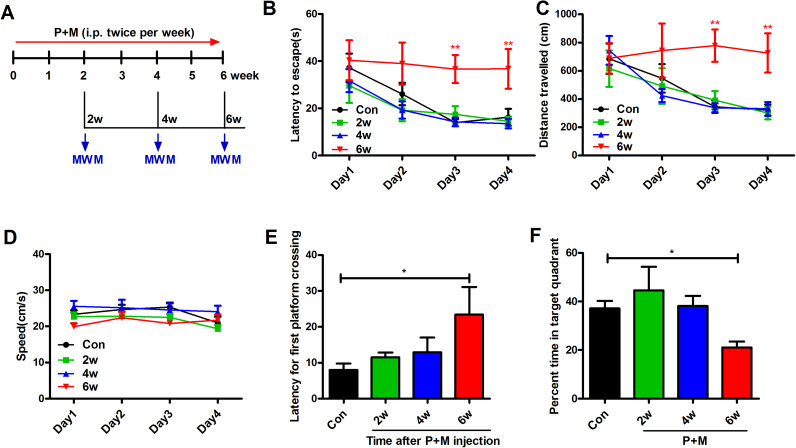
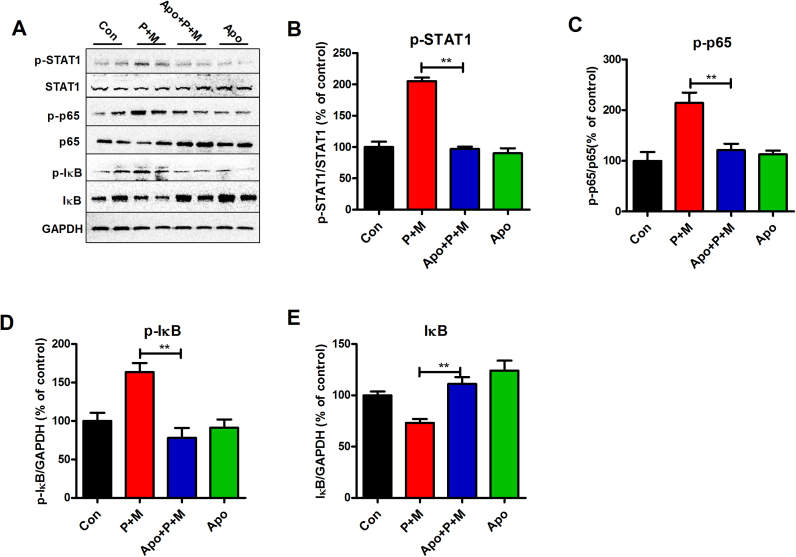
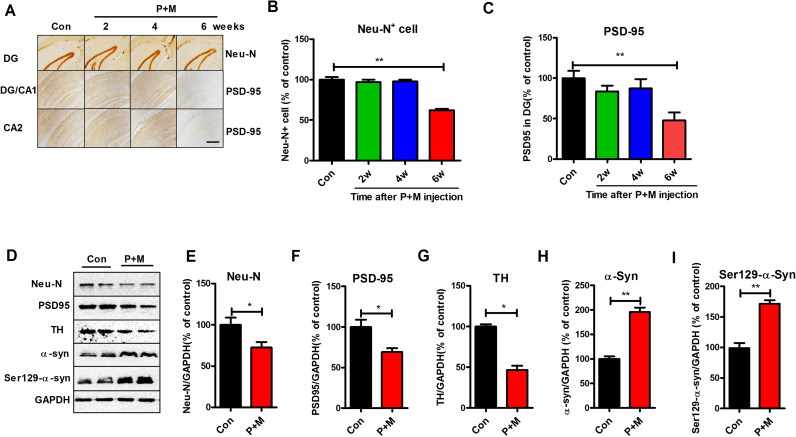
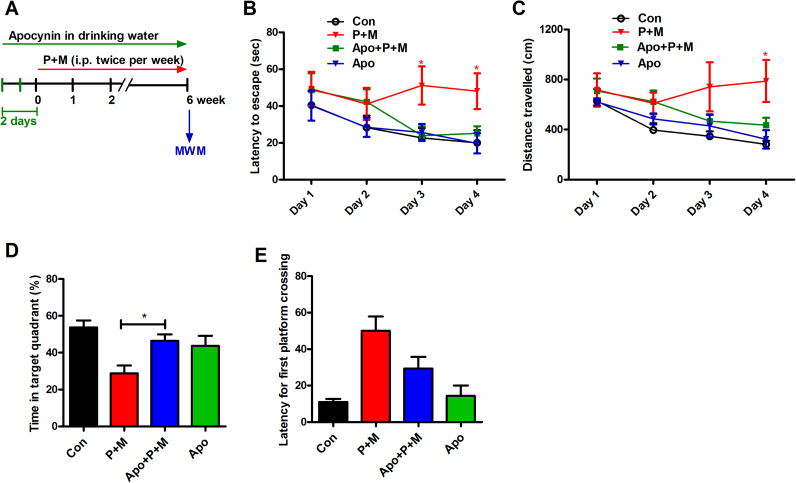
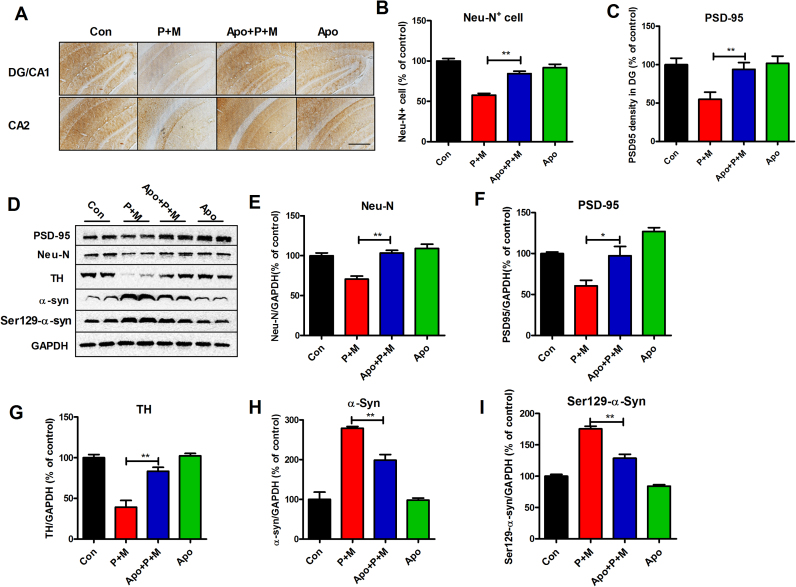
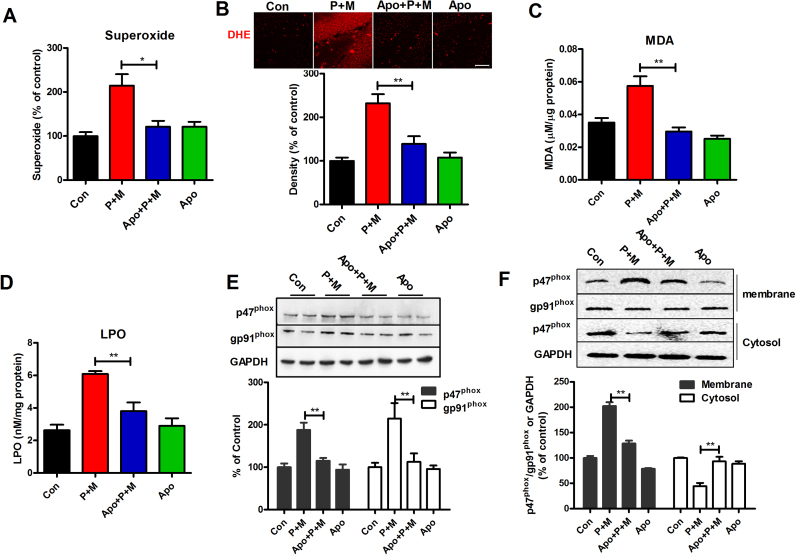
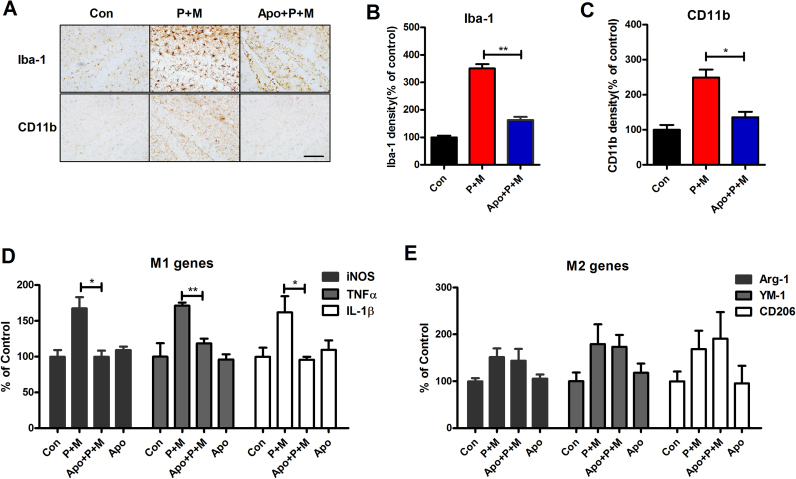
The activation of NADPH oxidase contributes to dopaminergic neurodegeneration and motor deficits in Parkinson's disease (PD). However, whether NADPH oxidase is involved in non-motor symptoms, especially cognitive dysfunction in PD remains unknown. This study is undertaken to characterize the effects of inhibition of NADPH oxidase by a widely used NADPH oxidase inhibitor apocynin on learning and memory deficits in paraquat and maneb-induced mouse PD model. Results showed that mice injected with paraquat and maneb displayed impairments of spatial learning and memory, which was associated with reduced tyrosine hydroxylase expression as well as increased neurodegeneration, synaptic loss, α-synuclein expression and Ser129-phosphorylation in the hippocampus. Interestingly, apocynin treatment significantly ameliorated learning and memory deficits as well as hippocampal neurodegeneration and α-synuclein pathology in mice treated with these two pesticides. Mechanistically, we found that apocynin mitigated paraquat and maneb-induced NADPH oxidase activation and related oxidative stress. Furthermore, reduced microglial activation and M1 polarization were observed in apocynin and paraquat and maneb co-treated mice compared with paraquat and maneb alone group. Finally, apocynin inhibited the activation of signal transducers and activators of transcription 1 (STAT1) and nuclear factor kappa B (NF-κB) pathways, two key regulatory factors for microglial M1 inflammatory responses, in paraquat and maneb-treated mice. Altogether, our findings implied that NADPH oxidase mediates learning and memory deficits in PD, and inhibition of NADPH oxidase by apocynin blocks impairments of learning and memory via the suppression of oxidative stress and neuroinflammation.
烟酰胺腺嘌呤二核苷酸磷酸氧化酶的激活导致帕金森病(PD)中的多巴胺能神经退行性变和运动功能障碍。然而,NADPH 氧化酶是否参与非运动症状,特别是 PD 中的认知功能障碍尚不清楚。本研究旨在描述广泛使用的 NADPH 氧化酶抑制剂 apocynin 抑制 NADPH 氧化酶对百草枯和代森锰诱导的 PD 模型小鼠学习和记忆缺陷的影响。结果表明,注射百草枯和代森锰的小鼠表现出空间学习和记忆障碍,这与酪氨酸羟化酶表达减少以及海马神经元丢失、α-突触核蛋白表达和 Ser129 磷酸化增加有关。有趣的是,apocynin 治疗显著改善了这些两种农药处理的小鼠的学习和记忆缺陷以及海马神经元丢失和α-突触核蛋白病理学。在机制上,我们发现 apocynin 减轻了百草枯和代森锰诱导的 NADPH 氧化酶激活和相关的氧化应激。此外,与百草枯和代森锰单独处理组相比,apocynin 和百草枯和代森锰共同处理的小鼠中观察到小胶质细胞激活和 M1 极化减少。最后,apocynin 抑制了信号转导和转录激活因子 1(STAT1)和核因子 kappa B(NF-κB)通路的激活,这两个是小胶质细胞 M1 炎症反应的关键调节因子,在百草枯和代森锰处理的小鼠中。总之,我们的研究结果表明,NADPH 氧化酶介导 PD 中的学习和记忆缺陷,apocynin 通过抑制氧化应激和神经炎症来阻断 NADPH 氧化酶抑制导致的学习和记忆损伤。