Li Fudong, Sun Xiaofei, Sun Kaiqiang, Kong Fanqi, Jiang Xin, Kong Qingjie
Department of Orthopedics, Shanghai General Hospital, Shanghai Jiao Tong University School of Medicine, Shanghai, China.
Department of Orthopedic Surgery, Spine Center, Shanghai Changzheng Hospital, Naval Medical University, Shanghai, China.
Neural Regen Res. 2024 Aug 1;19(8):1802-1811. doi: 10.4103/1673-5374.389302. Epub 2023 Nov 8.
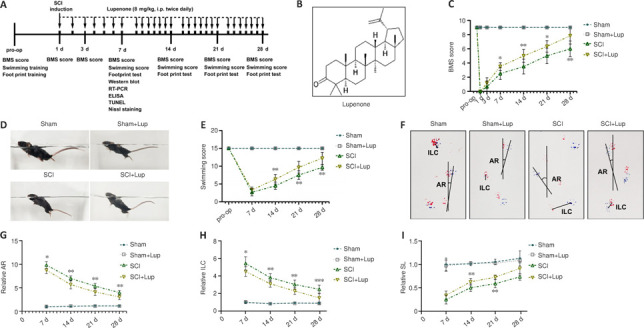
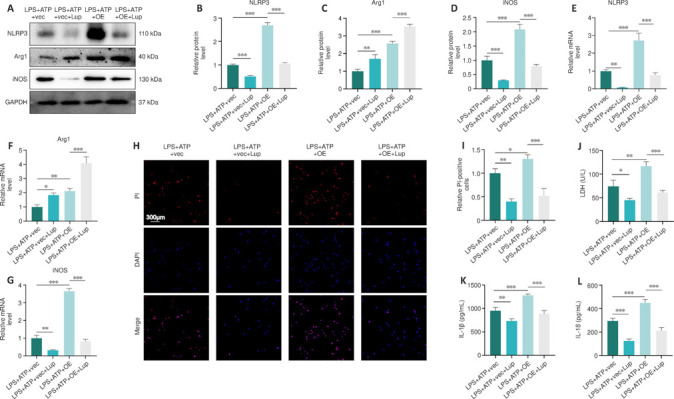
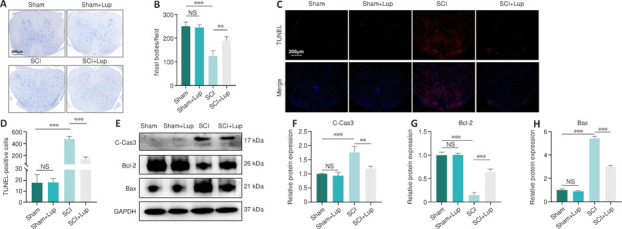
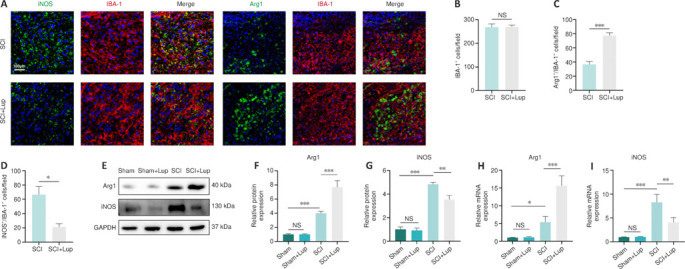
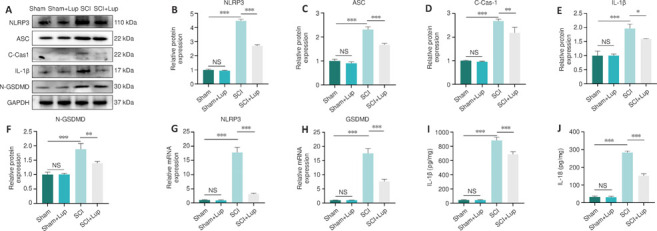
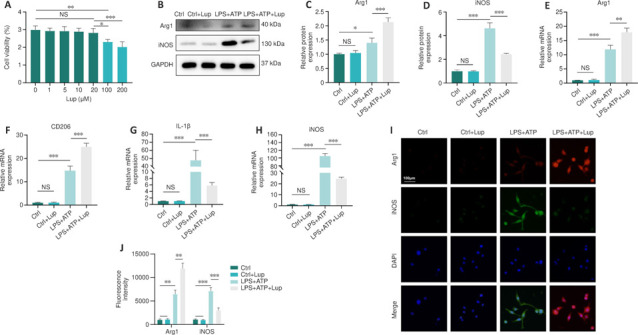
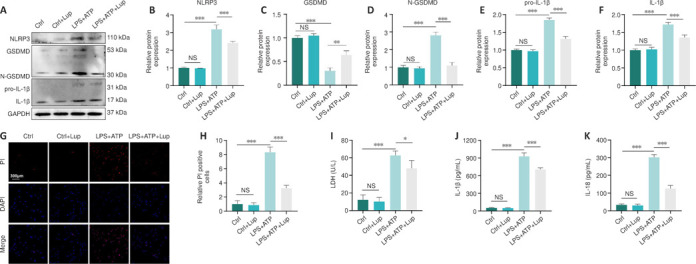
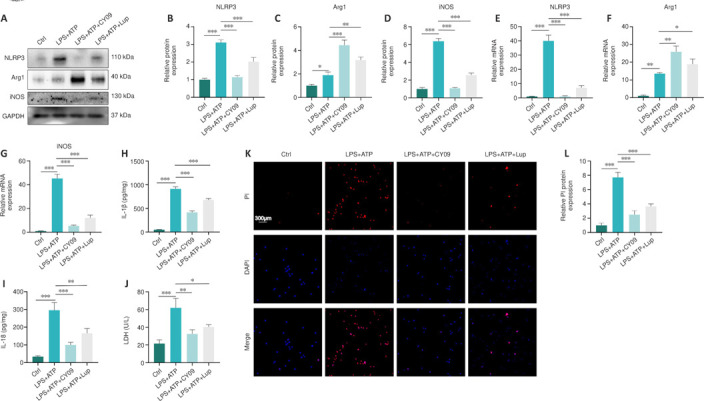
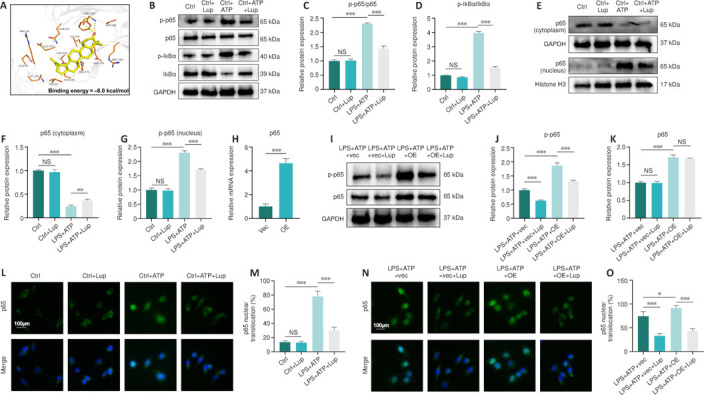
JOURNAL/nrgr/04.03/01300535-202408000-00034/figure1/v/2023-12-16T180322Z/r/image-tiff Spinal cord injury-induced motor dysfunction is associated with neuroinflammation. Studies have shown that the triterpenoid lupenone, a natural product found in various plants, has a remarkable anti-inflammatory effect in the context of chronic inflammation. However, the effects of lupenone on acute inflammation induced by spinal cord injury remain unknown. In this study, we established an impact-induced mouse model of spinal cord injury, and then treated the injured mice with lupenone (8 mg/kg, twice a day) by intraperitoneal injection. We also treated BV2 cells with lipopolysaccharide and adenosine 5'-triphosphate to simulate the inflammatory response after spinal cord injury. Our results showed that lupenone reduced IκBα activation and p65 nuclear translocation, inhibited NLRP3 inflammasome function by modulating nuclear factor kappa B, and enhanced the conversion of proinflammatory M1 microglial cells into anti-inflammatory M2 microglial cells. Furthermore, lupenone decreased NLRP3 inflammasome activation, NLRP3-induced microglial cell polarization, and microglia pyroptosis by inhibiting the nuclear factor kappa B pathway. These findings suggest that lupenone protects against spinal cord injury by inhibiting inflammasomes.
《期刊/nrgr/04.03/01300535 - 202408000 - 00034/图1/v/2023 - 12 - 16T180322Z/图像 - tiff》脊髓损伤诱导的运动功能障碍与神经炎症相关。研究表明,三萜类化合物羽扇豆酮是一种在多种植物中发现的天然产物,在慢性炎症背景下具有显著的抗炎作用。然而,羽扇豆酮对脊髓损伤诱导的急性炎症的影响仍不清楚。在本研究中,我们建立了撞击诱导的小鼠脊髓损伤模型,然后通过腹腔注射用羽扇豆酮(8毫克/千克,每天两次)治疗受伤小鼠。我们还用脂多糖和5'-三磷酸腺苷处理BV2细胞,以模拟脊髓损伤后的炎症反应。我们的结果表明,羽扇豆酮降低了IκBα的激活和p65的核转位,通过调节核因子κB抑制NLRP3炎性小体功能,并增强了促炎性M1小胶质细胞向抗炎性M2小胶质细胞的转化。此外,羽扇豆酮通过抑制核因子κB途径降低了NLRP3炎性小体的激活、NLRP3诱导的小胶质细胞极化和小胶质细胞焦亡。这些发现表明,羽扇豆酮通过抑制炎性小体来保护脊髓免受损伤。