Key Laboratory of Laboratory Medical Diagnostics, Chinese Ministry of Education, Chongqing Medical University, Chongqing 400016, China.
Key Laboratory of Laboratory Medical Diagnostics, Chinese Ministry of Education, Chongqing Medical University, Chongqing 400016, China; Department of Laboratory Medicine, Liuzhou Traditional Chinese Medical Hospital, Liuzhou 545001, Guangxi, China; Department of Laboratory Medicine, The Third Affiliated Hospital of Guangxi University of Chinese Medicine, Liuzhou 545001, Guangxi, China.
EBioMedicine. 2019 Mar;41:370-383. doi: 10.1016/j.ebiom.2019.02.025. Epub 2019 Feb 22.
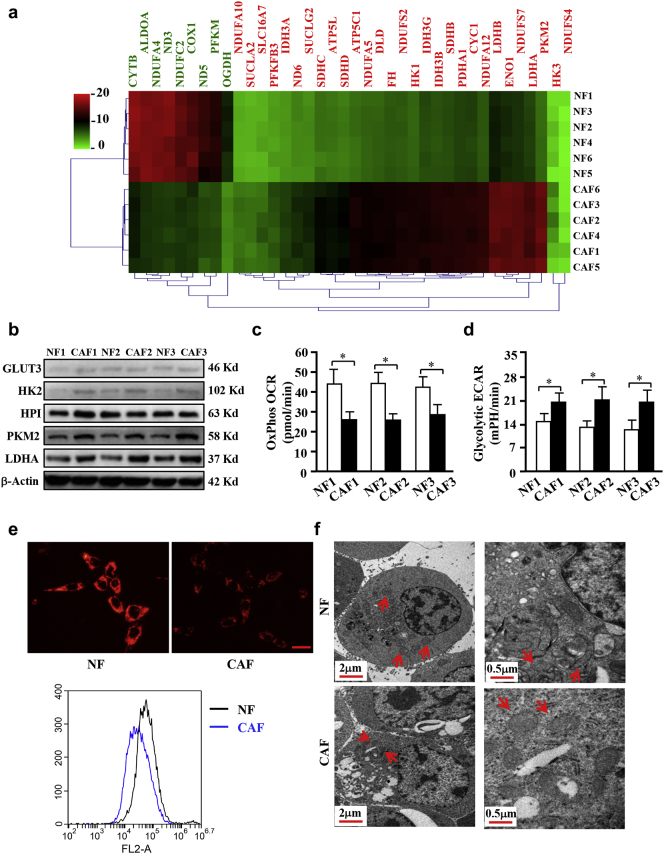
Cancer-associated fibroblasts (CAFs) are the predominant residents in the breast tumor microenvironment. In our work, we found activation of DNA damage-independent ATM (oxidized ATM), enhanced glycolysis and aberrant metabolism-associated gene expressions in breast CAFs. Nevertheless, whether and how oxidized ATM regulates the glycolytic activity of CAFs keep in unveil. Recently, a reverse Warburg effect was observed in tumor tissues, in which host cells (such as CAFs, PSCs) in the tumor microenvironment have been found to "fuel" the cancer cells via metabolites transfer. However, the molecular mechanisms of the metabolites from stromal cells playing a role to the progression of cancer cells remain to be determined.
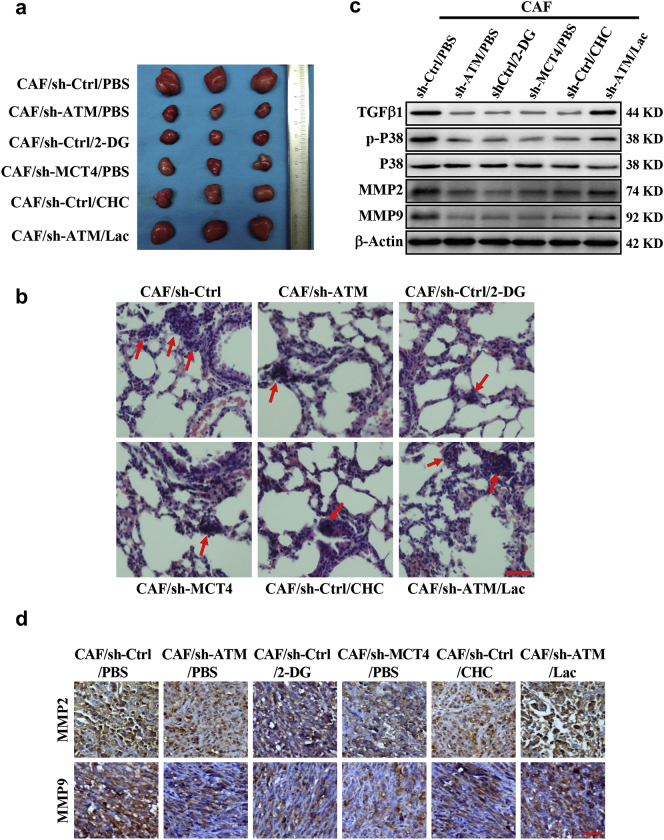
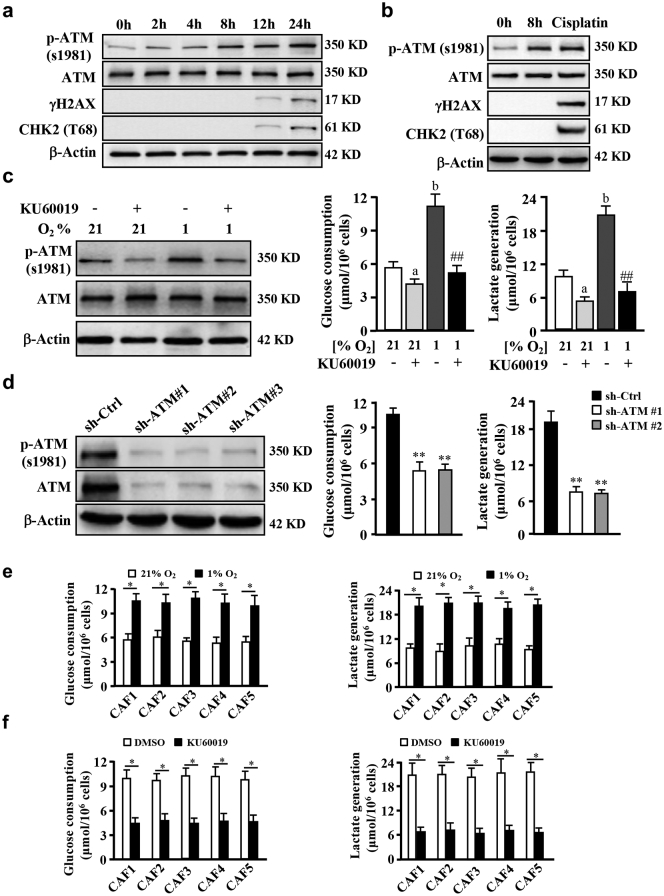
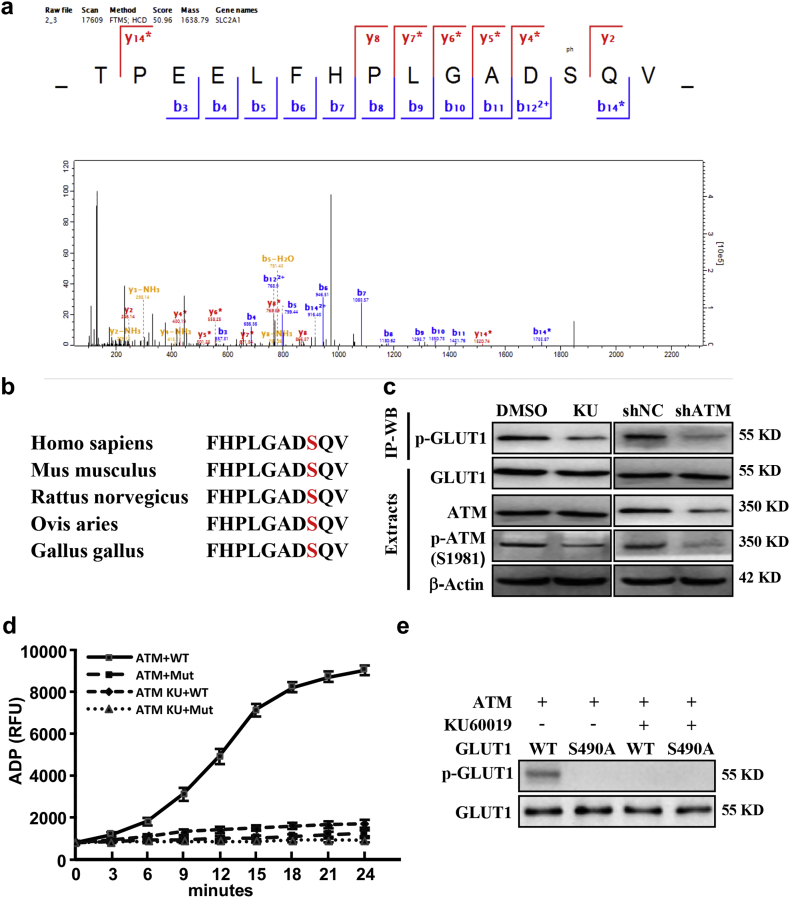
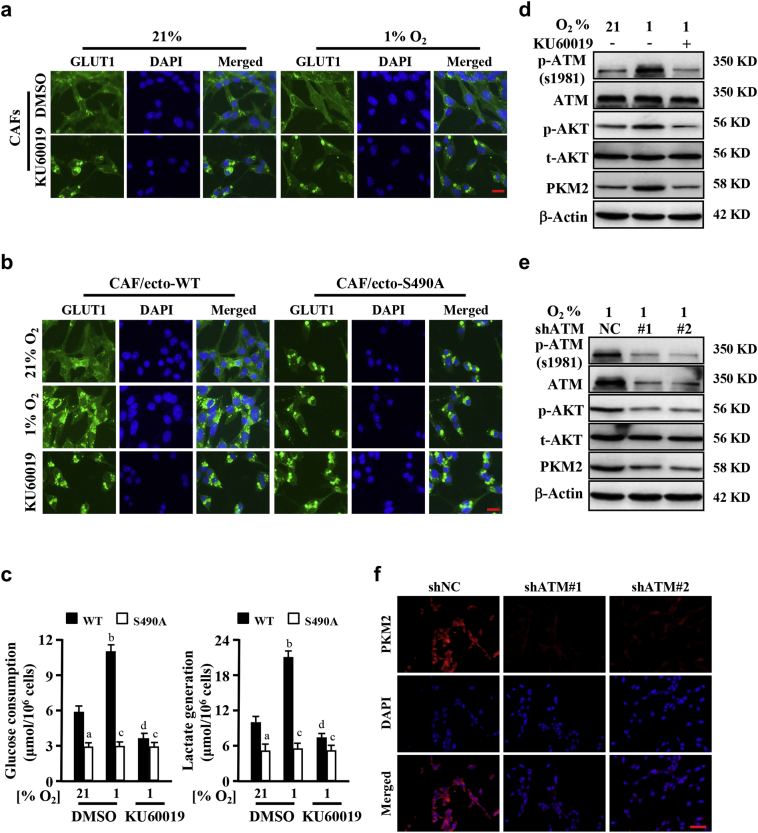
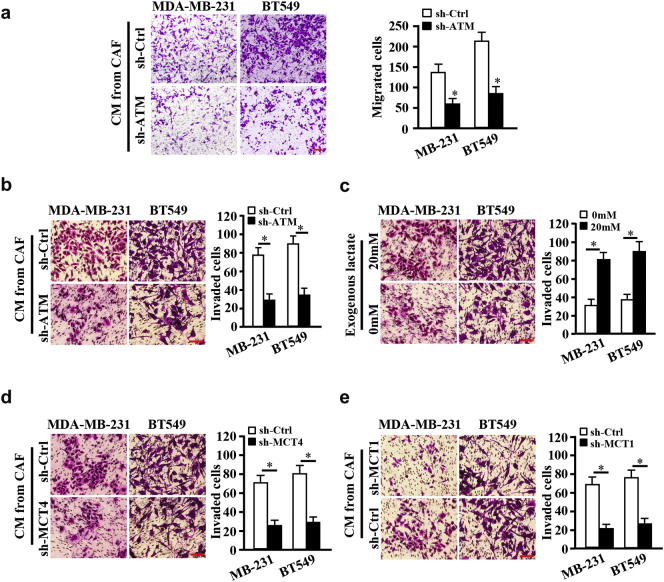
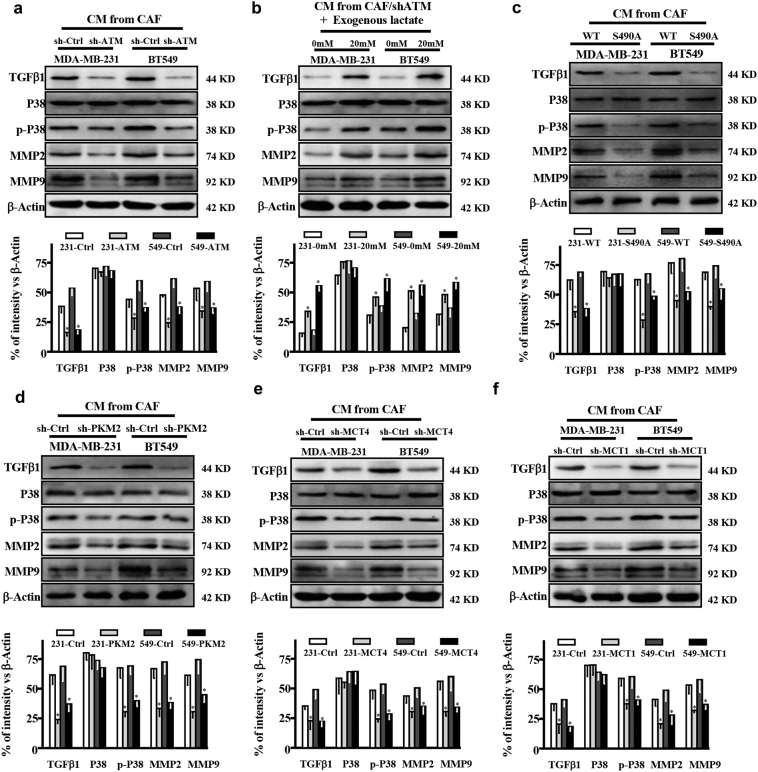
Oxidized ATM activation in stromal CAFs was assessed by western blotting and immunofluorescence. The increased glycolytic ability of CAFs was validated by measurements of OCR and ECAR and detections of glucose consumption and lactate production. Kinase assay and western blotting were performed to confirm the phosphorylation of GLUT1. The membrane location of phosphorylated GLUT1 was determined by biotin pull-down assay and immunofluorescence staining. The regulation of PKM2 through oxidized ATM was evaluated by western blots. In addition, the impact of lactate derived from hypoxic CAFs on cancer cell invasion was investigated both in vitro (transwell assays, western blots) and in vivo (orthotopic xenografts).
Hypoxia-induced oxidized ATM promotes glycolytic activity of CAFs by phosphorylating GLUT1 at S490 and increasing PKM2 expression. Moreover, lactate derived from hypoxic CAFs, acting as a metabolic coupling between CAFs and breast cancer cells, promotes breast cancer cell invasion by activating the TGFβ1/p38 MAPK/MMP2/9 signaling axis and fueling the mitochondrial activity in cancer cells.
Our work shows that oxidized ATM-mediated glycolysis enhancement in hypoxic stromal fibroblasts plays an essential role in cancer cell invasion and metastasis and may implicate oxidized ATM as a target for breast tumor treatment. FUND: This research was supported by National Natural Science Foundation of China.
癌症相关成纤维细胞(CAFs)是乳腺肿瘤微环境中的主要居民。在我们的工作中,我们发现乳腺 CAFs 中存在 DNA 损伤非依赖性 ATM(氧化 ATM)的激活、增强的糖酵解和异常代谢相关基因表达。然而,氧化 ATM 是否以及如何调节 CAFs 的糖酵解活性仍有待揭示。最近,在肿瘤组织中观察到了反向瓦伯格效应,其中肿瘤微环境中的宿主细胞(如 CAFs、PSC)已被发现通过代谢物转移为癌细胞“供能”。然而,基质细胞中的代谢物发挥作用促进癌细胞进展的分子机制仍有待确定。
通过 Western blot 和免疫荧光法评估基质 CAFs 中氧化 ATM 的激活。通过测量 OCR 和 ECAR 以及检测葡萄糖消耗和乳酸产生来验证 CAFs 增加的糖酵解能力。通过激酶测定和 Western blot 确认 GLUT1 的磷酸化。通过生物素下拉测定和免疫荧光染色确定磷酸化 GLUT1 的膜定位。通过 Western blot 评估 PKM2 对氧化 ATM 的调节。此外,还研究了缺氧 CAFs 衍生的乳酸对体外(transwell 测定、Western blot)和体内(原位异种移植)癌细胞侵袭的影响。
缺氧诱导的氧化 ATM 通过磷酸化 GLUT1 的 S490 促进 CAFs 的糖酵解活性,并增加 PKM2 的表达。此外,缺氧 CAFs 衍生的乳酸作为 CAFs 和乳腺癌细胞之间的代谢偶联物,通过激活 TGFβ1/p38 MAPK/MMP2/9 信号通路和为癌细胞中的线粒体活动提供燃料,促进乳腺癌细胞的侵袭。
我们的工作表明,缺氧基质成纤维细胞中氧化 ATM 介导的糖酵解增强在癌细胞侵袭和转移中起着重要作用,并且可能暗示氧化 ATM 是乳腺癌治疗的靶点。
本研究得到了国家自然科学基金的支持。