Somerville Robert A, Fernie Karen, Smith Allister, Bishop Keith, Maddison Ben C, Gough Kevin C, Hunter Nora
The Roslin Institute and R(D)SVS, University of Edinburgh, Easter Bush, Midlothian, EH25 9RG, Scotland, UK.
ADAS Biotechnology, School of Veterinary Medicine and Science, The University of Nottingham, College Rd., Sutton Bonington, Leicestershire, LE12 5RD, UK.
Arch Virol. 2019 Apr;164(4):1135-1145. doi: 10.1007/s00705-019-04154-8. Epub 2019 Feb 24.
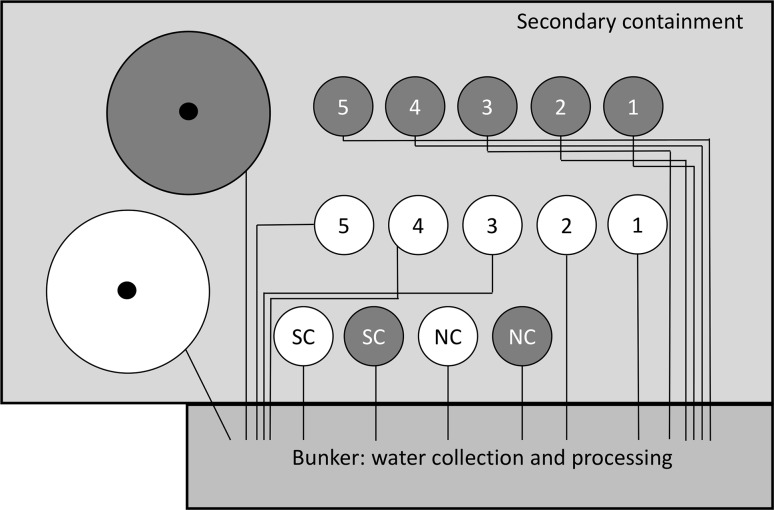
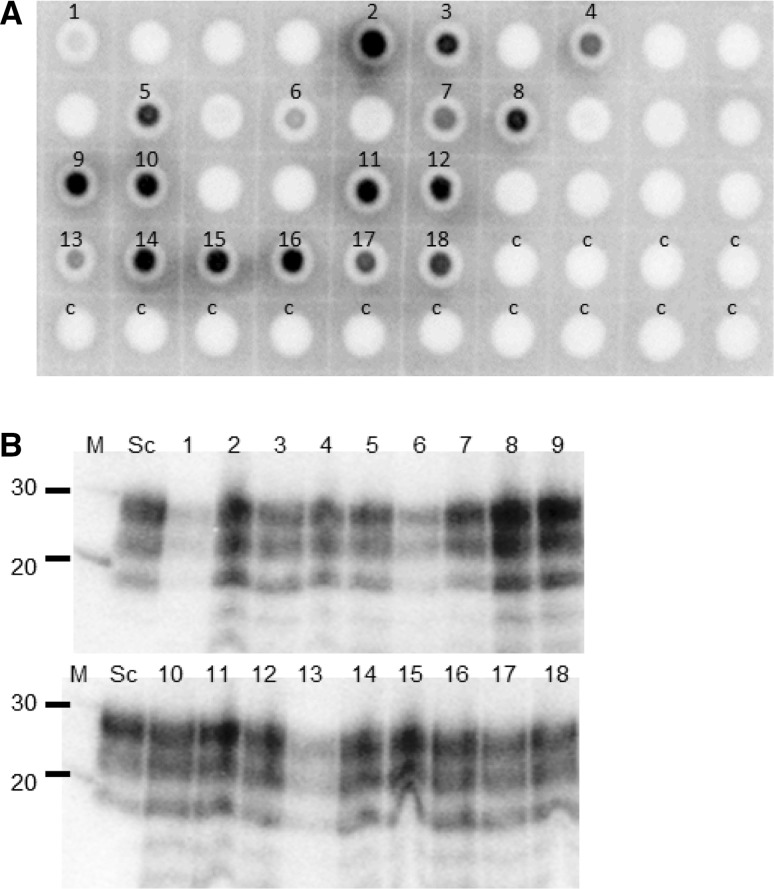
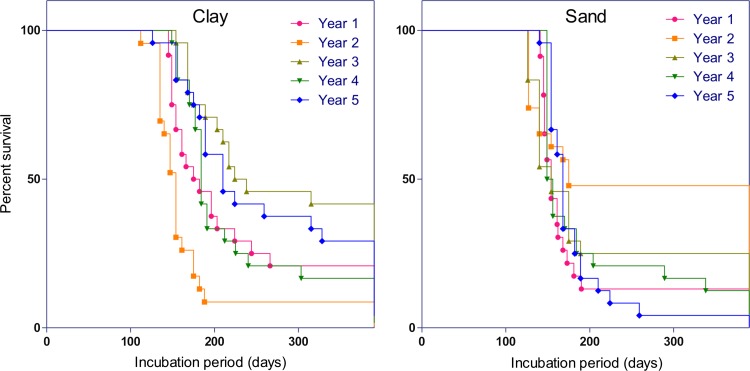
The carcasses of animals infected with bovine spongiform encephalopathy (BSE), scrapie or chronic wasting disease (CWD) that remain in the environment (exposed or buried) may continue to act as reservoirs of infectivity. We conducted two experiments under near-field conditions to investigate the survival and dissemination of BSE infectivity after burial in a clay or sandy soil. BSE infectivity was either contained within a bovine skull or buried as an uncontained bolus of BSE-infected brain. Throughout the five-year period of the experiment, BSE infectivity was recovered in similar amounts from heads exhumed annually from both types of soil. Very low levels of infectivity were detected in the soil immediately surrounding the heads, but not in samples remote from them. Similarly, there was no evidence of significant lateral movement of infectivity from the buried bolus over 4 years although there was a little vertical movement in both directions. However, bioassay analysis of limited numbers of samples of rain water that had drained through the bolus clay lysimeter indicated that infectivity was present in filtrates. sPMCA analysis also detected low levels of PrP in the filtrates up to 25 months following burial, raising the concern that leakage of infectivity into ground water could occur. We conclude that transmissible spongiform encephalopathy infectivity is likely to survive burial for long periods of time, but not to migrate far from the site of burial unless a vector or rain water drainage transports it. Risk assessments of contaminated sites should take these findings into account.
感染牛海绵状脑病(BSE)、羊瘙痒病或慢性消耗病(CWD)的动物尸体若留在环境中(暴露或掩埋),可能会继续作为传染源。我们在近场条件下进行了两项实验,以研究BSE传染性物质在粘土或沙土中掩埋后的存活及扩散情况。BSE传染性物质要么包含在牛颅骨内,要么作为未封装的BSE感染脑组织团块进行掩埋。在整个五年的实验期间,每年从两种土壤中挖掘出的牛头中回收的BSE传染性物质数量相似。在紧邻牛头的土壤中检测到极低水平的传染性物质,但在远离牛头的样本中未检测到。同样,尽管在两个方向上都有少量垂直移动,但在四年时间里,没有证据表明来自掩埋团块的传染性物质有明显的横向移动。然而,对通过团块粘土渗漏计排出的少量雨水样本进行生物测定分析表明,滤液中存在传染性物质。sPMCA分析还在掩埋后长达25个月的滤液中检测到低水平的PrP,这引发了人们对传染性物质可能渗漏到地下水中的担忧。我们得出结论,传染性海绵状脑病的传染性物质很可能在掩埋后长时间存活,但除非有载体或雨水排水将其运走,否则不会迁移到远离掩埋地点的地方。对受污染场地的风险评估应考虑到这些发现。