Hequembourg Amy L, Panagakis Christina
School of Nursing, University at Buffalo, Buffalo, NY, USA.
United Way of Buffalo and Erie County, Buffalo, NY, USA.
SAGE Open Med. 2019 Feb 17;7:2050312119829983. doi: 10.1177/2050312119829983. eCollection 2019.
Research to address the significant health burden experienced by sexual minority populations remains hampered by a lack of appropriate sampling methods to support evidence-based studies. Respondent-driven sampling offers one viable strategy to recruit these hidden populations. Because few studies systematically report their experiences using respondent-driven sampling to recruit sexual minorities, this article aligns with recent recommendations for the standardization of reporting and transparency in studies utilizing respondent-driven sampling. We (1) provide detailed descriptions about the successful execution of respondent-driven sampling in two community-based studies of sexual minority individuals, (2) outline procedures to enhance the effectiveness of respondent-driven sampling referral processes, (3) present mixed-methods results regarding the effectiveness of respondent-driven sampling in our studies, and (4) offer recommendations for other researchers when using respondent-driven sampling.
We successfully recruited 655 sexual minority men and women for two studies using respondent-driven sampling.
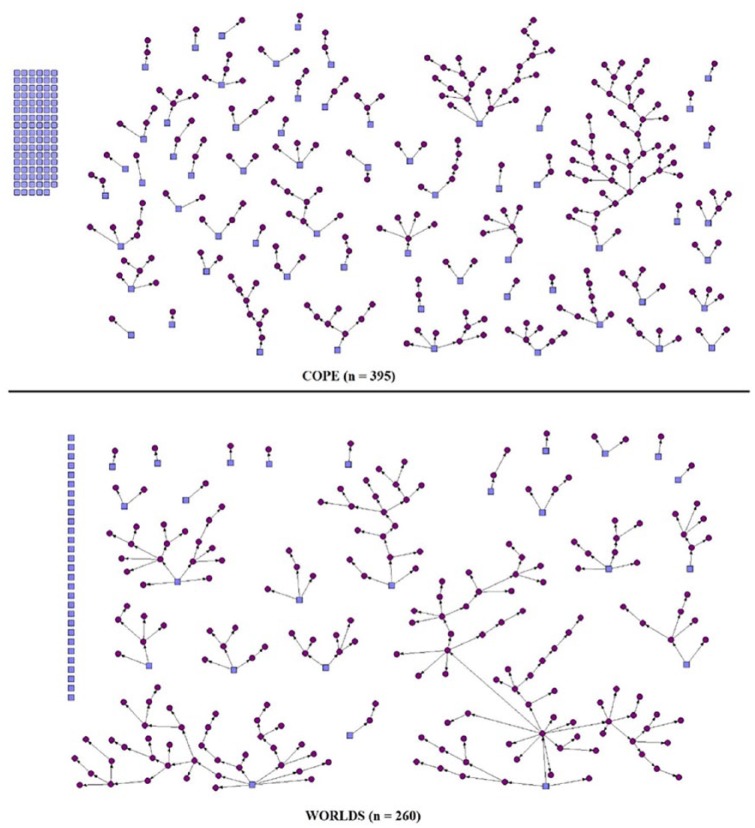
Resulting metrics indicate the successful achievement of equilibrium in each study. In addition, exit interviews elucidated strategies to effectively target referrals who meet the study criteria and procedures to promote the study that will maximize referral chains and ensure attainment of equilibrium.
Mixed-methods results suggest that respondent-driven sampling can be an effective means of recruiting a community-based sample of sexual minorities in smaller urban regions. Limitations are presented and suggestions are offered to researchers utilizing respondent-driven sampling in future studies.
由于缺乏适当的抽样方法来支持循证研究,针对性少数群体所承受的重大健康负担开展的研究仍然受到阻碍。应答驱动抽样为招募这些隐蔽群体提供了一种可行策略。由于很少有研究系统地报告其使用应答驱动抽样招募性少数群体的经验,本文符合近期关于在利用应答驱动抽样的研究中实现报告标准化和透明度的建议。我们(1)详细描述应答驱动抽样在两项针对性少数个体的社区研究中的成功实施情况,(2)概述提高应答驱动抽样推荐流程有效性的程序,(3)展示关于应答驱动抽样在我们研究中的有效性的混合方法结果,以及(4)为其他研究人员在使用应答驱动抽样时提供建议。
我们使用应答驱动抽样成功招募了655名性少数男性和女性参与两项研究。
所得指标表明每项研究都成功实现了平衡。此外,退出访谈阐明了有效定位符合研究标准的推荐对象的策略以及推广研究的程序,这将使推荐链最大化并确保实现平衡。
混合方法结果表明应答驱动抽样可以成为在较小城市地区招募基于社区的性少数群体样本的有效手段。本文提出了局限性,并为未来研究中使用应答驱动抽样的研究人员提供了建议。