Sedgmond Jemma, Lawrence Natalia S, Verbruggen Frederick, Morrison Sinead, Chambers Christopher D, Adams Rachel C
Cardiff University Brain Research Imaging Centre (CUBRIC), School of Psychology, Cardiff University, Cardiff CF24 4HQ, UK.
School of Psychology, University of Exeter, Washington Singer Building, Exeter EX4 4QG, UK.
R Soc Open Sci. 2019 Jan 9;6(1):181186. doi: 10.1098/rsos.181186. eCollection 2019 Jan.
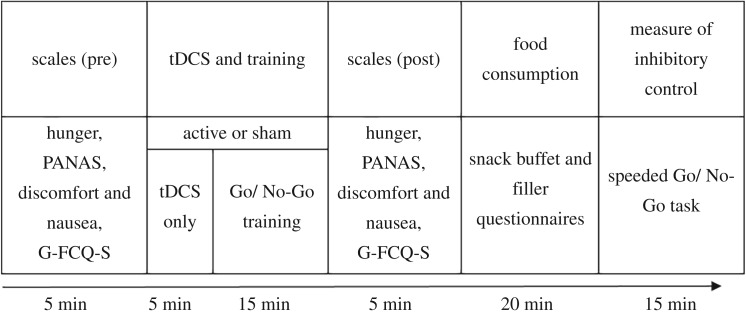
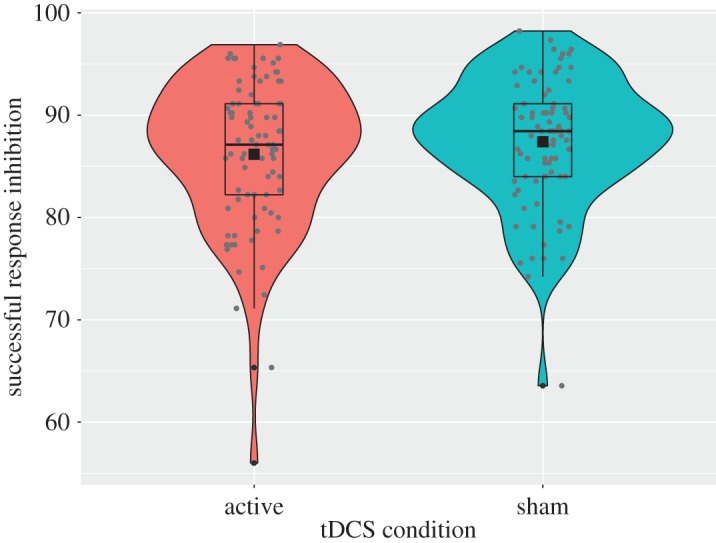
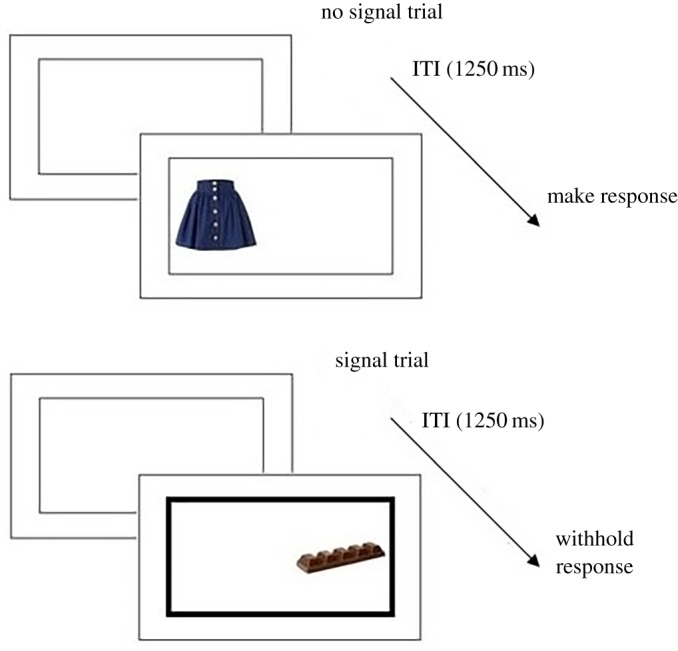
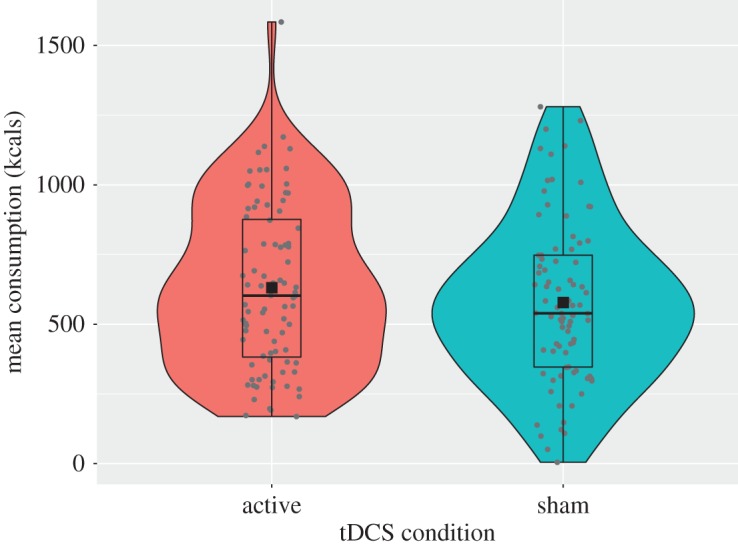
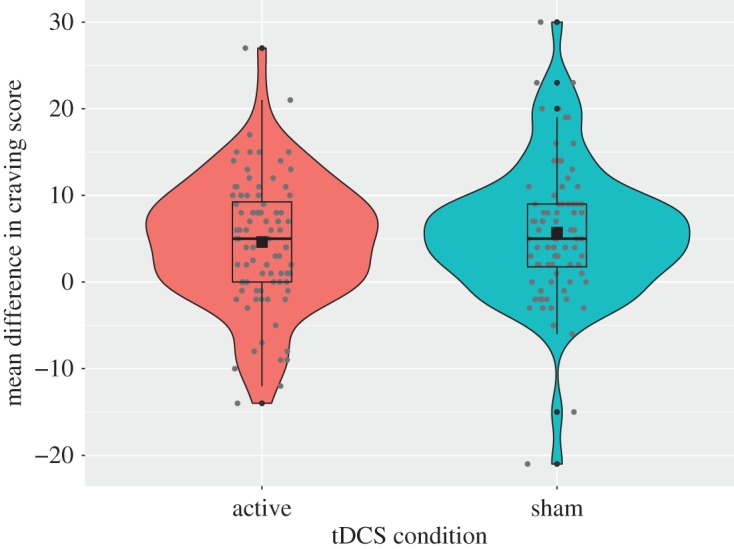
Modulation of dorsolateral prefrontal cortex (DLPFC) activity using non-invasive brain stimulation has been shown to reduce food craving as well as food consumption. Using a preregistered design, we examined whether bilateral transcranial direct current stimulation (tDCS) of the DLPFC could reduce food craving and consumption in healthy participants when administered alongside the cognitive target of inhibitory control training. Participants ( = 172) received either active or sham tDCS (2 mA; anode F4, cathode F3) while completing a food-related Go/No-Go task. State food craving, ad-lib food consumption and response inhibition were evaluated. Compared with sham stimulation, we found no evidence for an effect of active tDCS on any of these outcome measures in a predominantly female sample. Our findings raise doubts about the effectiveness of single-session tDCS on food craving and consumption. Consideration of individual differences, improvements in tDCS protocols and multi-session testing are discussed.
使用非侵入性脑刺激调节背外侧前额叶皮层(DLPFC)活动已被证明可以减少食物渴望以及食物摄入量。我们采用预先注册的设计,研究了在进行抑制控制训练的认知目标时,对DLPFC进行双侧经颅直流电刺激(tDCS)是否能减少健康参与者的食物渴望和食物摄入量。参与者(n = 172)在完成与食物相关的Go/No-Go任务时接受了主动或假tDCS(2 mA;阳极F4,阴极F3)。评估了状态性食物渴望、随意食物摄入量和反应抑制。与假刺激相比,在以女性为主的样本中,我们没有发现主动tDCS对这些结果指标有任何影响的证据。我们的研究结果对单节次tDCS对食物渴望和摄入量的有效性提出了质疑。文中讨论了个体差异的考量、tDCS方案的改进以及多节次测试。