Angeletti Andrea, Cantarelli Chiara, Cravedi Paolo
Nephrology Dialysis and Renal Transplantation Unit, S. Orsola University Hospital, Bologna, Italy.
Division of Nephrology, Department of Medicine, Icahn School of Medicine at Mount Sinai, New York, NY, United States.
Front Med (Lausanne). 2019 Feb 8;6:20. doi: 10.3389/fmed.2019.00020. eCollection 2019.
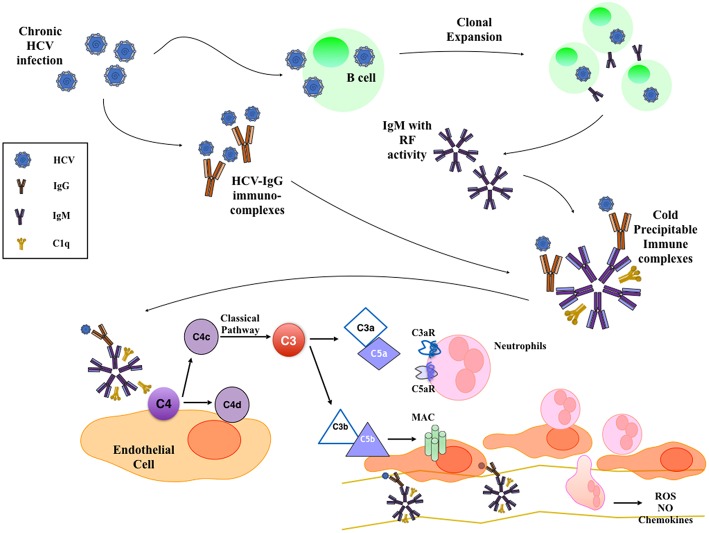
Hepatitis C virus (HCV) infection is a systemic disorder that frequently associates with extrahepatic manifestations, including nephropathies. Cryoglobulinemia is a typical extrahepatic manifestation of HCV infection that often involves kidneys with a histological pattern of membranoproliferative glomerulonephritis. Other, less common renal diseases related to HCV infection include membranous nephropathy, focal segmental glomerulosclerosis, IgA nephropathy, fibrillary and immunotactoid glomerulopathy. Over the last decades, the advent of direct-acting antiviral therapies has revolutionized treatment of HCV infection, dramatically increasing the rates of viral clearance. In patients where antiviral therapy alone fails to induce renal disease remission add-on B-cell depleting agents represent an alternative to counteract the synthesis of pathogenic antibodies. Immunosuppressive therapies, such as steroids, alkylating agents, and plasma exchanges, may still represent an effective option to inhibit immune-complex driven inflammatory response, but the potentially associated increase of HCV replication and worsening of liver disease represent a serious limitation to their use.
丙型肝炎病毒(HCV)感染是一种全身性疾病,常伴有肝外表现,包括肾病。冷球蛋白血症是HCV感染典型的肝外表现,常累及肾脏,组织学表现为膜增生性肾小球肾炎。其他与HCV感染相关的较少见的肾脏疾病包括膜性肾病、局灶节段性肾小球硬化、IgA肾病、纤维样和免疫触须样肾小球病。在过去几十年中,直接抗病毒疗法的出现彻底改变了HCV感染的治疗方式,显著提高了病毒清除率。在仅抗病毒治疗未能使肾病缓解的患者中,添加B细胞耗竭剂是对抗致病性抗体合成的一种替代方法。免疫抑制疗法,如类固醇、烷化剂和血浆置换,可能仍是抑制免疫复合物驱动的炎症反应的有效选择,但HCV复制可能增加以及肝病恶化是限制其使用的严重因素。