Laboratory of Cell-Based Assays and Innovations, School of Biotechnology, Institute of Agricultural Technology, Suranaree University of Technology, 111 University Avenue, Nakhon Ratchasima 30000, Thailand.
Biomed Res Int. 2019 Jan 21;2019:4378710. doi: 10.1155/2019/4378710. eCollection 2019.
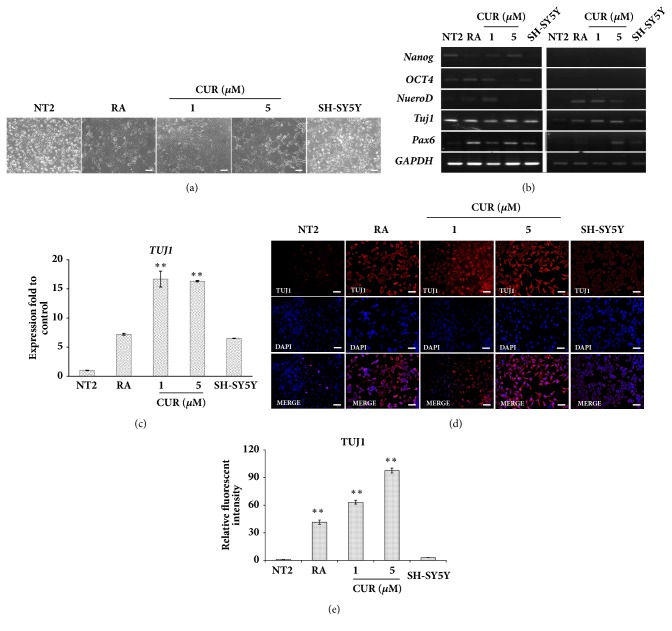
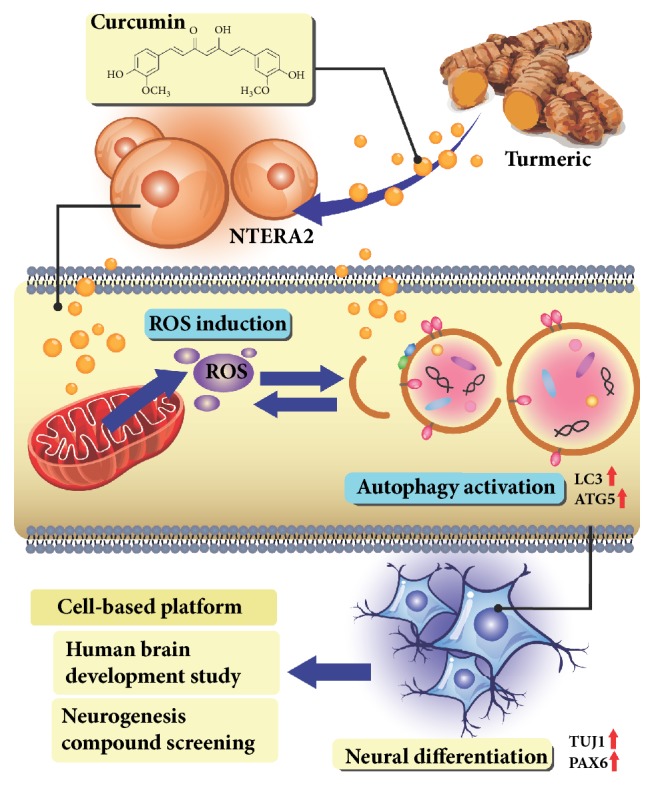
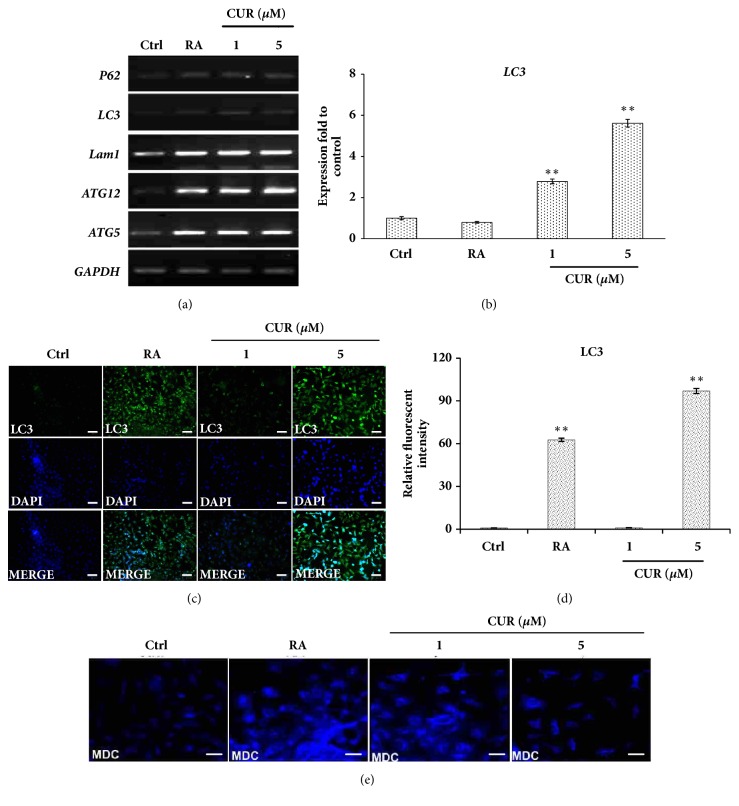
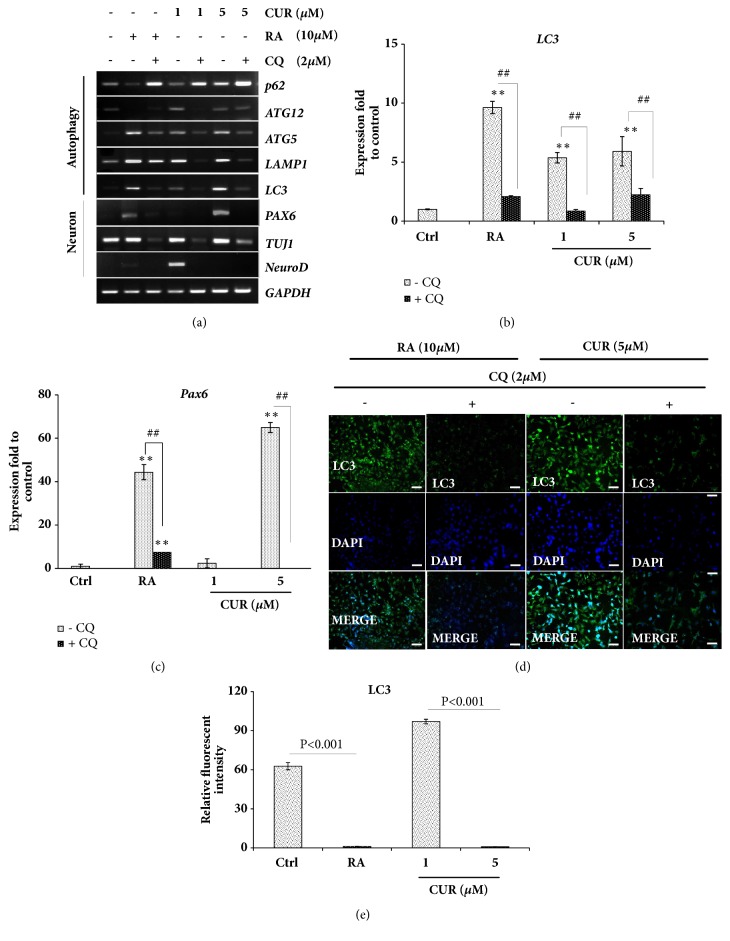
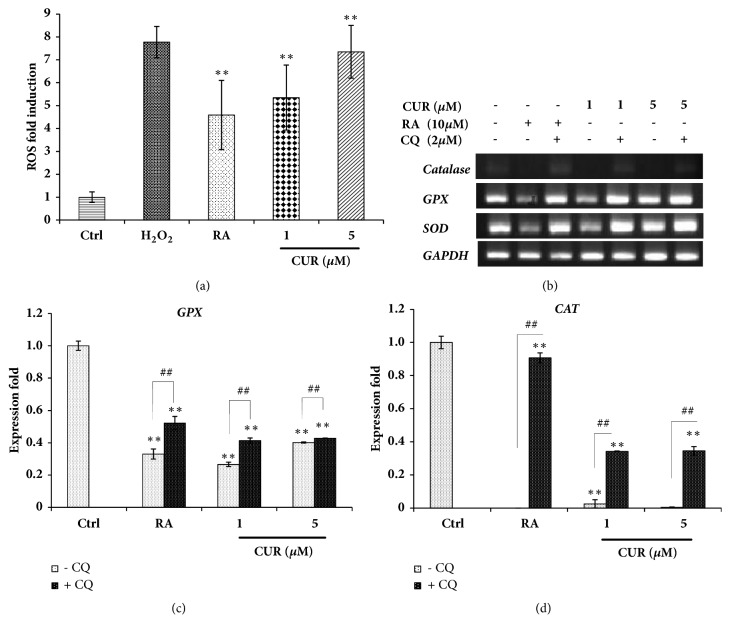
Curcumin is a natural polyphenolic compound, isolated from Curcuma longa, and is an important ingredient of Asian foods. Curcumin has revealed its strong activities of anti-inflammatory, antioxidant, and anticancer. The efficient amount of curcumin could induce differentiation of stem cells and promoted the differentiation of glioma-initiating cells; however, the mechanisms underlying neural induction of curcumin have not yet been revealed. In this study, neural-inducing ability of curcumin was explored by using human pluripotent embryonal carcinoma cells, NTERA2 cells. The cells were induced toward neural lineage with curcumin and were compared with a standard neutralizing agent (retinoic acid). It was found that, after 14 days of the induction by curcumin, NTERA2 cells showed neuronal morphology and expressed neural-specific genes, including , , and . Importantly, curcumin activated neurogenesis of NTERA2 cells via the activation of autophagy, since autophagy-related genes, such as , , and , were upregulated along with the expression of neural genes. The inhibition of autophagy by chloroquine suppressed both autophagy and neural differentiation, highlighting the positive role of autophagy during neural differentiation. This autophagy-mediated neural differentiation of curcumin was found to be an ROS-dependent manner; curcumin induced ROS generation and suppressed antioxidant gene expression. Altogether, this study proposed the neural-inducing activity of curcumin via the regulation of autophagy within NTERA2 cells and underscored the health beneficial effects of curcumin for neurodegenerative disorders, such as Alzheimer's disease and Parkinson's disease.
姜黄素是一种天然多酚化合物,从姜黄中分离得到,是亚洲食品的重要成分。姜黄素具有很强的抗炎、抗氧化和抗癌活性。有效剂量的姜黄素可诱导干细胞分化,并促进神经胶质瘤起始细胞的分化;然而,姜黄素诱导神经的机制尚未揭示。在这项研究中,使用人多能胚胎癌细胞 NTERA2 细胞探索了姜黄素的神经诱导能力。用姜黄素诱导细胞向神经谱系分化,并与标准中和剂(视黄酸)进行比较。结果发现,用姜黄素诱导 14 天后,NTERA2 细胞表现出神经元形态,并表达神经特异性基因,包括 、 和 。重要的是,姜黄素通过激活自噬来激活 NTERA2 细胞的神经发生,因为自噬相关基因,如 、 和 ,随着神经基因的表达而上调。自噬抑制剂氯喹抑制自噬和神经分化,突出了自噬在神经分化过程中的积极作用。这种姜黄素诱导的自噬介导的神经分化是一种依赖 ROS 的方式;姜黄素诱导 ROS 生成并抑制抗氧化基因的表达。总之,这项研究提出了姜黄素通过调节 NTERA2 细胞内的自噬来诱导神经的活性,并强调了姜黄素对神经退行性疾病(如阿尔茨海默病和帕金森病)的健康有益作用。