Caldwell Jon-Michael E, Alexander Frank J, Ahmad Christopher S
Department of Orthopedic Surgery, Columbia University Irving Medical Center/New York-Presbyterian Hospital, New York, New York, USA.
Orthop J Sports Med. 2019 Feb 12;7(2):2325967118825469. doi: 10.1177/2325967118825469. eCollection 2019 Feb.
Weighted-implement training utilizing over- or underweight baseballs has increased in popularity at all levels in competitive baseball. However, there is no consensus on the efficacy or safety of these training methods.
This systematic review was intended to answer the following questions: Does weighted-ball training improve pitching velocity? Does weighted-ball training increase the risk of injury?
Systematic review; Level of evidence, 4.
Searches were conducted with MEDLINE, EMBASE, and the ProQuest Physical Education Index. Articles were included if the study population consisted of adult, adolescent, or youth baseball pitchers training with under- or overweight baseballs, with velocity as a measured outcome. Articles were excluded if they were review articles, examined sports other than baseball, utilized weighted implements other than baseballs, or were not published in peer-reviewed journals. Included articles were at least level 4 evidence. Data extracted for qualitative analysis included training protocol parameters (such as ball weight, number of pitches, duration of training), velocity change, and injuries or complications reported.
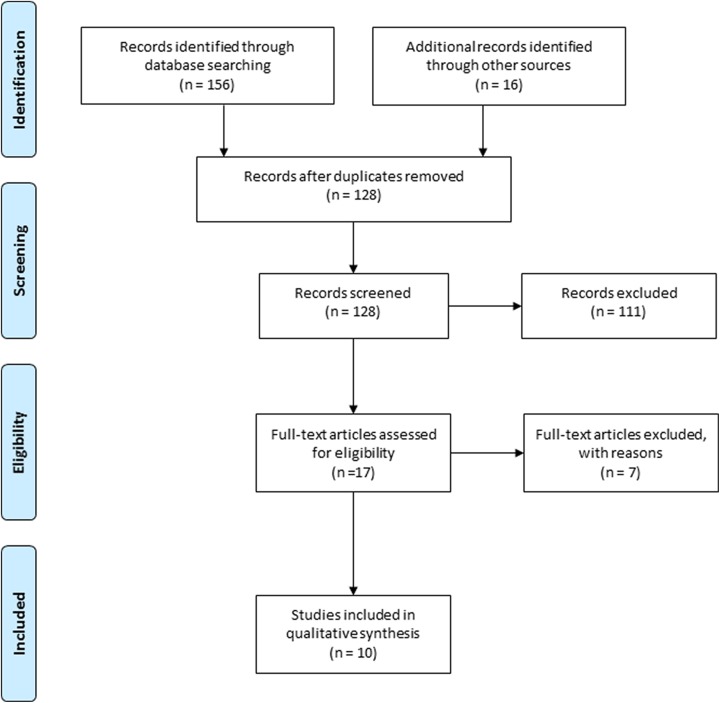
A total of 4119 article titles were retrieved, of which 156 were selected for abstract review. After manual removal of duplicates, 128 abstracts were reviewed. Of these, 17 met the inclusion criteria, and the full text was obtained. After full-text review, 7 additional articles were excluded, leaving 10 articles that met inclusion criteria and were included for analysis.
Weighted-implement training increased pitching velocity in the majority of the included studies. However, the quality of available evidence was determined to be very poor, and there was marked heterogeneity in training protocols, ball weights, and study populations. There was inadequate evidence reported to determine the risk of injury with this type of training.
在竞技棒球运动的各个级别中,使用超重或轻量棒球的加重器械训练越来越受欢迎。然而,对于这些训练方法的有效性或安全性尚无共识。
本系统评价旨在回答以下问题:加重球训练能否提高投球速度?加重球训练是否会增加受伤风险?
系统评价;证据等级,4级。
通过MEDLINE、EMBASE和ProQuest体育教育索引进行检索。如果研究对象包括使用超重或轻量棒球进行训练的成年、青少年或青年棒球投手,且将速度作为测量结果,则纳入相关文章。如果文章为综述文章、研究的是棒球以外的运动、使用的是棒球以外的加重器械,或者未发表在同行评审期刊上,则予以排除。纳入的文章至少为4级证据。提取用于定性分析的数据包括训练方案参数(如球的重量、投球次数、训练时长)、速度变化以及报告的损伤或并发症。
共检索到4119篇文章标题,其中156篇被选作摘要评审。在手动去除重复项后,对128篇摘要进行了评审。其中,17篇符合纳入标准,并获取了全文。在全文评审后,又排除了7篇文章,最终有10篇文章符合纳入标准并被纳入分析。
在大多数纳入研究中,加重器械训练提高了投球速度。然而,现有证据的质量被判定为非常低,并且在训练方案、球的重量和研究对象方面存在明显的异质性。没有足够的证据来确定这种训练方式的受伤风险。