From the Department of Anesthesiology and Critical Care Medicine, Johns Hopkins Hospital, Baltimore, Maryland.
Anesth Analg. 2019 May;128(5):1013-1021. doi: 10.1213/ANE.0000000000004058.
The use of regional and other opioid-sparing forms of anesthesia has been associated with a decrease in the recurrence of certain malignancies. Direct suppression of human natural killer cells by opioids has been postulated to explain this observation. However, the effect of different classes of opioids on suppression of natural killer cell cytotoxicity has not been systematically characterized.
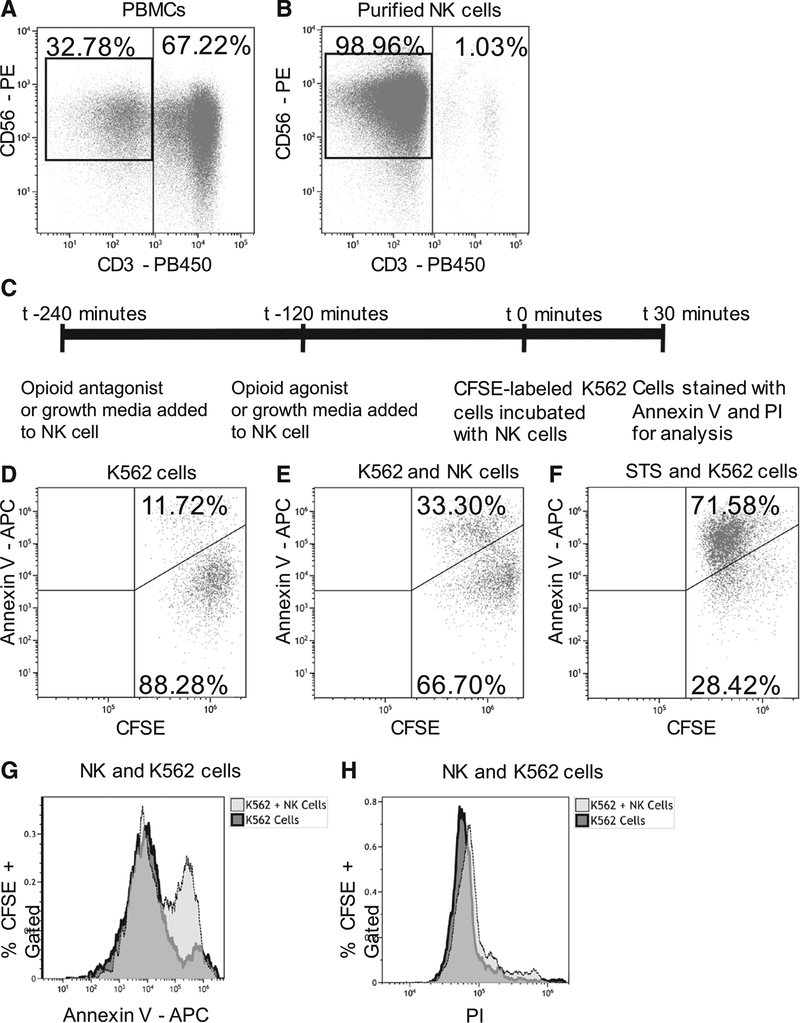
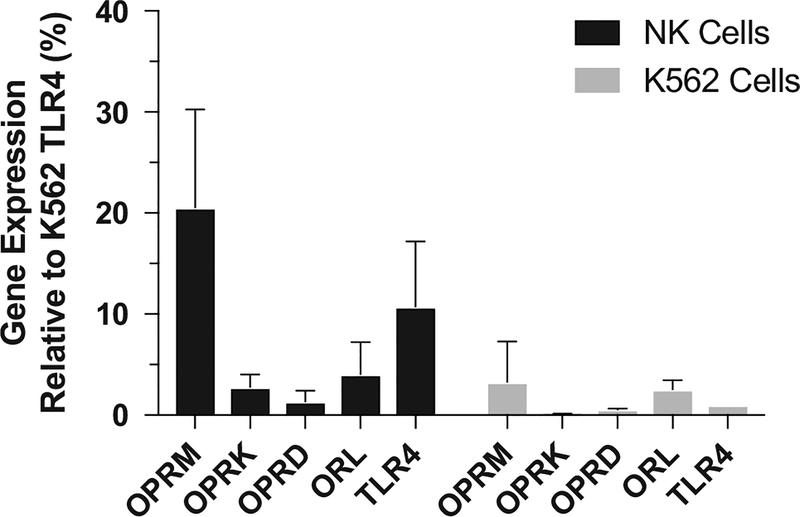
After confirming that freshly isolated natural killer cells from peripheral human blood express opioid receptors, cells were incubated with increasing concentrations of clinically used or receptor-specific opioid agonists. We also evaluated the effect of pretreatment with receptor-specific antagonists or naloxone. Treated natural killer cells were then coincubated with a carboxyfluorescein succinimidyl ester-labeled target tumor cell line, K562. Annexin V staining was used to compare the percent of tumor cell apoptosis in the presence of opioid-pretreated and untreated natural killer cells. Treated samples were compared to untreated samples using Kruskal-Wallis tests with a post hoc Dunn correction.
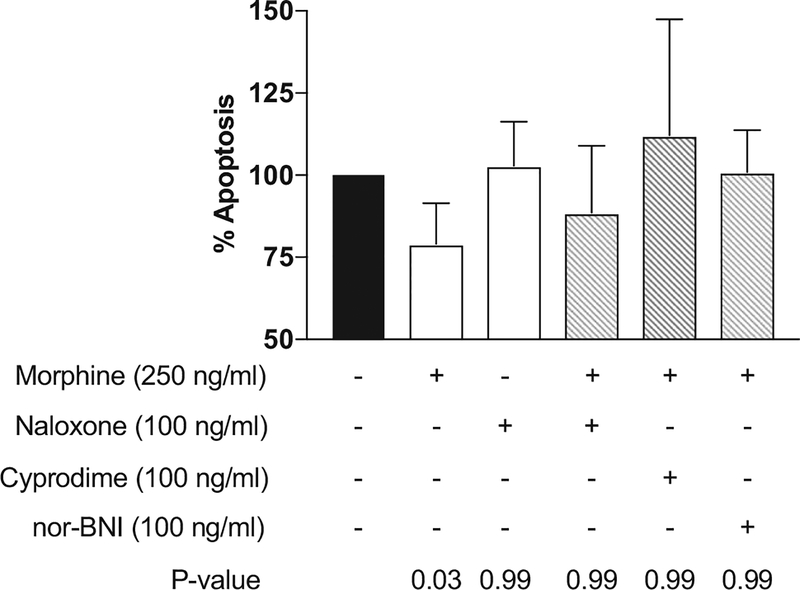
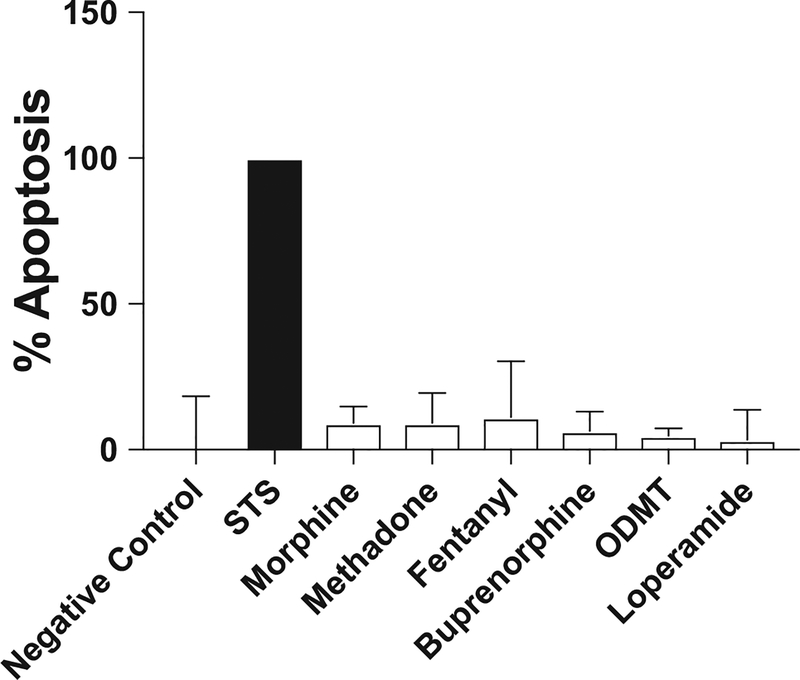
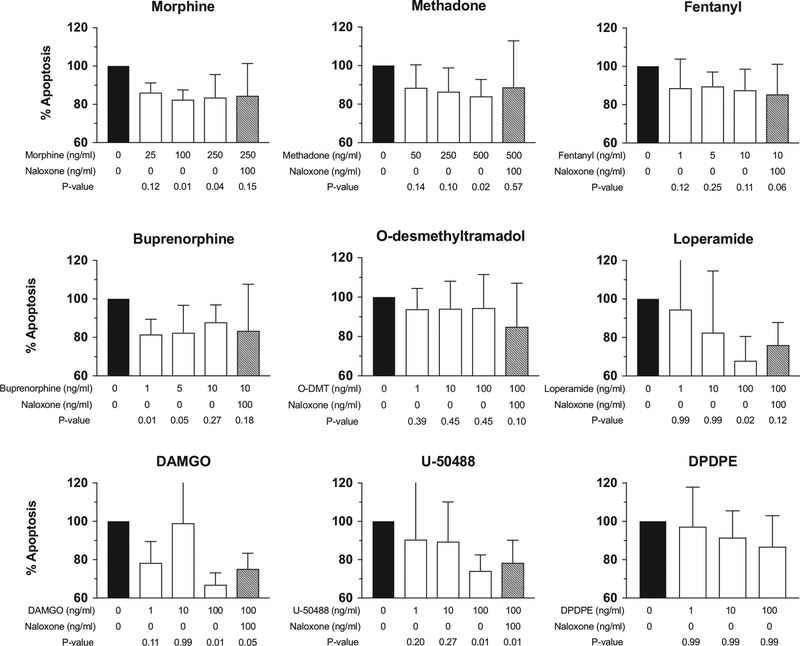
Morphine, methadone, buprenorphine, loperamide, [D-Ala2, N-MePhe4, Gly-ol]-enkephalin, and U-50488 significantly decreased natural killer cell cytotoxicity. When natural killer cells were pretreated with naloxone, cyprodime, and nor-binaltorphimine before exposure to morphine, there was no difference in natural killer cytotoxicity, compared to the amount observed by untreated natural killer cells. Fentanyl, O-desmethyltramadol, and [D-Pen2,D-Pen5] enkephalin did not change natural killer cell cytotoxicity compare to untreated natural killer cells.
Incubation of isolated natural killer cells with certain opioids causes a decrease in activity that is not observed after naloxone pretreatment. Suppression of natural killer cell cytotoxicity was observed with μ- and κ-receptor agonists but not δ-receptor agonists. These data suggest that the effect is mediated by μ- and κ-receptor agonism and that suppression is similar with many clinically used opioids.
区域麻醉和其他阿片类药物节约型麻醉的使用与某些恶性肿瘤的复发率降低有关。阿片类药物对人自然杀伤细胞的直接抑制作用被认为可以解释这一观察结果。然而,不同类别的阿片类药物对自然杀伤细胞细胞毒性抑制的影响尚未得到系统描述。
在确认外周血中分离的新鲜自然杀伤细胞表达阿片受体后,将细胞与浓度递增的临床使用或受体特异性阿片类激动剂孵育。我们还评估了受体特异性拮抗剂或纳洛酮预处理的效果。然后将经处理的自然杀伤细胞与羧基荧光素琥珀酰亚胺酯标记的靶肿瘤细胞系 K562 共孵育。使用 Annexin V 染色比较阿片类药物预处理和未处理自然杀伤细胞存在时肿瘤细胞凋亡的百分比。使用 Kruskal-Wallis 检验和事后 Dunn 校正比较处理样本和未处理样本。
吗啡、美沙酮、丁丙诺啡、洛哌丁胺、[D-Ala2,N-MePhe4,Gly-ol]-脑啡肽和 U-50488 显著降低自然杀伤细胞细胞毒性。当自然杀伤细胞在用吗啡暴露前用纳洛酮、环丙甲羟二羟吗啡酮和诺布啡预处理时,与未处理的自然杀伤细胞相比,自然杀伤细胞毒性没有差异。芬太尼、O-去甲基曲马多和[D-Pen2,D-Pen5]脑啡肽与未处理的自然杀伤细胞相比,自然杀伤细胞细胞毒性没有变化。
与某些阿片类药物孵育分离的自然杀伤细胞会导致活性降低,而用纳洛酮预处理后则不会观察到这种情况。观察到 μ 和 κ 受体激动剂但不是 δ 受体激动剂抑制自然杀伤细胞细胞毒性。这些数据表明,这种抑制作用是由 μ 和 κ 受体激动作用介导的,许多临床使用的阿片类药物的抑制作用相似。