The Computational, Cognitive and Clinical Neuroimaging Laboratory, Division of Brain Sciences, Imperial College London, London, W12 0NN, UK.
Centre for Neuroimaging Sciences, Institute of Psychiatry, Kings College London, London, SE5 8AF, UK.
Nat Commun. 2019 Feb 25;10(1):936. doi: 10.1038/s41467-019-08840-8.
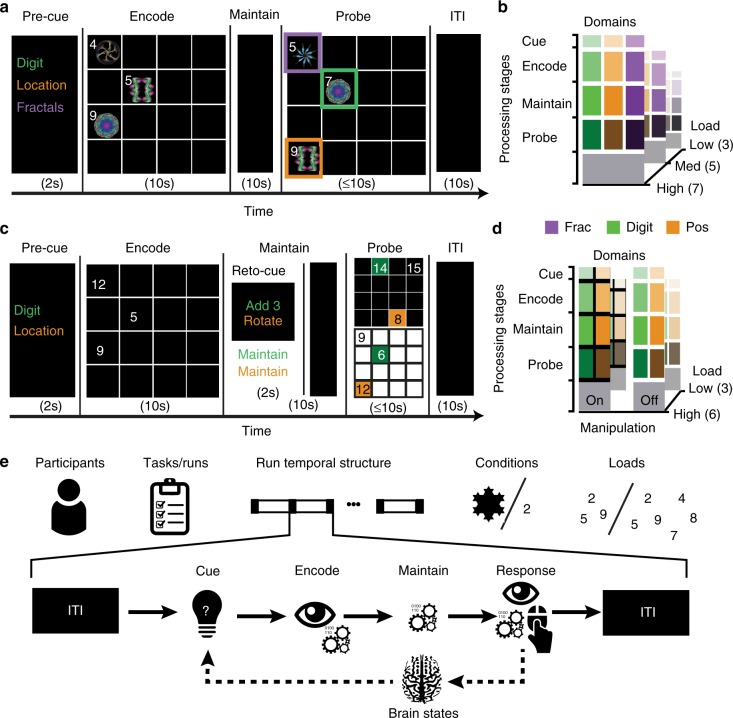
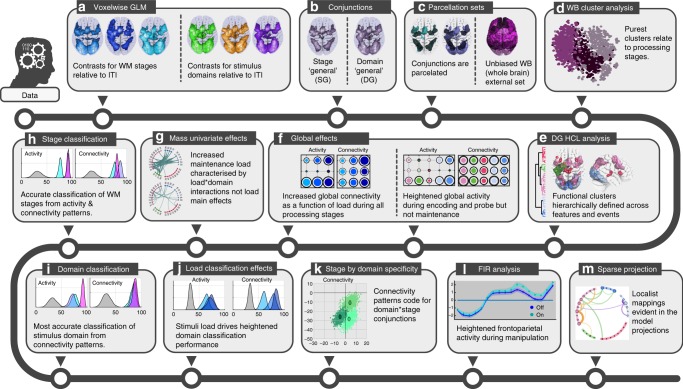
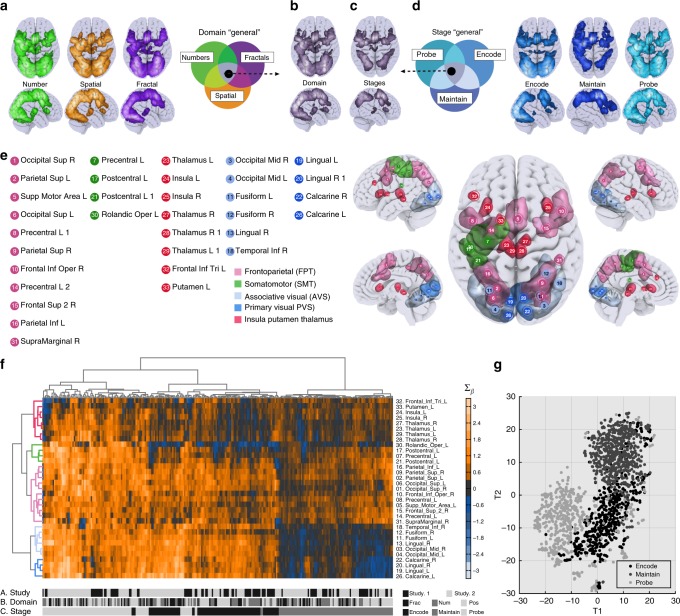
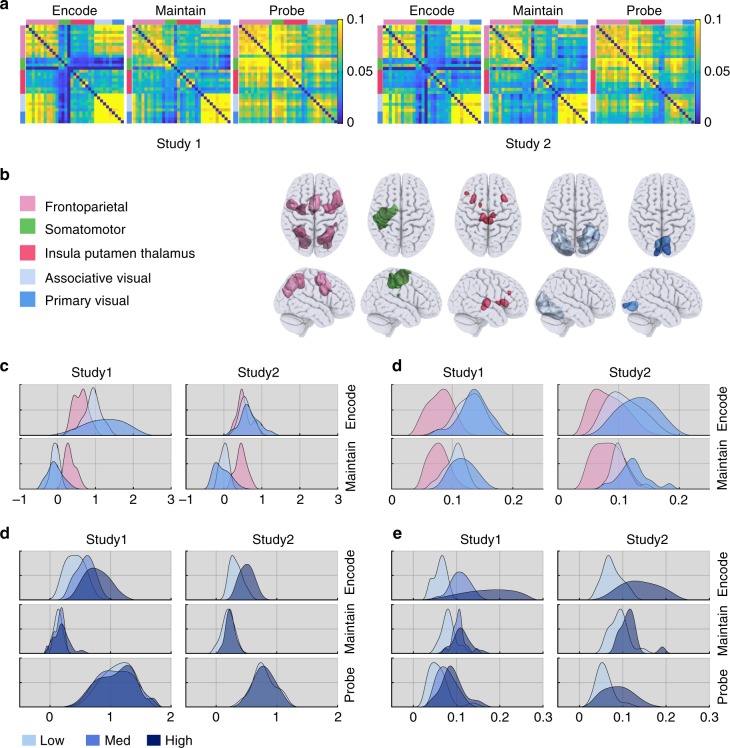
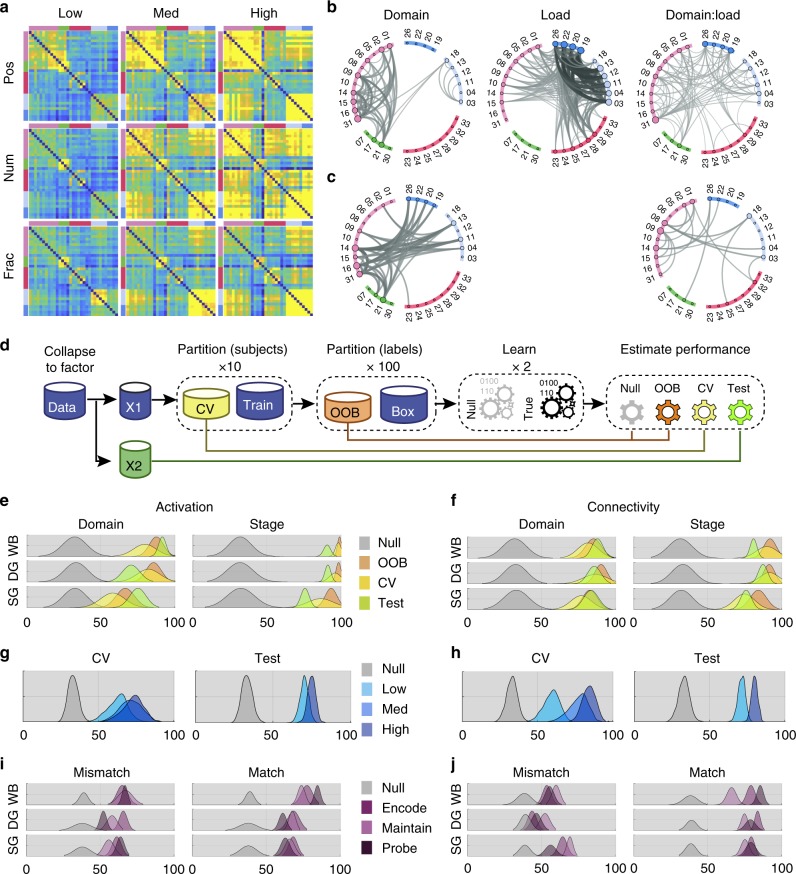
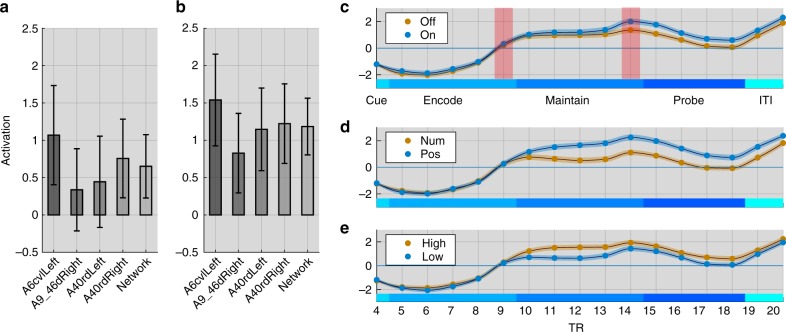
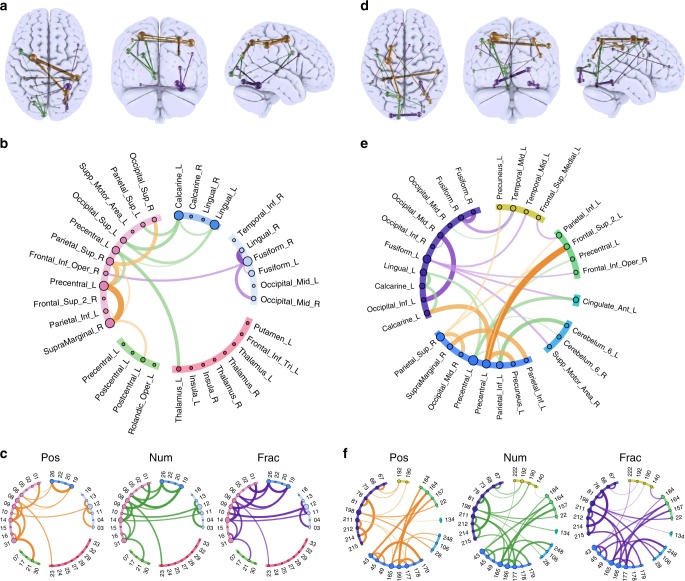
The classic mapping of distinct aspects of working memory (WM) to mutually exclusive brain areas is at odds with the distributed processing mechanisms proposed by contemporary network science theory. Here, we use machine-learning to determine how aspects of WM are dynamically coded in the human brain. Using cross-validation across independent fMRI studies, we demonstrate that stimulus domains (spatial, number and fractal) and WM processes (encode, maintain, probe) are classifiable with high accuracy from the patterns of network activity and connectivity that they evoke. This is the case even when focusing on 'multiple demands' brain regions, which are active across all WM conditions. Contrary to early neuropsychological perspectives, these aspects of WM do not map exclusively to brain areas or processing streams; however, the mappings from that literature form salient features within the corresponding multivariate connectivity patterns. Furthermore, connectivity patterns provide the most precise basis for classification and become fine-tuned as maintenance load increases. These results accord with a network-coding mechanism, where the same brain regions support diverse WM demands by adopting different connectivity states.
经典的工作记忆 (WM) 不同方面映射到相互排斥的大脑区域的方法与当代网络科学理论提出的分布式处理机制不一致。在这里,我们使用机器学习来确定 WM 的各个方面在人类大脑中是如何动态编码的。通过在独立的 fMRI 研究中进行交叉验证,我们证明即使关注在所有 WM 条件下都活跃的“多任务”大脑区域,也可以从它们引起的网络活动和连接模式中以高精度对刺激域(空间、数字和分形)和 WM 过程(编码、保持、探测)进行分类。与早期神经心理学观点相反,WM 的这些方面并不专门映射到大脑区域或处理流;但是,来自该文献的映射形成了相应多元连接模式中的显著特征。此外,连接模式为分类提供了最精确的基础,并随着保持负载的增加而变得更加精细。这些结果与网络编码机制一致,即相同的大脑区域通过采用不同的连接状态来支持不同的 WM 需求。