He Xiaosong, Caciagli Lorenzo, Parkes Linden, Stiso Jennifer, Karrer Teresa M, Kim Jason Z, Lu Zhixin, Menara Tommaso, Pasqualetti Fabio, Sperling Michael R, Tracy Joseph I, Bassett Dani S
Department of Psychology, School of Humanities and Social Sciences, University of Science and Technology of China, Hefei, Anhui, China.
Department of Bioengineering, University of Pennsylvania, Philadelphia, PA, USA.
Sci Adv. 2022 Nov 11;8(45):eabn2293. doi: 10.1126/sciadv.abn2293. Epub 2022 Nov 9.
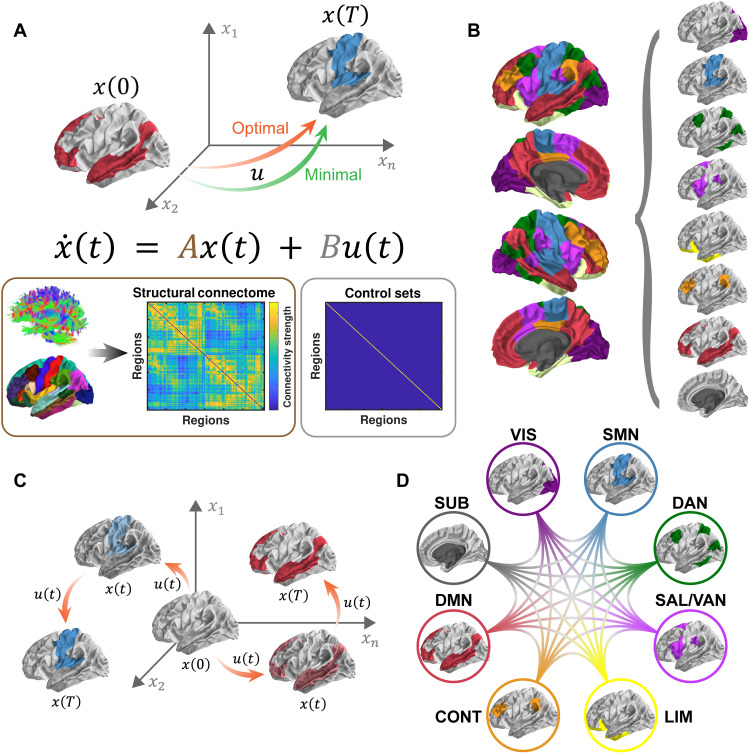
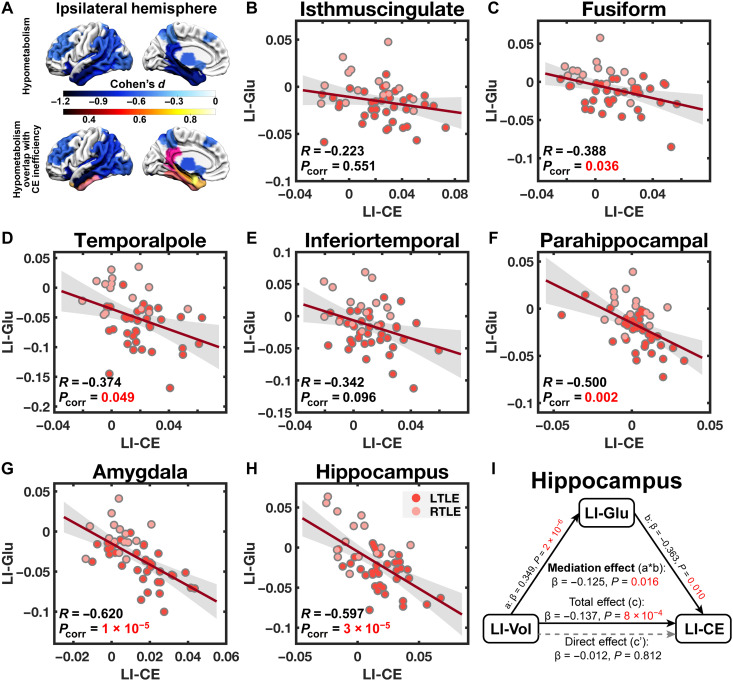
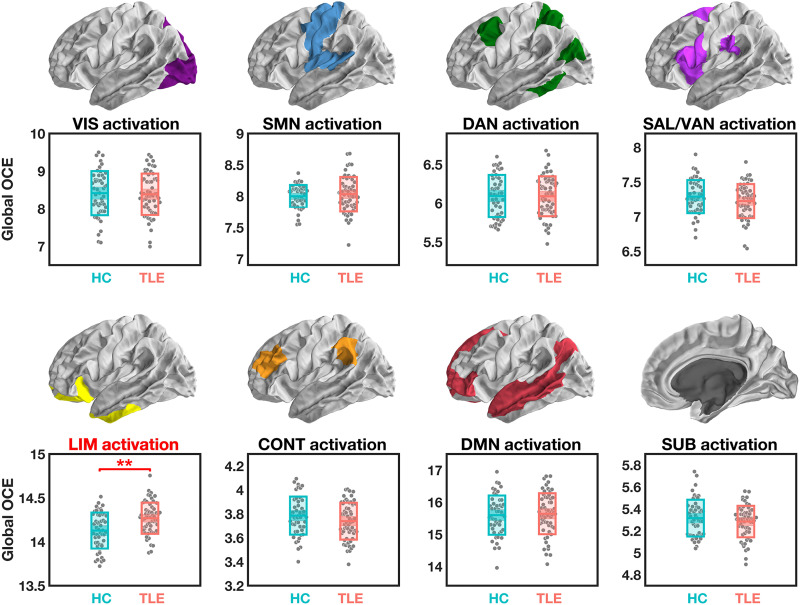
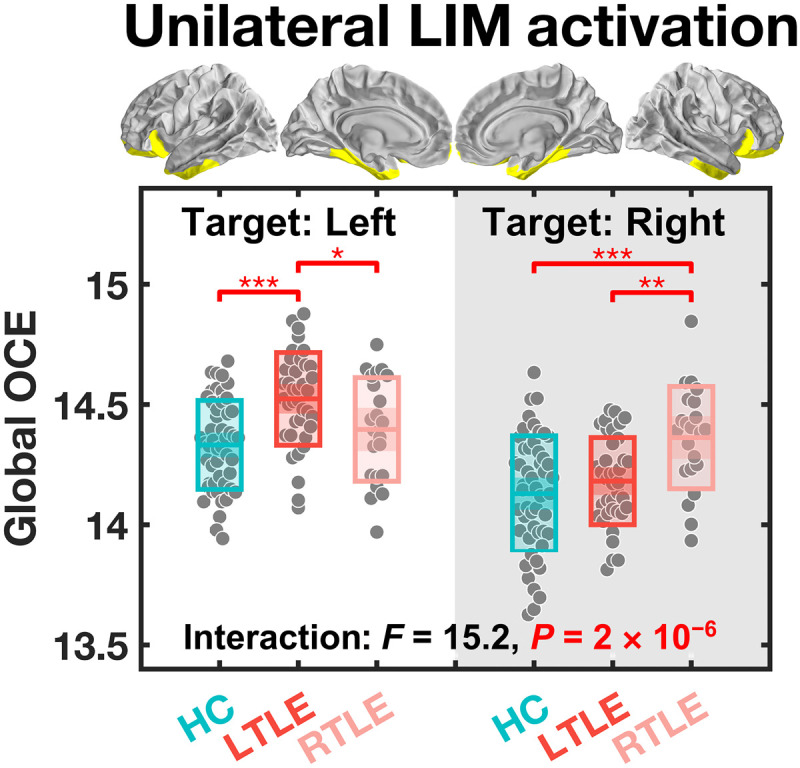
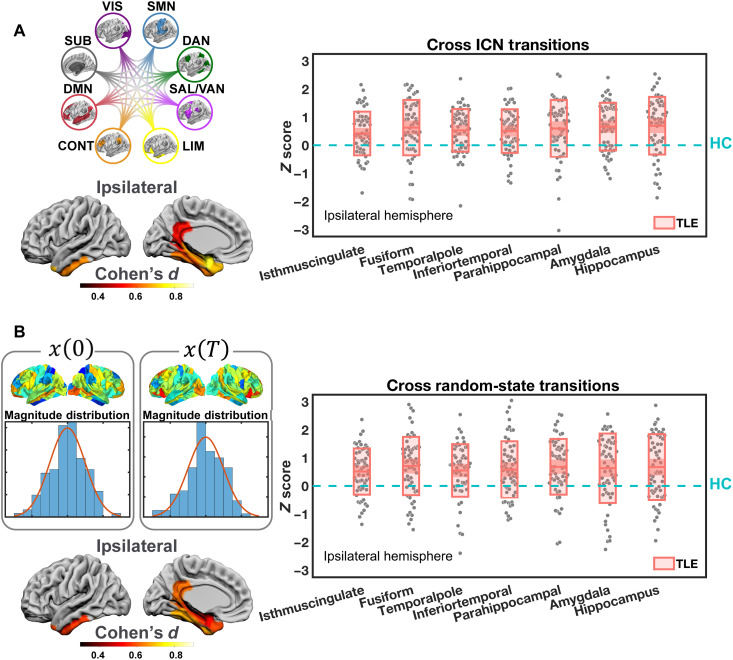
Network control theory is increasingly used to profile the brain's energy landscape via simulations of neural dynamics. This approach estimates the control energy required to simulate the activation of brain circuits based on structural connectome measured using diffusion magnetic resonance imaging, thereby quantifying those circuits' energetic efficiency. The biological basis of control energy, however, remains unknown, hampering its further application. To fill this gap, investigating temporal lobe epilepsy as a lesion model, we show that patients require higher control energy to activate the limbic network than healthy volunteers, especially ipsilateral to the seizure focus. The energetic imbalance between ipsilateral and contralateral temporolimbic regions is tracked by asymmetric patterns of glucose metabolism measured using positron emission tomography, which, in turn, may be selectively explained by asymmetric gray matter loss as evidenced in the hippocampus. Our investigation provides the first theoretical framework unifying gray matter integrity, metabolism, and energetic generation of neural dynamics.
网络控制理论越来越多地通过神经动力学模拟来描绘大脑的能量格局。这种方法基于使用扩散磁共振成像测量的结构连接组,估计模拟脑回路激活所需的控制能量,从而量化这些回路的能量效率。然而,控制能量的生物学基础仍然未知,这阻碍了其进一步应用。为了填补这一空白,我们以颞叶癫痫作为损伤模型进行研究,结果表明,与健康志愿者相比,患者激活边缘网络需要更高的控制能量,尤其是在癫痫病灶同侧。使用正电子发射断层扫描测量的葡萄糖代谢不对称模式追踪了同侧和对侧颞叶边缘区域之间的能量失衡,反过来,这可能由海马体中明显的不对称灰质损失来选择性解释。我们的研究提供了第一个统一灰质完整性、代谢和神经动力学能量生成的理论框架。