School of Geosciences, The University of Sydney, Sydney, NSW, 2006, Australia.
School of Environmental and Life Sciences, The University of Newcastle, Callaghan, NSW, 2308, Australia.
Sci Rep. 2019 Feb 25;9(1):2667. doi: 10.1038/s41598-019-39516-4.
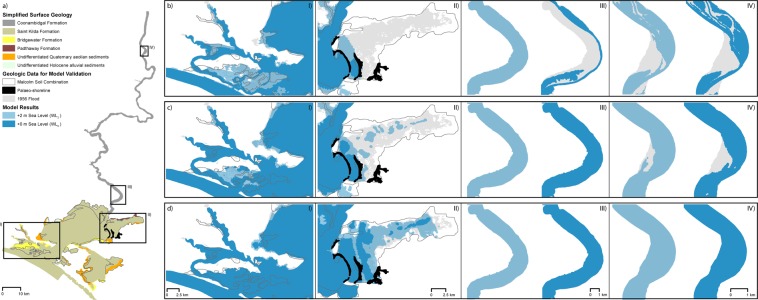
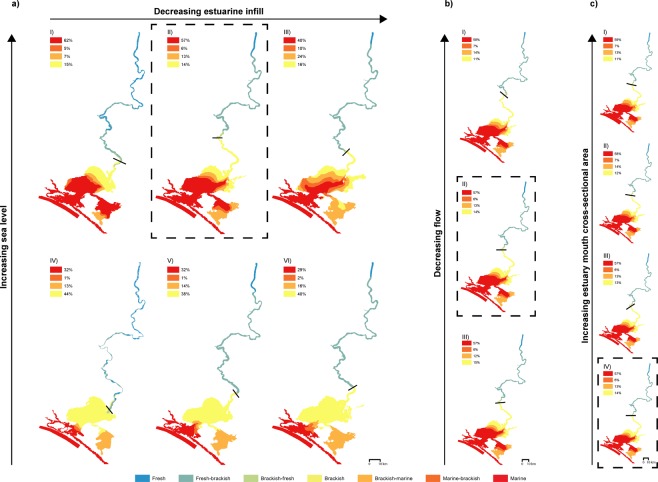
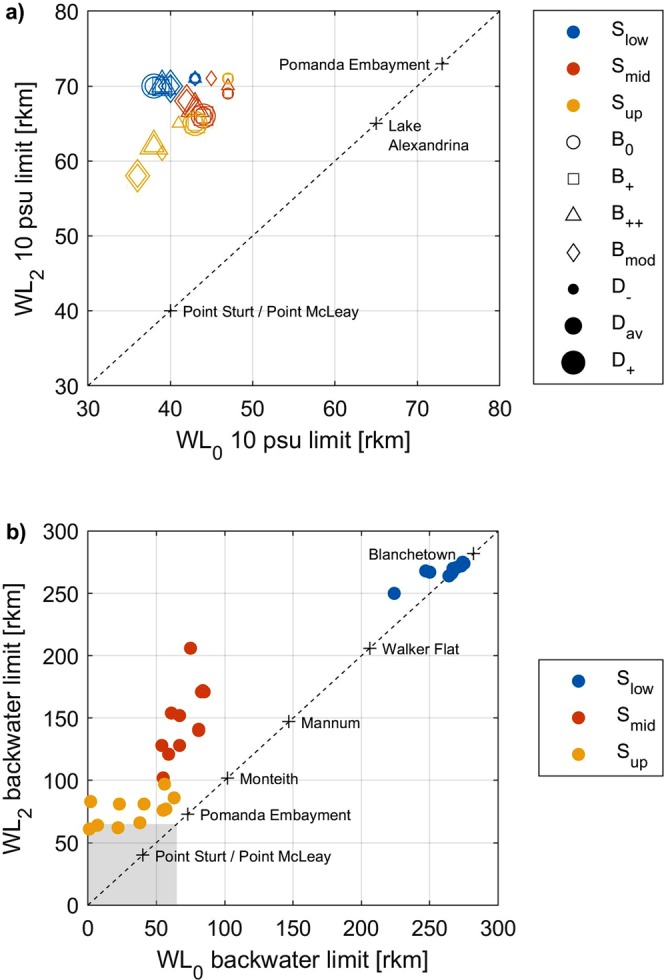
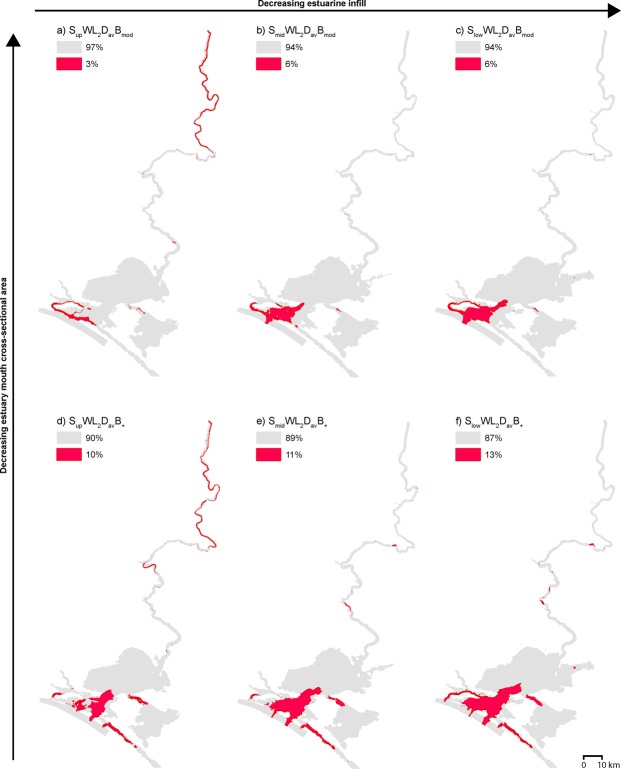
Hydrodynamic modelling of Australia's lower Murray River demonstrates the response of a large coastal plain estuary to the mid-Holocene (7,000-6,000 yr BP) sea-level highstand. The approximately two metre higher-than-present sea level during the highstand forced the estuarine limit upstream generating an extensive central basin environment extending more than 200 kilometres from the river mouth (143 kilometres upstream of the modern tidal limit). The geomorphic history of the region does not conform to conventional estuarine facies models as, for much of the Holocene, the lower Murray River acted as a landward, gorge-confined extension of the Murray estuary. The incredibly low relief of this coastal plain system drove significant saline incursion and limited current velocities across the estuary facilitating deposition of a laminated silt-clay sequence which our results suggest may be regionally extensive. Variations to discharge, barrier morphology, or the estuary's bathymetry result in minimal change to the estuarine palaeo-environment. The shift to the present-day fresher water distribution in the Murray estuary requires a fall in sea level to present-day conditions. The dominance of sea level as the controlling factor on this estuarine palaeo-environment highlights the significant potential impact of climate change induced sea-level rise to coastal plain estuaries.
澳大利亚墨累河下游的水动力建模展示了一个大型沿海平原河口对中全新世(7000-6000 年前)海平面高位的响应。高位期间,海平面比现在高出约两米,迫使河口上游移动,形成了一个广阔的中央盆地环境,从河口延伸超过 200 公里(现代潮汐限制上游 143 公里)。该地区的地貌历史不符合传统的河口相模式,因为在全新世的大部分时间里,墨累河下游充当了默里河口的内陆、峡谷限制的延伸。这个沿海平原系统的极低起伏导致了大量的盐水入侵和河口内有限的水流速度,有利于形成层理粉砂-粘土序列,我们的结果表明,这种序列可能在区域范围内广泛存在。流量、障碍物形态或河口的水深变化对古河口环境的变化很小。默里河口向现今淡水分布的转变需要海平面下降到现今的条件。海平面作为控制这个古河口环境的因素的主导地位凸显了气候变化引起的海平面上升对沿海平原河口的重大潜在影响。