Young Michael K, Smith Rebecca J, Pilgrim Kristine L, Fairchild Matthew P, Schwartz Michael K
U.S. Forest Service, Rocky Mountain Research Station, National Genomics Center for Wildlife and Fish Conservation Missoula Montana.
U.S. Forest Service, Arapaho and Roosevelt National Forest Fort Collins Colorado.
Ecol Evol. 2019 Jan 13;9(3):1364-1377. doi: 10.1002/ece3.4852. eCollection 2019 Feb.
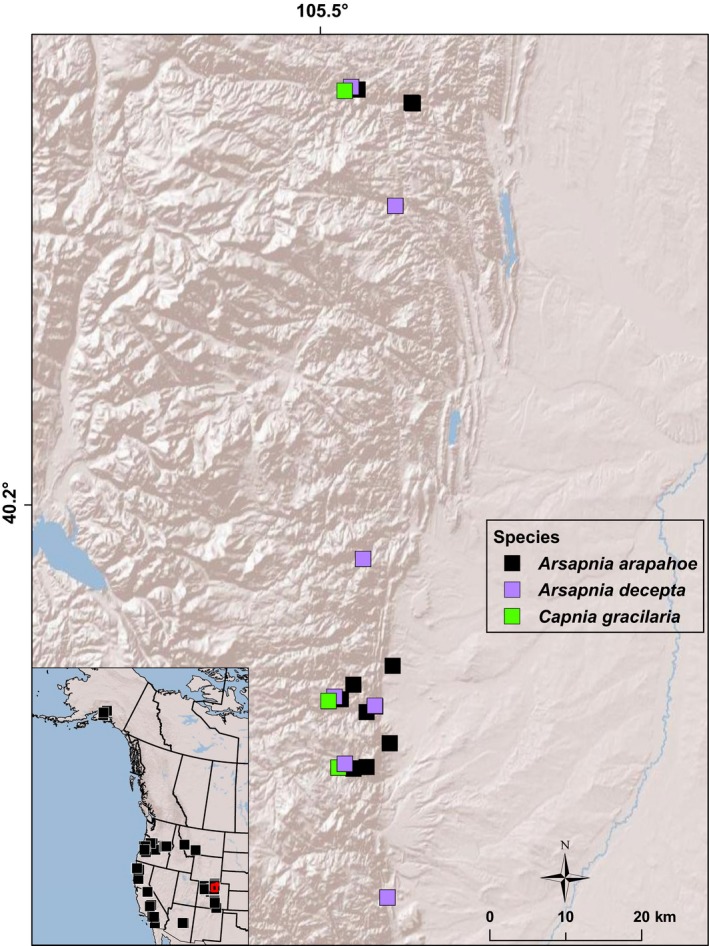
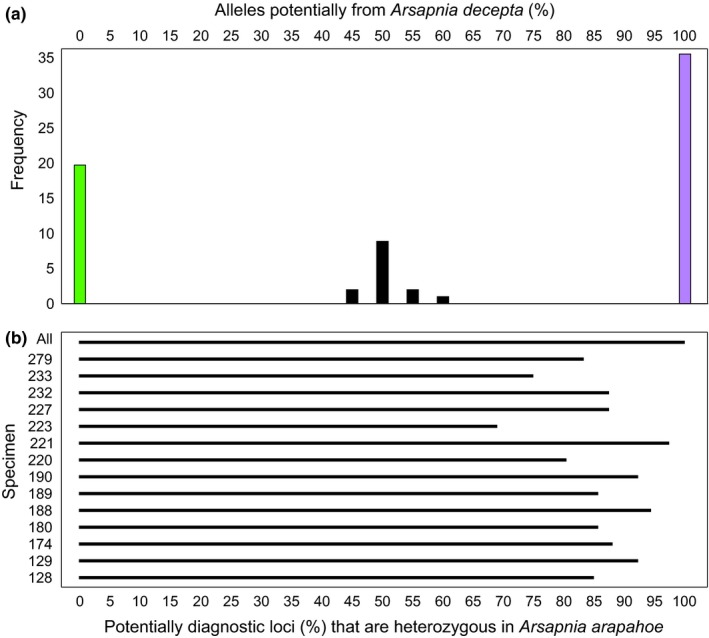
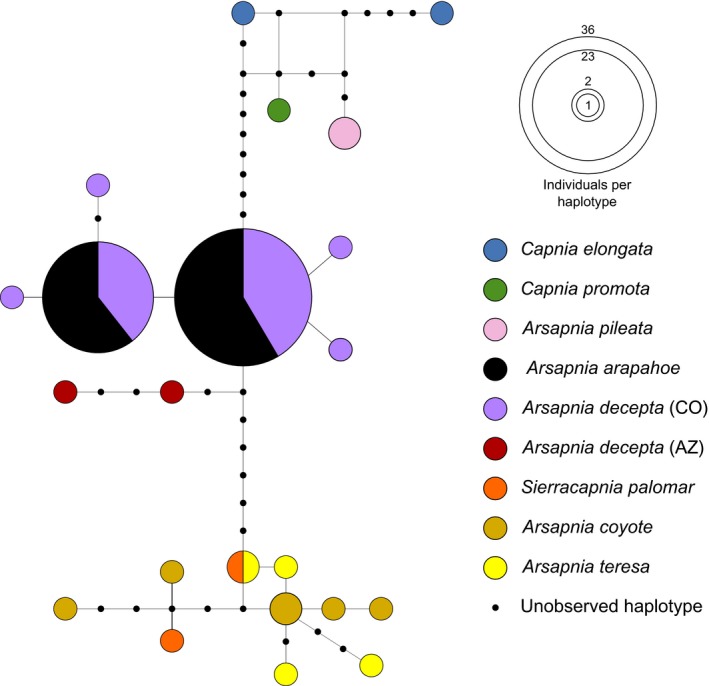
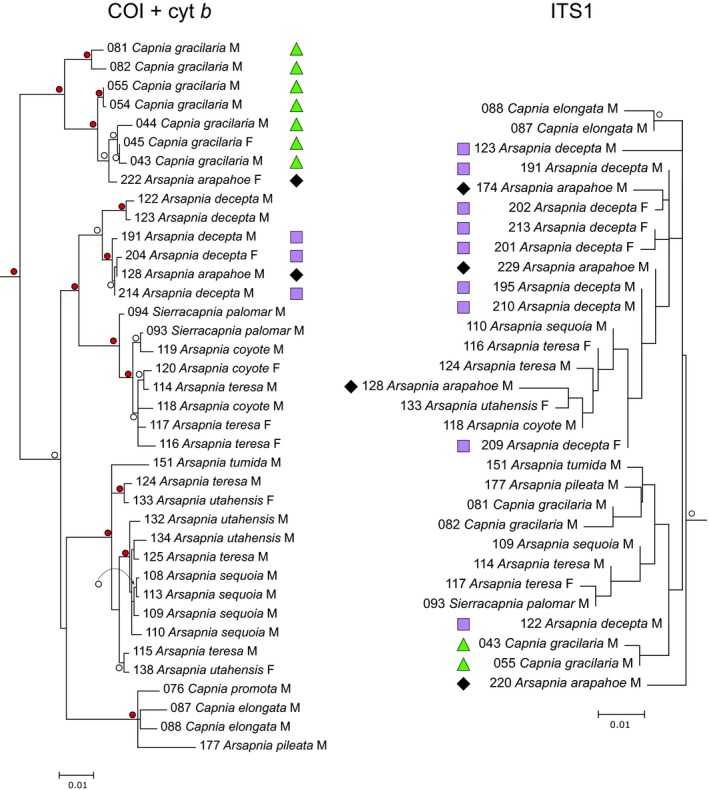
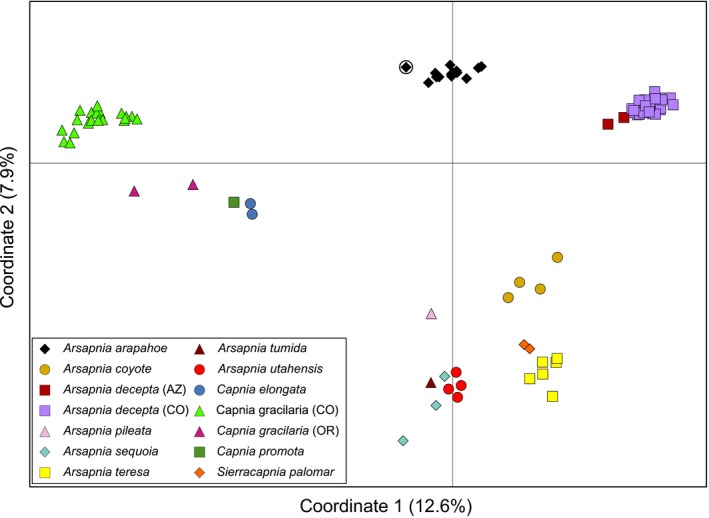
Molecular tools are commonly directed at refining taxonomies and the species that constitute their fundamental units. This has been especially insightful for groups for which species hypotheses are ambiguous and have largely been based on morphological differences between certain life stages or sexes, and has added importance when taxa are a focus of conservation efforts. Here, we examine the taxonomic status of , a winter stonefly in the family Capniidae that is a species of conservation concern because of its limited abundance and restricted range in northern Colorado, USA. Phylogenetic analyses of sequences of mitochondrial and nuclear genes of this and other capniid stoneflies from this region and elsewhere in western North America indicated extensive haplotype sharing, limited genetic differences, and a lack of reciprocal monophyly between and the sympatric , despite distinctive and consistent morphological differences in the sexual apparatus of males of both species. Analyses of autosomal and sex-linked single nucleotide polymorphisms detected using genotyping by sequencing indicated that all individuals of consisted of F hybrids between female and males of another sympatric stonefly, . Rather than constitute a self-sustaining evolutionary lineage, appears to represent the product of nonintrogressive hybridization in the limited area of syntopy between two widely distributed taxa. This offers a cautionary tale for taxonomists and conservation biologists working on the less-studied components of the global fauna.
分子工具通常用于完善分类学以及构成其基本单位的物种。对于那些物种假说模糊且主要基于某些生命阶段或性别的形态差异的类群而言,这一点尤其具有启发性,并且当分类单元成为保护工作的重点时,其重要性也会增加。在此,我们研究了一种冬石蝇(Capniidae科)的分类地位,该物种因其在美国科罗拉多州北部的数量有限且分布范围狭窄而受到保护关注。对该地区以及北美西部其他地区的这种石蝇和其他Capniidae科石蝇的线粒体和核基因序列进行系统发育分析表明,尽管这两个物种雄性的性器官存在明显且一致的形态差异,但它们之间存在广泛的单倍型共享、有限的遗传差异,并且缺乏相互单系性。通过测序基因分型检测到的常染色体和性连锁单核苷酸多态性分析表明,所有个体均由雌性与另一种同域石蝇雄性之间的F杂种组成。似乎并不构成一个自我维持的进化谱系,而是代表了两个广泛分布的分类单元在有限同域区域内非渐渗杂交的产物。这为研究全球动物群中较少研究部分的分类学家和保护生物学家提供了一个警示故事。