Johnson Leigh, Cornish Rosie, Boyd Andy, Macleod John
Population Health Sciences, Bristol Medical School, University of Bristol, Oakfield House, Oakfield Grove, Bristol, BS8 2BN, UK.
BMC Health Serv Res. 2019 Feb 26;19(1):134. doi: 10.1186/s12913-019-3922-7.
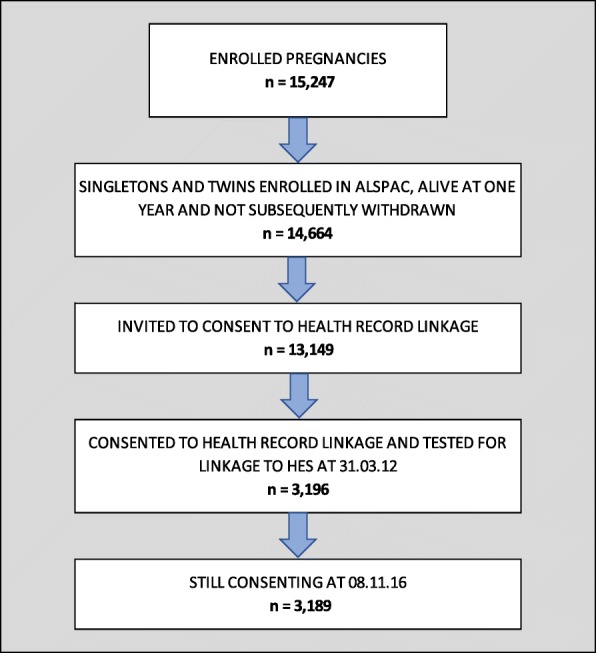
In England emergency hospital admissions among children are increasing and the under 25s are the most frequent attenders of A&E departments. Children of lower socio-economic status (SES) have poorer health outcomes and higher hospital admission rates. NHS Hospital Episode Statistics (HES) are increasingly being used for research but lack detailed data on individual characteristics such as SES. We report the results of an Avon Longitudinal Study of Parents and Children (ALSPAC) study that linked the data of 3,189 consenting participants to HES. We describe rates of hospital admission, emergency readmissions, and A&E attendances and examine socio-demographic correlates of these.
Subjects were singletons and twins enrolled in ALSPAC who had provided consent for linkage to their health records by the study cut-off date (31.02.12). Linkage was carried out by the Health and Social Care Information Centre (now NHS Digital). We examined rates of admissions between birth and age 20 and A&E attendances between 14 and 20 years. Socio-demographic information collected in ALSPAC questionnaires during pregnancy were used to examine factors associated with admissions, emergency readmissions (an emergency admission within 30 days of discharge) and A&E attendances.
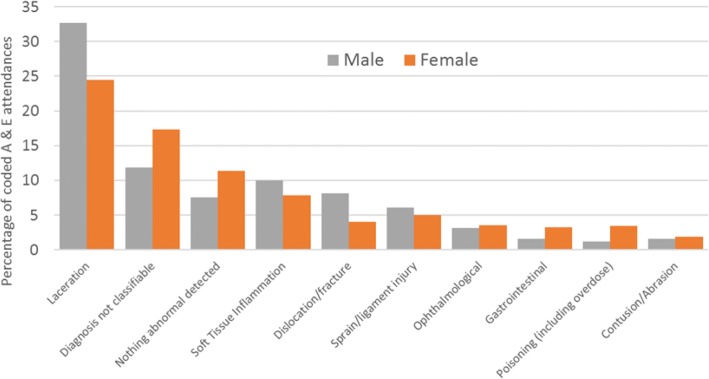
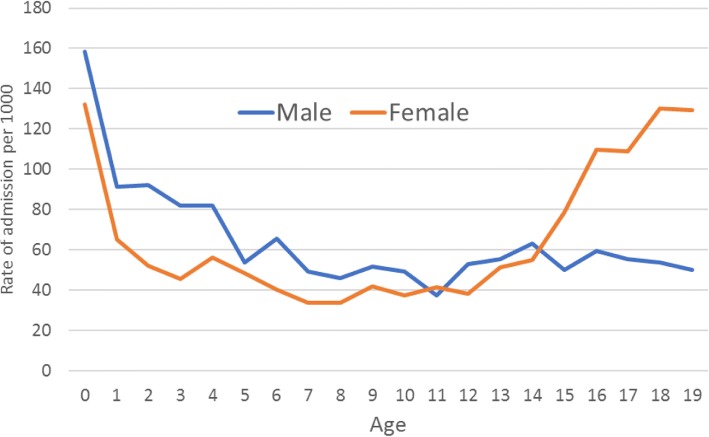
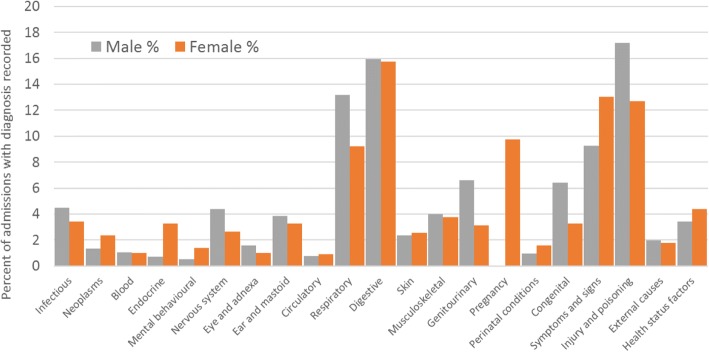
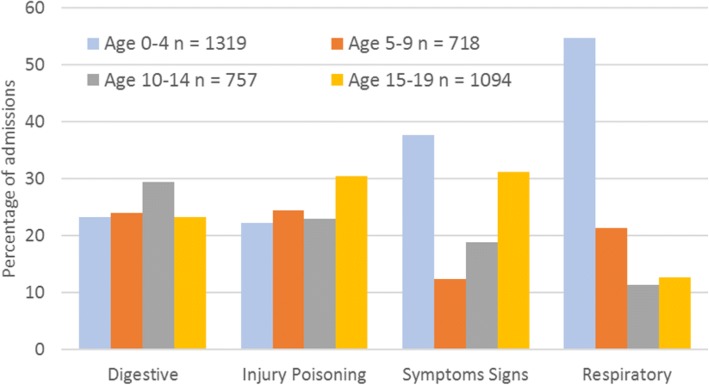
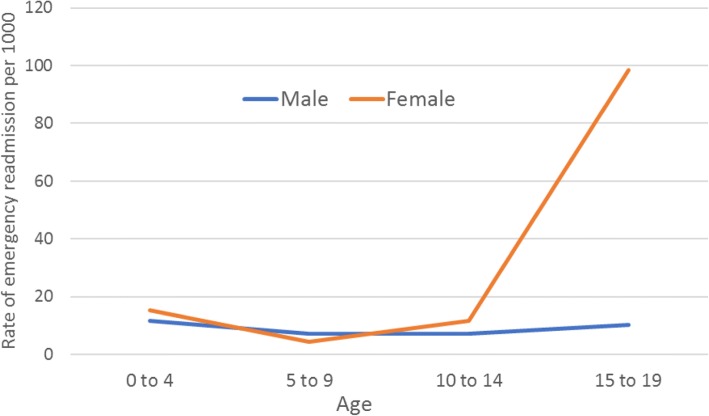
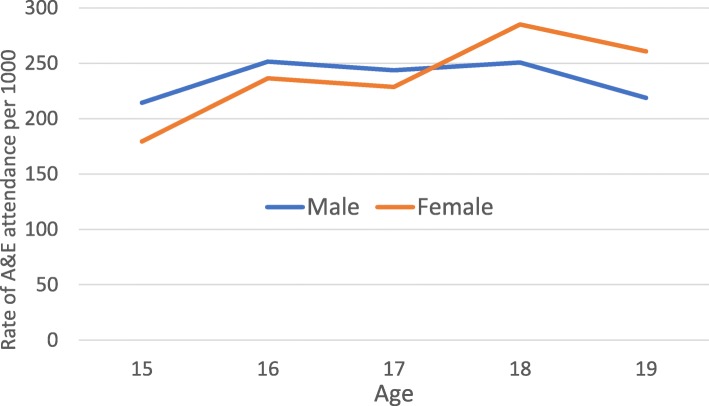
Excluding birth records, we found at least one admission for 1,792/3,189 (56.2%) participants and 4,305 admissions in total. Admission rates were highest in the first year of life. Among males, admissions declined until about age 5 and then remained relatively stable; conversely, among females, they increased sharply from the age of 15. ICD 10 chapters for diseases of the digestive system and injury and poisoning accounted for the largest proportions of admissions (15.8 and 14.5%, respectively). Tooth decay was the highest single cause of admission for those aged 5-9 years. Overall, 1,518/3,189 (47.6%) of participants attended A&E at least once, with a total of 3,613 attendances between age 14 and 20 years. Individuals from more deprived backgrounds had higher rates of admissions, readmissions and A&E attendances.
Linkage between cohort studies such as ALSPAC and HES data provides unique opportunities for detailed insights into socio-demographic and other determinants of hospital activity, which can inform secondary care demand management in the NHS.
在英格兰,儿童急诊入院人数不断增加,25岁以下人群是急诊部门最常见的就诊者。社会经济地位较低(SES)的儿童健康状况较差,住院率较高。国民健康服务体系医院事件统计(HES)越来越多地用于研究,但缺乏关于SES等个体特征的详细数据。我们报告了一项埃文亲子纵向研究(ALSPAC)的结果,该研究将3189名同意参与的参与者的数据与HES进行了关联。我们描述了住院率、急诊再入院率和急诊就诊率,并研究了这些指标的社会人口学相关因素。
研究对象为参与ALSPAC的单胎和双胞胎,他们在研究截止日期(2012年2月29日)前已同意将其健康记录进行关联。关联工作由健康与社会护理信息中心(现为国民健康服务体系数字部门)完成。我们研究了出生至20岁之间的住院率以及14至20岁之间的急诊就诊率。利用ALSPAC孕期问卷中收集的社会人口学信息,研究与住院、急诊再入院(出院后30天内的急诊入院)和急诊就诊相关的因素。
排除出生记录后,我们发现1792/3189名(56.2%)参与者至少有一次住院,总共4305次住院。住院率在生命的第一年最高。在男性中,住院率在5岁左右之前下降,然后保持相对稳定;相反,在女性中,住院率从15岁起急剧上升。国际疾病分类第10章中消化系统疾病以及损伤和中毒占住院比例最大(分别为15.8%和14.5%)。龋齿是5至9岁儿童住院的最主要单一原因。总体而言,1518/3189名(47.6%)参与者至少有一次急诊就诊,14至20岁之间总共急诊就诊3613次。来自更贫困背景的个体住院、再入院和急诊就诊率更高。
像ALSPAC这样的队列研究与HES数据之间的关联为深入了解社会人口学及医院活动的其他决定因素提供了独特机会,可为国民健康服务体系的二级医疗需求管理提供参考。