Department of Molecular and Developmental Medicine, Siena University, 53100 Siena, Italy.
Walther-Straub-Institute of Pharmacology and Toxicology, Ludwig-Maximilians-University, 80539 Munich, Germany.
Int J Mol Sci. 2019 Feb 22;20(4):967. doi: 10.3390/ijms20040967.
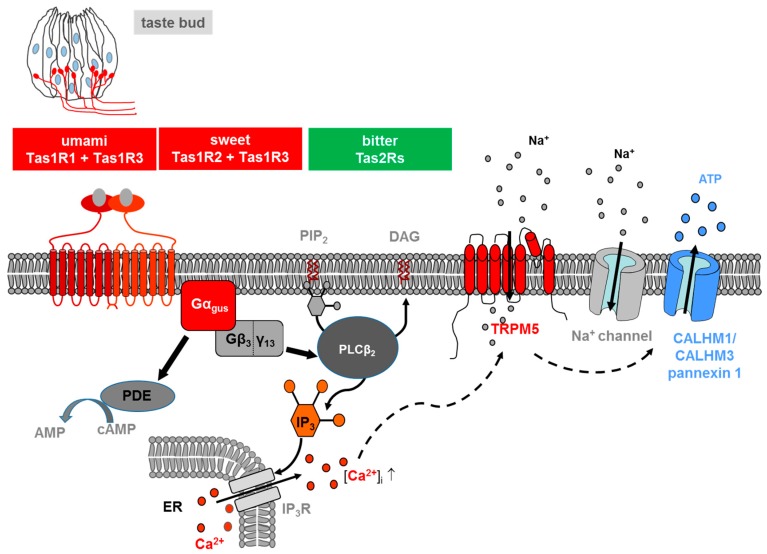
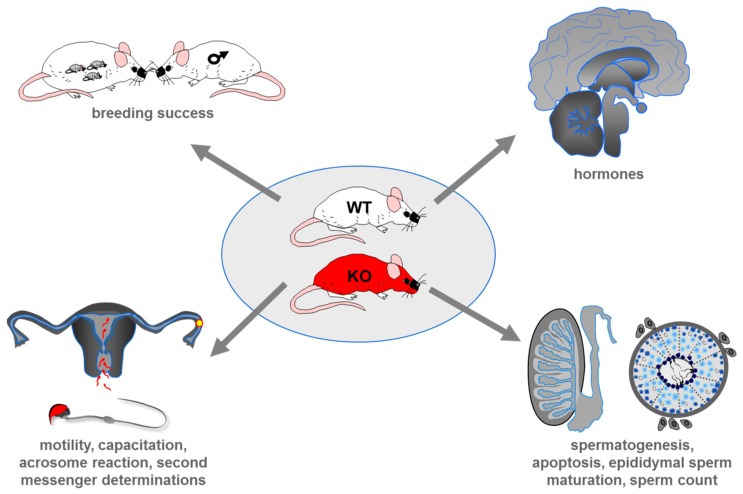
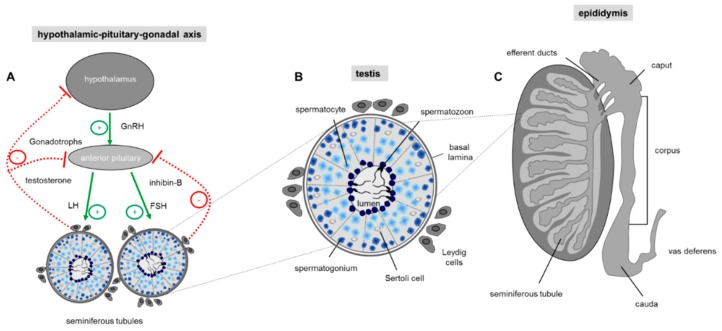
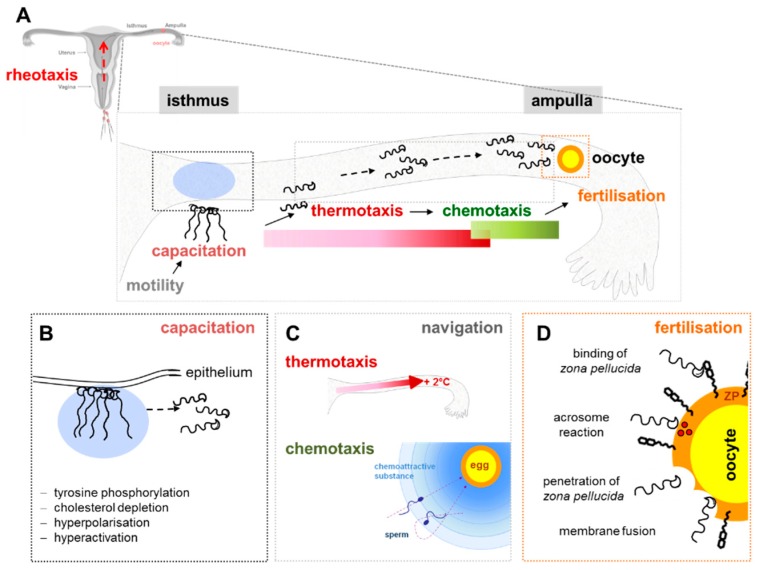
Taste receptors were first described as sensory receptors located on the tongue, where they are expressed in small clusters of specialized epithelial cells. However, more studies were published in recent years pointing to an expression of these proteins not only in the oral cavity but throughout the body and thus to a physiological role beyond the tongue. The recent observation that taste receptors and components of the coupled taste transduction cascade are also expressed during the different phases of spermatogenesis as well as in mature spermatozoa from mouse to humans and the overlap between the ligand spectrum of taste receptors with compounds in the male and female reproductive organs makes it reasonable to assume that sperm "taste" these different cues in their natural microenvironments. This assumption is assisted by the recent observations of a reproductive phenotype of different mouse lines carrying a targeted deletion of a taste receptor gene as well as the finding of a significant correlation between human male infertility and some polymorphisms in taste receptors genes. In this review, we depict recent findings on the role of taste receptors in male fertility, especially focusing on their possible involvement in mechanisms underlying spermatogenesis and post testicular sperm maturation. We also highlight the impact of genetic deletions of taste receptors, as well as their polymorphisms on male reproduction.
味觉受体最初被描述为位于舌头上的感觉受体,它们在小簇专门的上皮细胞中表达。然而,近年来发表的更多研究指出,这些蛋白质不仅在口腔中表达,而且在全身表达,因此具有超越舌头的生理作用。最近的观察表明,味觉受体和偶联味觉转导级联的组成部分也在精子发生的不同阶段以及从老鼠到人类的成熟精子中表达,并且味觉受体的配体谱与男性和女性生殖器官中的化合物重叠,这使得可以合理地假设精子在其自然微环境中“品尝”这些不同的线索。最近观察到不同的小鼠品系携带靶向缺失味觉受体基因的生殖表型以及发现人类男性不育与味觉受体基因的一些多态性之间存在显著相关性,这一假设得到了支持。在这篇综述中,我们描述了味觉受体在男性生育力中的作用的最新发现,特别是重点关注它们在精子发生和睾丸后精子成熟机制中的可能参与。我们还强调了味觉受体的遗传缺失及其多态性对男性生殖的影响。