Scavone Cristina, di Mauro Gabriella, Mascolo Annamaria, Berrino Liberato, Rossi Francesco, Capuano Annalisa
Campania Regional Centre for Pharmacovigilance and Pharmacoepidemiology, Department of Experimental Medicine, Section of Pharmacology "L. Donatelli", University of Campania "Luigi Vanvitelli", Naples, Italy.
Front Pharmacol. 2019 Feb 13;10:111. doi: 10.3389/fphar.2019.00111. eCollection 2019.
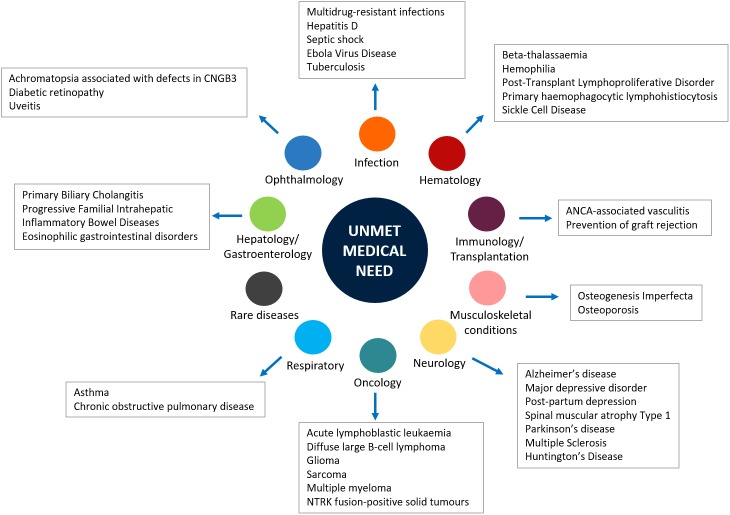
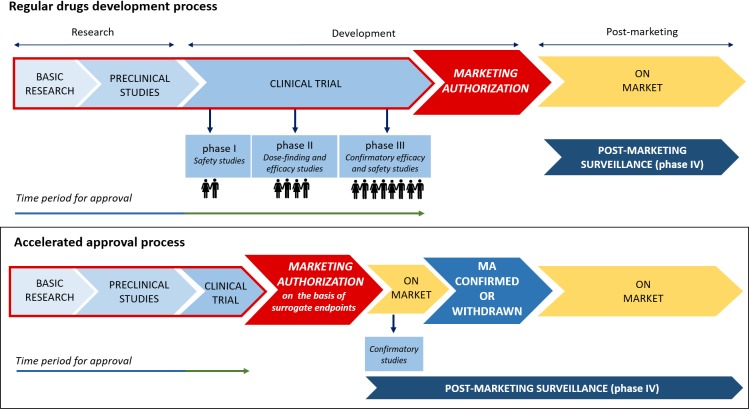
Despite several innovative medicines gaining worldwide approval in recent years, there are still therapeutic areas for which unsatisfied therapeutic needs persist. For example, high unmet clinical need was observed in patients diagnosed with type 2 diabetes mellitus and hemophilia, as well as in specific age groups, such as the pediatric population. Given the urgent need to improve the therapy of clinical conditions for which unmet clinical need is established, clinical testing, and approval of new medicines are increasingly being carried out through accelerated authorization procedures. Starting from 1992, the Food and Drug Administration and the European Medicines Agency have supported the so-called Early Access Programs (EAPs). Such procedures, which can be based on incomplete clinical data, allow an accelerated marketing authorization for innovative medicines. The growth in pharmaceutical research has also resulted in the development of novel therapeutic approaches, such as biotech drugs and advanced therapy medicinal products, including new monoclonal antibodies for the treatment of asthma, antisense oligonucleotides for the treatment of Duchenne muscular dystrophy and spinal muscular atrophy, and new anticancer drugs that act on genetic biomarkers rather than any specific type of cancer. Even though EAPs and novel therapeutic approaches have brought huge benefits for public health, their implementation is limited by several challenges, including the high risk of safety-related label changes for medicines authorized through the accelerated procedure, the high costs, and the reimbursement and access concerns. In this context, regulatory agencies should provide the best conditions for the implementation of the described new tools.
尽管近年来有几种创新药物在全球范围内获得批准,但仍有一些治疗领域存在未满足的治疗需求。例如,在2型糖尿病和血友病患者以及特定年龄组(如儿科人群)中观察到了较高的未满足临床需求。鉴于迫切需要改善已确定存在未满足临床需求的临床病症的治疗方法,新药的临床试验和批准越来越多地通过加速授权程序进行。自1992年以来,美国食品药品监督管理局和欧洲药品管理局一直支持所谓的早期准入计划(EAPs)。此类程序可基于不完整的临床数据,允许对创新药物进行加速上市授权。药物研究的发展还带来了新的治疗方法,如生物科技药物和先进治疗药品,包括用于治疗哮喘的新型单克隆抗体、用于治疗杜氏肌营养不良症和脊髓性肌萎缩症的反义寡核苷酸,以及作用于基因生物标志物而非任何特定类型癌症的新型抗癌药物。尽管早期准入计划和新的治疗方法为公共卫生带来了巨大益处,但其实施受到若干挑战的限制,包括通过加速程序授权的药物与安全相关标签变更的高风险、高成本以及报销和获取方面的担忧。在此背景下,监管机构应为实施上述新工具提供最佳条件。