Moccia Marcello, Capacchione Antonio, Lanzillo Roberta, Carbone Fortunata, Micillo Teresa, Perna Francesco, De Rosa Anna, Carotenuto Antonio, Albero Roberto, Matarese Giuseppe, Palladino Raffaele, Brescia Morra Vincenzo
Multiple Sclerosis Clinical Care and Research Centre, Department of Neuroscience, Reproductive Science and Odontostomatology, Federico II University, Via Sergio Pansini, 5 - Building 17, Ground floor, Naples, Italy.
Medical Affairs Department, Merck, Rome, Italy.
Ther Adv Neurol Disord. 2019 Feb 18;12:1756286418819074. doi: 10.1177/1756286418819074. eCollection 2019.
Oxidative stress is a driver of multiple sclerosis (MS) pathology. We evaluated the effect of coenzyme Q10 (CoQ10) on laboratory markers of oxidative stress and inflammation, and on MS clinical severity.
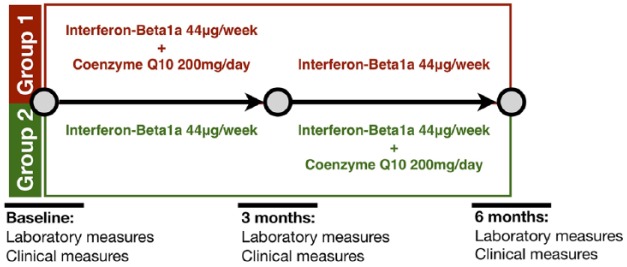
We included 60 relapsing-remitting patients with MS treated with interferon beta1a 44μg (IFN-β1a) with CoQ10 for 3 months, and with IFN-β1a 44μg alone for 3 more months (in an open-label crossover design). At baseline and at the 3 and 6-month visits, we measured markers of scavenging activity, oxidative damage and inflammation in the peripheral blood, and collected data on disease severity.
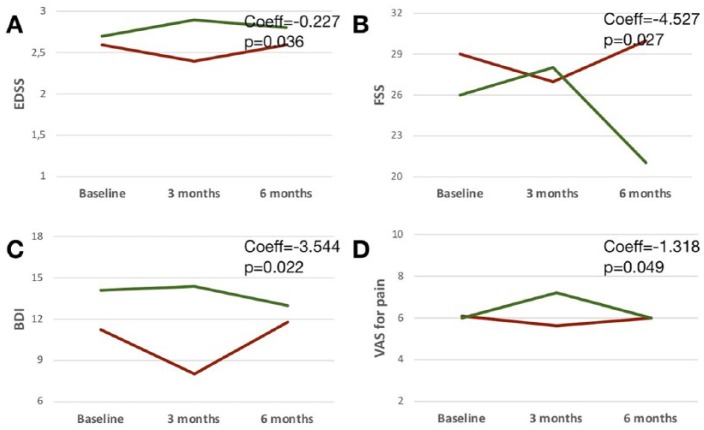
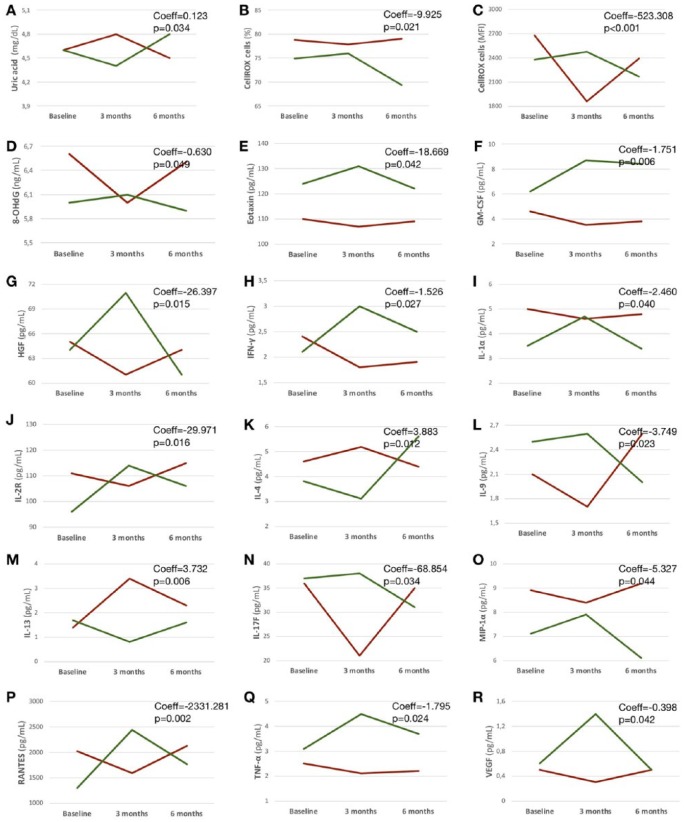
After 3 months, CoQ10 supplementation was associated with improved scavenging activity (as mediated by uric acid), reduced intracellular reactive oxygen species production, reduced oxidative DNA damage, and a shift towards a more anti-inflammatory milieu in the peripheral blood [with higher interleukin (IL)-4 and IL-13, and lower eotaxin, granulocyte-macrophage colony-stimulating factor (GM-CSF), hepatocyte growth factor (HGF), interferon (IFN)-γ, IL-1α, IL-2R, IL-9, IL-17F, macrophage inflammatory proteins (MIP)-1α, regulated on activation-normal T cell expressed and secreted (RANTES), tumor necrosis factor (TNF)-α, and vascular endothelial growth factor (VEGF). Also, CoQ10 supplementation was associated with lower Expanded Disability Status Scale, fatigue severity scale, Beck's depression inventory, and the visual analogue scale for pain.
CoQ10 supplementation improved scavenging activity, reduced oxidative damage, and induced a shift towards a more anti-inflammatory milieu, in the peripheral blood of relapsing-remitting MS patients treated with 44μg IFN-β1a 44μg. A possible clinical effect was noted but deserves to be confirmed over longer follow ups.
氧化应激是多发性硬化症(MS)病理过程的驱动因素。我们评估了辅酶Q10(CoQ10)对氧化应激和炎症的实验室指标以及MS临床严重程度的影响。
我们纳入了60例复发缓解型MS患者,这些患者接受44μg干扰素β1a(IFN-β1a)联合CoQ10治疗3个月,然后单独接受44μg IFN-β1a再治疗3个月(采用开放标签交叉设计)。在基线以及第3和6个月随访时,我们测量了外周血中清除活性、氧化损伤和炎症的指标,并收集了疾病严重程度的数据。
3个月后,补充CoQ10与清除活性改善(由尿酸介导)、细胞内活性氧生成减少、氧化DNA损伤减少以及外周血向更具抗炎环境转变有关[白细胞介素(IL)-4和IL-13水平升高,而嗜酸性粒细胞趋化因子、粒细胞巨噬细胞集落刺激因子(GM-CSF)、肝细胞生长因子(HGF)、干扰素(IFN)-γ、IL-1α、IL-2R、IL-9、IL-17F、巨噬细胞炎性蛋白(MIP)-1α、活化正常T细胞表达和分泌调控趋化因子(RANTES)、肿瘤坏死因子(TNF)-α和血管内皮生长因子(VEGF)水平降低]。此外,补充CoQ10与较低的扩展残疾状态量表、疲劳严重程度量表、贝克抑郁量表以及疼痛视觉模拟量表评分相关。
在接受44μg IFN-β1a治疗的复发缓解型MS患者外周血中,补充CoQ10改善了清除活性,减少了氧化损伤,并诱导了向更具抗炎环境的转变。观察到了可能的临床效果,但值得通过更长时间的随访来证实。