Iqbal Md Hafiz
Centre for Higher Studies and Research (CHSR), Bangladesh University of Professionals (BUP), Dhaka, Bangladesh.
J Mark Access Health Policy. 2019 Feb 14;7(1):1575683. doi: 10.1080/20016689.2019.1575683. eCollection 2019.
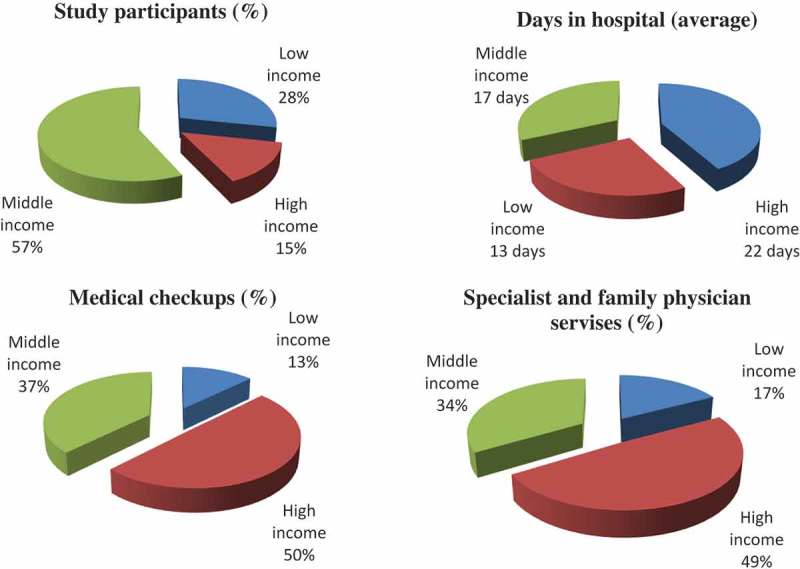
: Poor people, in general, get poor quality of health services. The situation is very much worsening for the poor who live in the remote areas in the coastal belt of Bangladesh as health care facilities and services are often less complete, farther away, and therefore most costly to reach than in urban hospitals and physician. Ensure of better health service for the poor, it is essential to examine the effectiveness of Universal Health Coverage (UHC). This study sets its objectives to evaluate the health service for the poor in the coastal area of Bangladesh and develop an approach of management strategy. : This study followed a two-stage cluster sampling technique and carried out a household survey through the open-ended questionnaire. In addition, the study applied the logistic regression model to generate empirically supported assessments. : Result from the disparity rate ratio (DRR) revealed that there is a big health care disparity of different income groups like poor and rich. Furthermore, results from the model demonstrated that Medicaid, Medicare, Social Health Insurance, Telemedicine and Capitation under the provision Universal Health Coverage (UHC) are statistically significant compared to reduce the health care disparity. : UHC becomes a critical issue for improved and quality health care system for all the groups especially, the poor in coastal Bangladesh. This study showed that Medicaid, Medicare and Social Health Insurance and Capitation perform well to provide better health care facilities for all.
总体而言,贫困人口获得的医疗服务质量较差。对于生活在孟加拉国沿海偏远地区的贫困人口来说,情况正在急剧恶化,因为那里的医疗设施和服务往往不够完善,距离更远,因此相比城市医院和医生,前往就医的成本更高。为了确保为贫困人口提供更好的医疗服务,审视全民健康覆盖(UHC)的有效性至关重要。本研究旨在评估孟加拉国沿海地区为贫困人口提供的医疗服务,并制定一种管理策略方法。:本研究采用两阶段整群抽样技术,通过开放式问卷进行了家庭调查。此外,该研究应用逻辑回归模型得出经验支持的评估结果。:差异率比(DRR)的结果显示,贫困和富裕等不同收入群体之间存在巨大的医疗保健差异。此外,模型结果表明,全民健康覆盖(UHC)规定下的医疗补助、医疗保险、社会健康保险、远程医疗和按人头付费在减少医疗保健差异方面具有统计学意义。:全民健康覆盖对于改善所有群体尤其是孟加拉国沿海贫困人口的优质医疗保健系统而言,成为一个关键问题。本研究表明,医疗补助、医疗保险、社会健康保险和按人头付费在为所有人提供更好的医疗设施方面表现良好。