Center of Excellence for Shrimp Molecular Biology and Biotechnology, Mahidol University, Bangkok, 10400, Thailand.
National Center for Genetic Engineering and Biotechnology (BIOTEC) Thailand Science Park, Pathumthani, 12120, Thailand.
Sci Rep. 2019 Feb 28;9(1):3164. doi: 10.1038/s41598-019-39539-x.
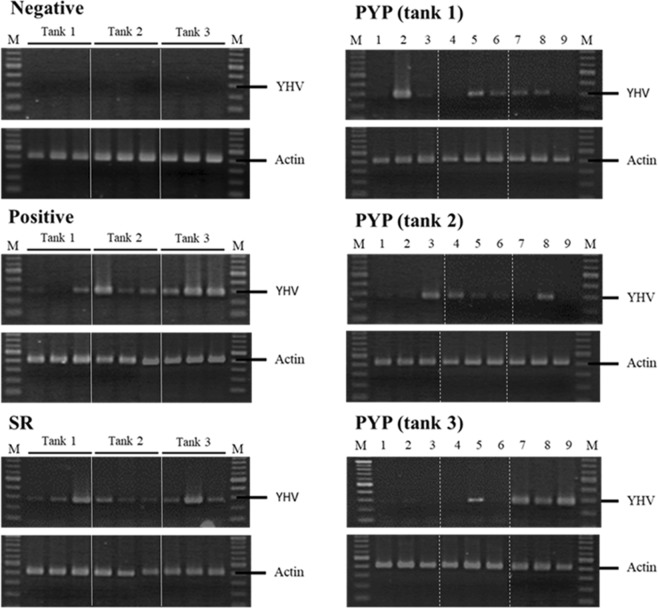
RNA interference (RNAi) is an effective way of combating shrimp viruses by using sequence-specific double-stranded (dsRNA) designed to knock down key viral genes. The aim of this study was to use microalgae expressing antiviral dsRNA as a sustainable feed supplement for shrimp offering viral protection. In this proof of concept, we engineered the chloroplast genome of the green microalga Chlamydomonas reinhardtii for the expression of a dsRNA cassette targeting a shrimp yellow head viral gene. We used a previously described chloroplast transformation approach that allows for the generation of stable, marker-free C. reinhardtii transformants without the supplementation of antibiotics. The generated dsRNA-expressing microalgal strain was then used in a shrimp feeding trial to evaluate the efficiency of the algal RNAi-based vaccine against the virus. Shrimps treated with dsRNA-expressed algal cells prior to YHV infection had 50% survival at 8 day-post infection (dpi), whereas 84.1% mortality was observed in control groups exposed to the YHV virus. RT-PCR using viral specific primers revealed a lower infection rate in dsRNA-expressing algae treated shrimp (55.6 ± 11.1%) compared to control groups (88.9 ± 11.1% and 100.0 ± 0.0%, respectively). Our results are promising for using microalgae as a novel, sustainable alternative as a nutritious, anti-viral protective feedstock in shrimp aquaculture.
RNA 干扰 (RNAi) 是一种通过使用针对关键病毒基因的序列特异性双链 (dsRNA) 来对抗虾病毒的有效方法。本研究旨在利用表达抗病毒 dsRNA 的微藻作为一种可持续的虾饲料补充剂,为虾提供病毒保护。在本概念验证中,我们对绿藻莱茵衣藻的叶绿体基因组进行了工程改造,以表达靶向虾黄头病毒基因的 dsRNA 盒。我们使用了先前描述的叶绿体转化方法,该方法允许生成稳定、无标记的莱茵衣藻转化体,而无需补充抗生素。然后,将生成的表达 dsRNA 的微藻菌株用于虾喂养试验,以评估藻类 RNAi 疫苗对病毒的有效性。在用 YHV 感染之前用表达 dsRNA 的藻细胞处理的虾在 8 天感染后 (dpi) 的存活率为 50%,而暴露于 YHV 病毒的对照组的死亡率为 84.1%。使用病毒特异性引物的 RT-PCR 显示,与对照组相比,用表达 dsRNA 的藻类处理的虾的感染率较低(55.6 ± 11.1%)(分别为 88.9 ± 11.1%和 100.0 ± 0.0%)。我们的结果表明,微藻作为一种新型的可持续替代物,可作为虾养殖中营养丰富、抗病毒的保护饲料原料具有很大的应用前景。