Department of Plastic and Cosmetic Surgery, Nanfang Hospital, Southern Medical University, Guangzhou, Guangdong 510515, P.R. China.
Oncol Rep. 2019 Apr;41(4):2126-2136. doi: 10.3892/or.2019.7018. Epub 2019 Feb 15.
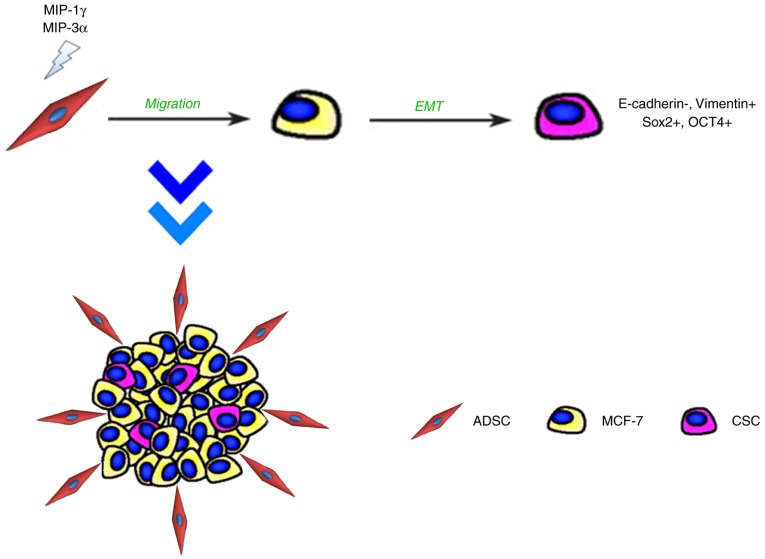
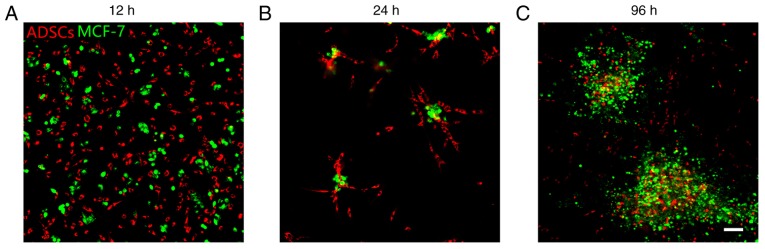
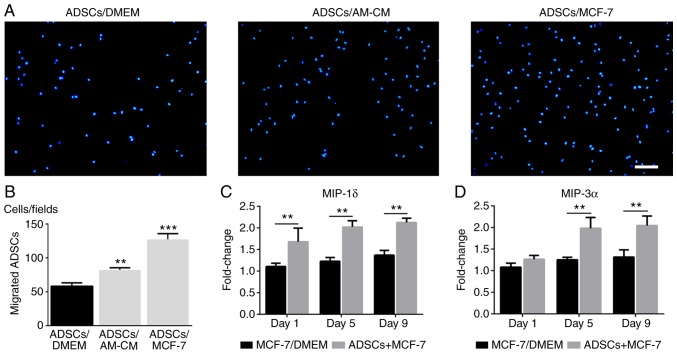
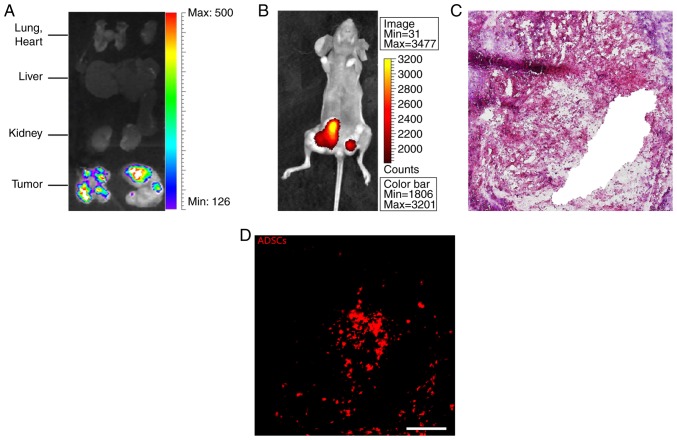
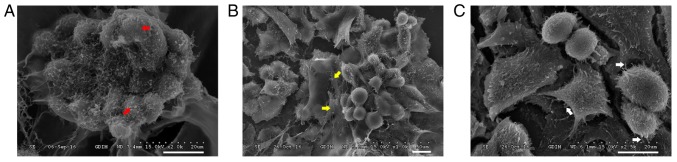
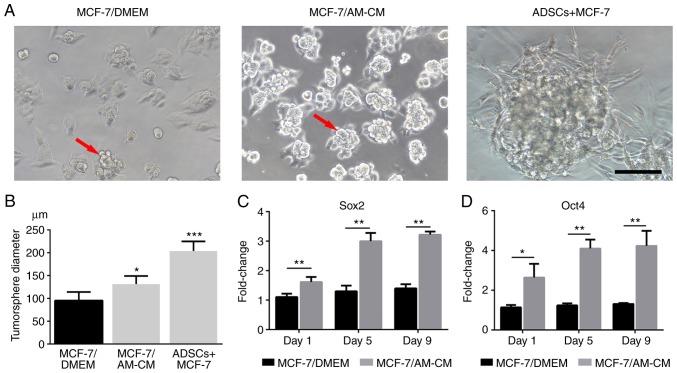
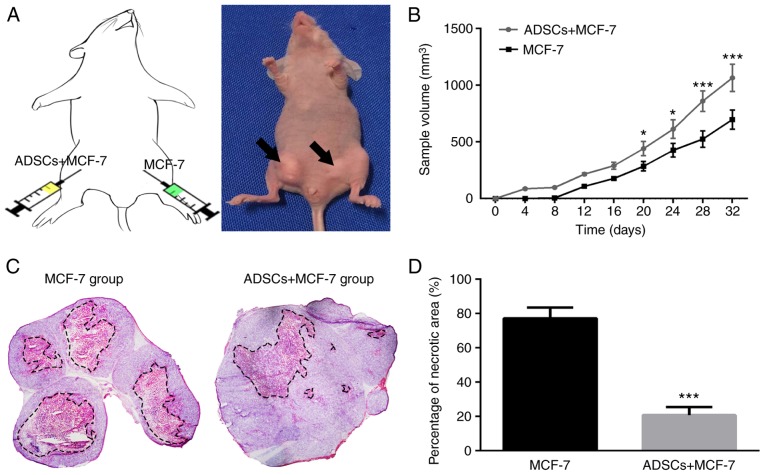
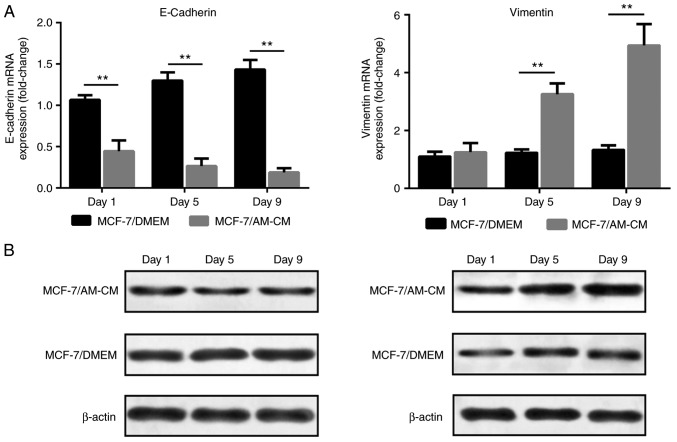
Mesenchymal stem cells reportedly have a marked effect on tumor growth or suppression. However, it remains uncertain whether adipose‑derived mesenchymal stem cells (ADSCs) from grafted fat can contribute to breast cancer growth and recurrence. In the present study, interactions between ADSCs and MCF‑7 breast cancer cells were evaluated in a Matrigel co‑culture system and in an in vivo nude mouse model. Results suggested that MCF‑7 cells exerted tumor tropism effects on ADSCs and this may be regulated by chemokines, such as the macrophage inflammatory protein (MIP)‑1δ and MIP‑3α. Additionally, ADSCs significantly induced tumorsphere formation in vitro and promoted tumorigenicity in vivo. RT‑qPCR analysis indicated that tumorsphere formation by MCF‑7 cells was associated with the induction of stem‑like properties, which was mediated by epithelial‑-mesenchymal transition. Together, the present findings indicated that ADSCs exhibit tropism and induce tumorsphere formation of MCF‑7 cells.
间充质干细胞据称对肿瘤的生长或抑制具有显著影响。然而,脂肪来源的间充质干细胞(ADSCs)是否能促进乳腺癌的生长和复发仍不确定。在本研究中,在 Matrigel 共培养系统和体内裸鼠模型中评估了 ADSCs 与 MCF-7 乳腺癌细胞之间的相互作用。结果表明,MCF-7 细胞对 ADSCs 具有肿瘤趋向性作用,这可能受趋化因子(如巨噬细胞炎性蛋白(MIP)-1δ和 MIP-3α)调节。此外,ADSCs 可显著诱导 MCF-7 细胞体外肿瘤球形成,并促进体内致瘤性。RT-qPCR 分析表明,MCF-7 细胞的肿瘤球形成与诱导干细胞样特性有关,这是通过上皮-间充质转化介导的。综上所述,这些发现表明 ADSCs 表现出趋向性并诱导 MCF-7 细胞的肿瘤球形成。