Department of Anesthesiology, Laboratory for Experimental Anesthesiology, Erasmus MC University Medical Center, s Gravendijkwal 230, 3015 CE, Rotterdam, The Netherlands.
Department of Gastroenterology and Hepatology, Erasmus MC University Medical Center, s Gravendijkwal 230, 3015 CE, Rotterdam, The Netherlands.
J Transl Med. 2019 Feb 28;17(1):65. doi: 10.1186/s12967-019-1802-x.
Visible light spectroscopy (VLS) is a technique used to measure the mucosal oxygen saturation during upper gastrointestinal endoscopy to evaluate mucosal ischemia, however in vivo validation is lacking. We aimed to compare VLS measurements with a validated quantitative microvascular oxygen tension (μPO) measurement technique.
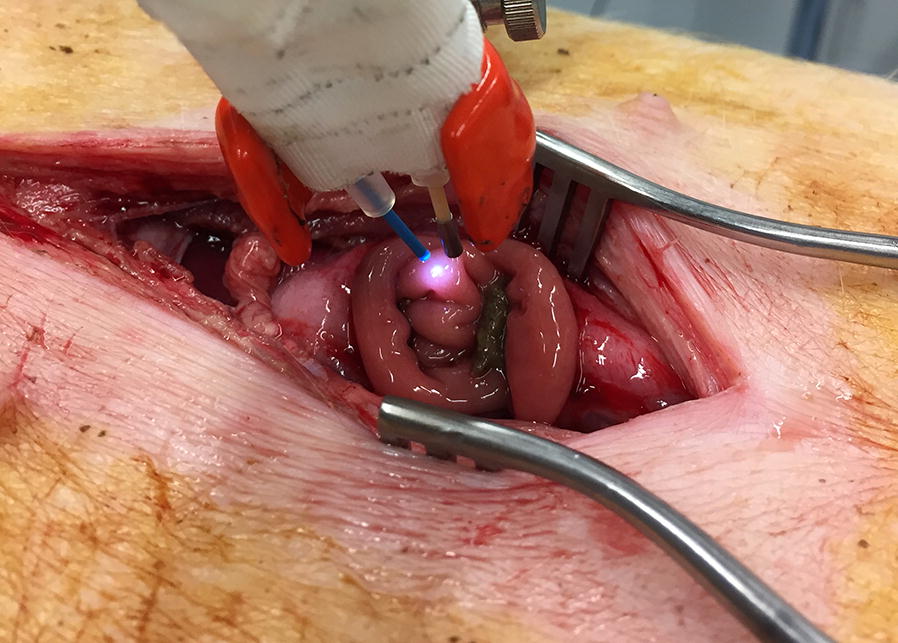
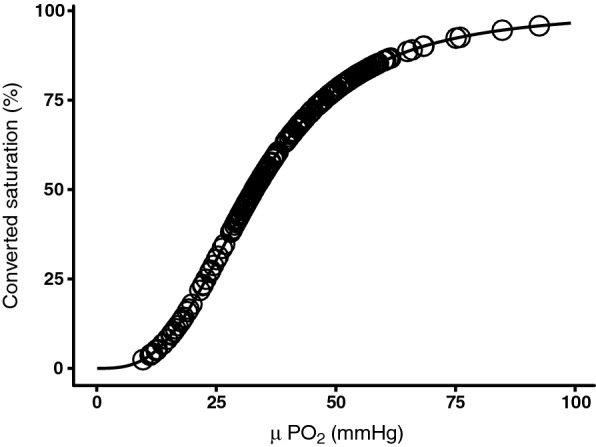
Simultaneous VLS measurements and μPO measurements were performed on the small intestine of five pigs. First, simultaneous measurements were performed at different FiO values (18%-100%). Thereafter, the influence of bile was assessed by comparing VLS measurements in the presence of bile and without bile. Finally, simultaneous VLS and μPO measurements were performed from the moment a lethal dose potassium chloride intravenously was injected.
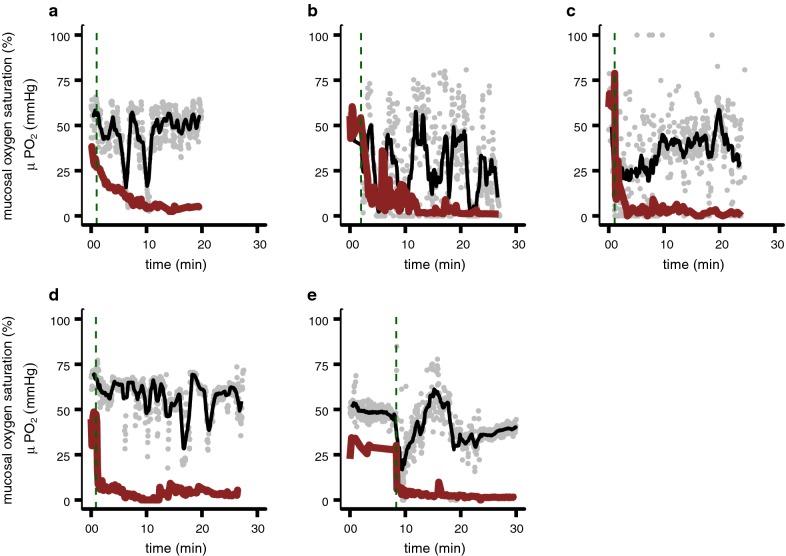
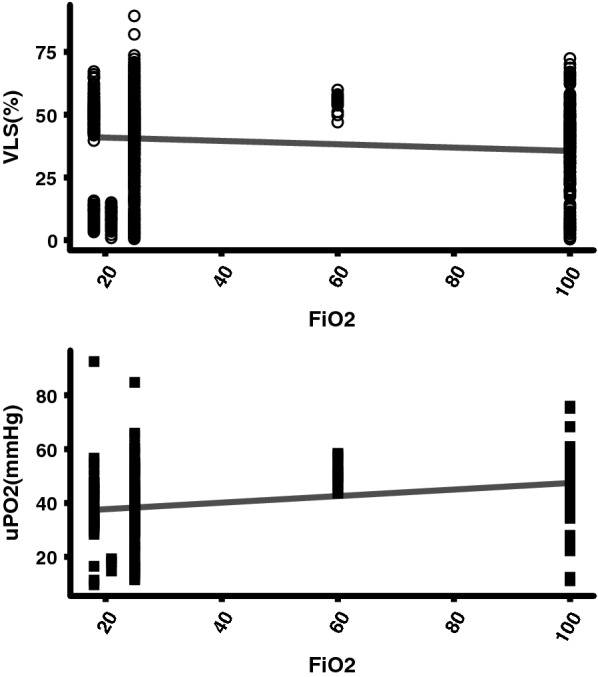
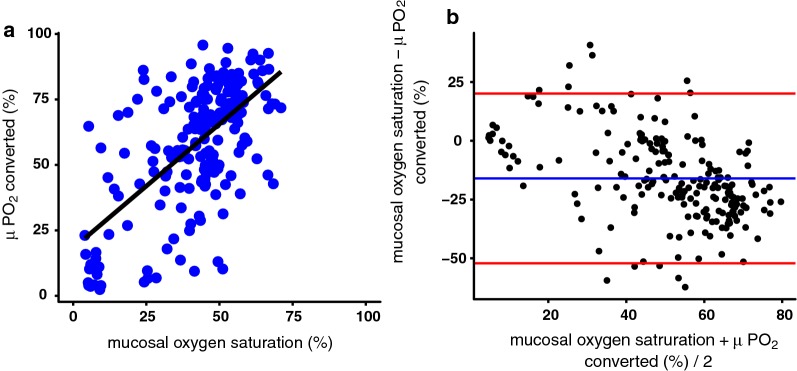
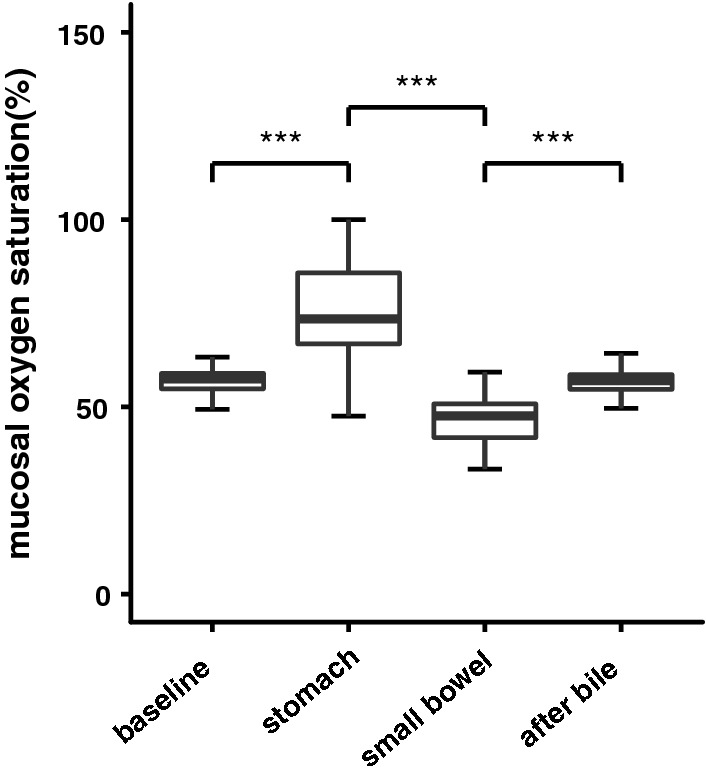
In contrast to μPO values that increased with increasing FiO, VLS values decreased. Both measurements correlated poorly with R = 0.39, intercept 18.5, slope 0.41 and a bias of - 16%. Furthermore, the presence of bile influenced VLS values significantly (median (IQR)) before bile application 57.5% (54.8-59.0%) versus median with bile mixture of the stomach 73.5% (66.8-85.8), p = < 2.2 * 10; median with bile mixture of small bowel 47.6% (41.8-50.8) versus median after bile removal 57.0% (54.7-58.6%), p = < 2.2 * 10). Finally, the VLS mucosal oxygen saturation values did not decrease towards a value of 0 in the first 25 min of asystole in contrast to the μPO values.
These results suggest that VLS measures the mixed venous oxygen saturation rather than mucosal capillary hemoglobin oxygen saturation. Further research is needed to establish if the mixed venous compartment is optimal to assess gastrointestinal ischemia.
可视光谱(VLS)是一种用于在上消化道内窥镜检查中测量黏膜氧饱和度的技术,以评估黏膜缺血,但缺乏体内验证。我们旨在比较 VLS 测量值与经过验证的定量微血管氧张力(μPO)测量技术。
在五只猪的小肠上同时进行 VLS 测量和 μPO 测量。首先,在不同的 FiO 值(18%-100%)下进行同时测量。然后,通过比较有胆汁和无胆汁时的 VLS 测量值来评估胆汁的影响。最后,从静脉注射致死剂量氯化钾的那一刻起,同时进行 VLS 和 μPO 测量。
与随 FiO 增加而增加的 μPO 值相反,VLS 值降低。两种测量方法的相关性都很差,R=0.39,截距 18.5,斜率 0.41,偏倚-16%。此外,胆汁的存在显著影响 VLS 值(胆汁应用前中位数(IQR)为 57.5%(54.8-59.0%),与胃中胆汁混合物的中位数为 73.5%(66.8-85.8%)相比,p<2.2×10;与小肠中胆汁混合物的中位数相比,47.6%(41.8-50.8%)与胆汁去除后的中位数相比,57.0%(54.7-58.6%)相比,p<2.2×10)。最后,与 μPO 值相比,在心脏停搏的前 25 分钟内,VLS 黏膜氧饱和度值并未降至 0 值。
这些结果表明,VLS 测量的是混合静脉血氧饱和度,而不是黏膜毛细血管血红蛋白氧饱和度。需要进一步研究以确定是否混合静脉腔是评估胃肠道缺血的最佳选择。