University of California San Diego, Department of Pediatrics, Division of Infectious Disease; Rady Children's Institute of Genomic Medicine.
University of California San Diego, Department of Pediatrics, Division of Critical Care.
Diagn Microbiol Infect Dis. 2019 Jun;94(2):188-191. doi: 10.1016/j.diagmicrobio.2018.12.016. Epub 2019 Feb 2.
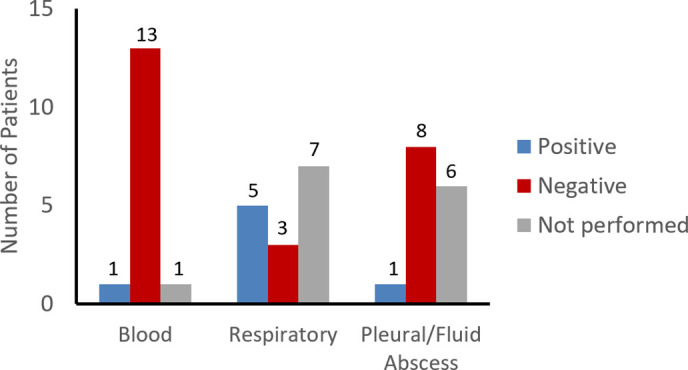
Community-acquired pneumonia (CAP) is a common cause of pediatric hospital admission. Empiric antibiotic therapy for hospitalized children with serious CAP now targets the most likely pathogen(s), including those that may demonstrate significant antibiotic resistance. Cell-free plasma next-generation sequencing (CFPNGS) was first made available for Pediatric Infectious Diseases physicians in June 1, 2017, to supplement standard-of-care diagnostic techniques. A retrospective chart review was performed for children hospitalized with CAP between June 1, 2017, and January 22, 2018, to evaluate the impact of CFPNGS. We identified 15 hospitalized children with CAP without other underlying medical conditions for whom CFPNGS was performed. CFPNGS identified a pathogen in 13 of 15 (86%) children compared with 47% for those using standard culture and PCR-based methods alone. Changes in antibiotic management were made in 7 of 15 (47%) of children as a result of CFPNGS.
社区获得性肺炎(CAP)是儿童住院的常见病因。针对严重 CAP 住院儿童的经验性抗生素治疗现在针对最可能的病原体(包括可能表现出显著抗生素耐药性的病原体)。无细胞血浆下一代测序(CFPNGS)于 2017 年 6 月 1 日首次提供给儿科传染病医生,以补充标准护理诊断技术。对 2017 年 6 月 1 日至 2018 年 1 月 22 日期间因 CAP 住院的儿童进行了回顾性图表审查,以评估 CFPNGS 的影响。我们确定了 15 名患有 CAP 且无其他潜在医疗条件的住院儿童,对他们进行了 CFPNGS。与仅使用标准培养和基于 PCR 的方法的 47%相比,CFPNGS 在 15 名儿童中的 13 名(86%)中确定了病原体。由于 CFPNGS,15 名儿童中有 7 名(47%)改变了抗生素管理。